If you read nothing else
- A short sail from Funchal puts you over ocean depths of more than 3,000 metres just 5 kilometres offshore, which is why deep-water whales can appear close to the coast.[1]
- A total of 27 cetacean species have been verified by researchers in Madeira's waters, ranging from bottlenose dolphins that stay year-round to orcas and humpbacks that are rarely spotted.[2]
- Short-finned pilot whales and bottlenose dolphins remain throughout the year; sperm whales are more frequent in fall, and Bryde's whales reach their peak from June until November.[2][3][4]
- In Madeira, boats are required to remain 50 metres or more away from whales and dolphins, and keep a distance of 25 metres or more from sea turtles.[5]
- The 3-hour catamaran cruise departing from Funchal costs from US$40, with live guide service in English and Portuguese plus free cancellation available until 24 hours before departure.[6]
- Top choice Dolphin & Whale Catamaran from US$40 Duration3 hours[6]Rating4.61[6]GuideEnglish, Portuguese[6]CancellationFree up to 24 hours[6] Check availability
- Luxury Catamaran Cruise from US$46 Duration3 hours[7]Rating4.25[7]GuidePortuguese, English[7]CancellationFree up to 24 hours[7] See this tour
- Sunset Sailing Tour from US$63 Duration3 hours[8]Rating4.77[8]GuideEnglish, Portuguese[8]CancellationFree up to 24 hours[8] See this tour
He guides the Lobosonda skippers exactly with details like, milage and landmarks to the places at sea, where the boat with the guests can then observe the marine mammals.
Madeira delivers whales without the marathon crossing
Read before booking
- Reserve now and pay later
- Free cancellation on the booked cruise
- A morning or afternoon on the water
- Live guiding in English and Portuguese
On the water
- Wildlife rules keep encounters calm
- Sea temperatures stay mild
- Bring a layer for the breeze
- A stable catamaran deck suits first-timers
An island with no shallow edge
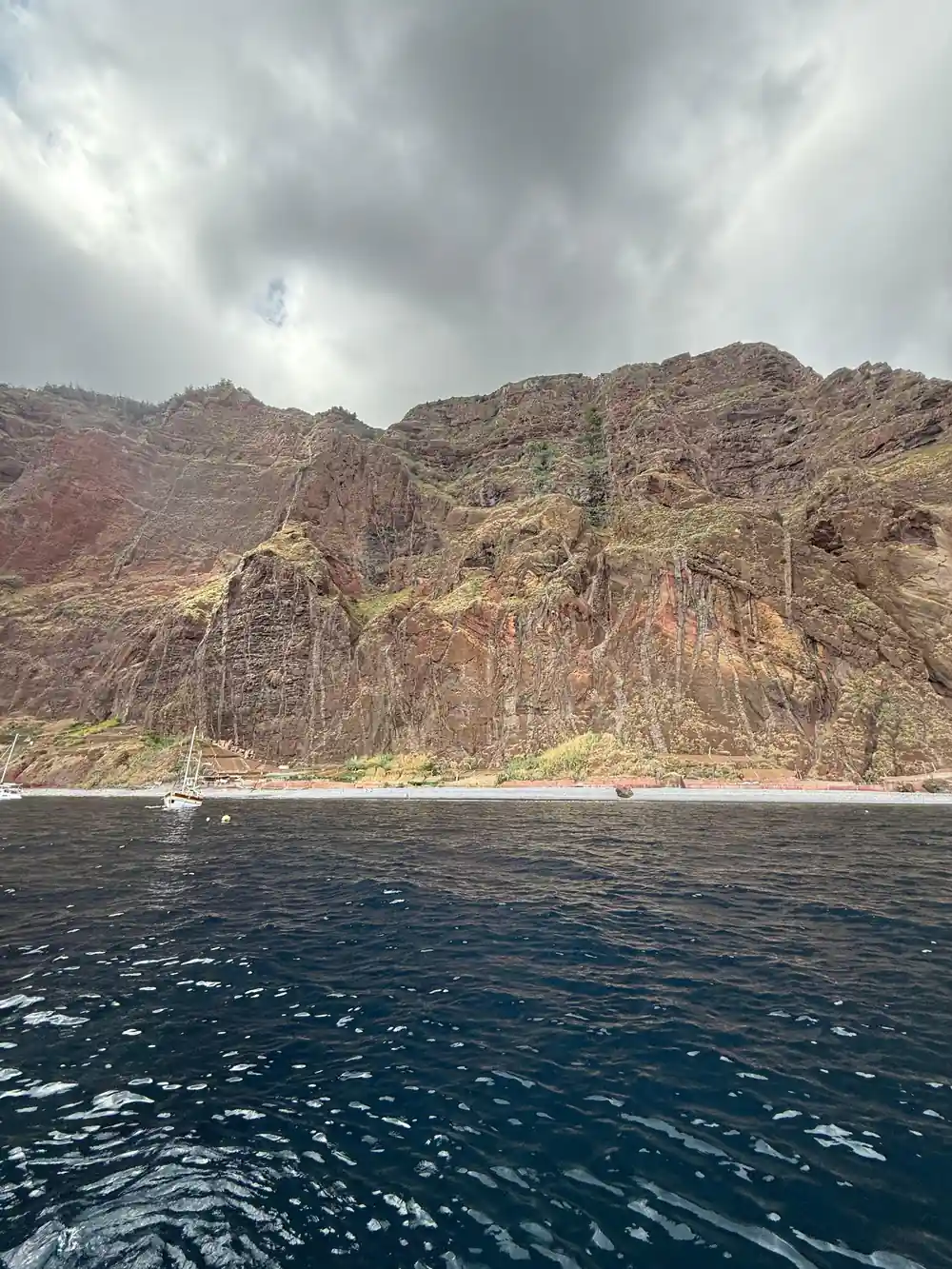
Madeira is a mountain that rises out of the Atlantic with almost no shallow shelf. Just 5 kilometres offshore, the sea floor falls to more than 3,000 metres, and the underwater terrain is made of steep slopes, canyons and vast plateaus.[1] That abrupt edge is the main reason deep-water whales can appear so close to the coast.[1] For anyone planning whale watching Madeira, this is the fact that changes everything: you do not need an all-day voyage to reach serious ocean.
The island has known this for a long time. Madeira's whaling past is over, and today the same waters are a place to watch rather than hunt. A 3-hour cruise from Funchal is enough to reach the deep-water habitat where dolphins and whales live.[6] Scientists have confirmed 27 cetacean species in Madeira's waters, giving you an idea of the diversity just offshore.[2]
Travellers often ask whether the animals are really that close. The answer is visible in the depth: with more than 3,000 metres of water just 5 kilometres from the coast, the island has the kind of access that most other whale destinations lack.[1] It is the simplest explanation for the island's appeal.
Why depth matters to a whale
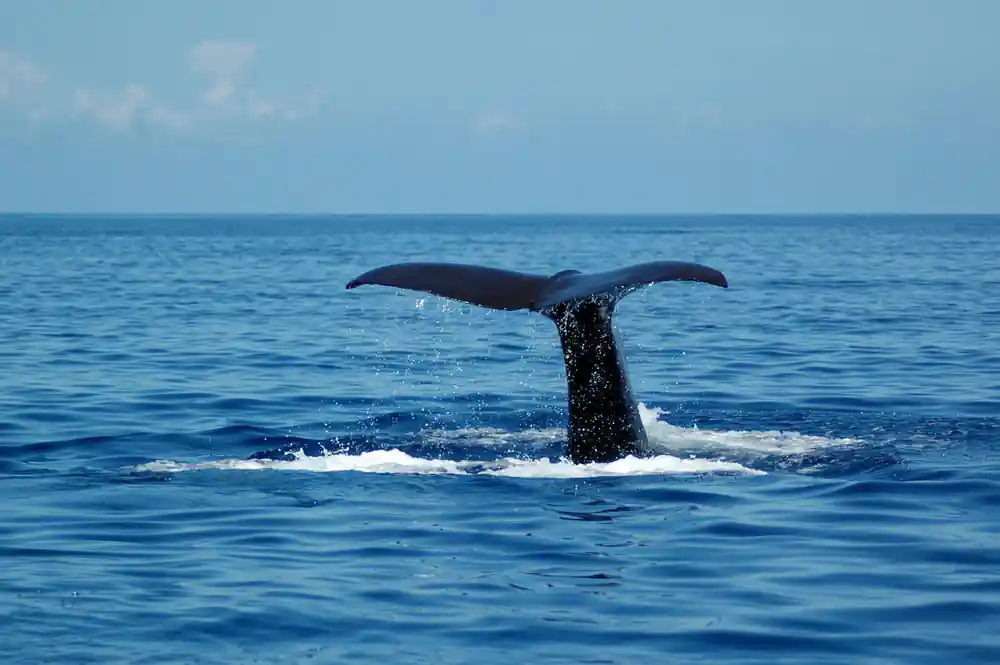
Different whales use different parts of the ocean. Sperm whales can be seen off Madeira with some frequency all year, but they are more common during the fall months.[3] Bryde's whales, the most commonly observed baleen whale species around the island, are typically seen most from June until November.[4] These are deep-water animals, and the fact that the water drops so quickly offshore is exactly what brings them into view.[1]
Depth also shapes how a whale watching day works. The same steep seabed that attracts cetaceans affects currents and food, so boats do not have to search a vast area.[1] Crews can focus on the zones where the edge of the deep water meets the island. On some trips, a land-based spotter helps by relaying precise details such as mileage and landmarks to the skipper.[9] That local knowledge is one of the quiet advantages of whale watching Madeira Funchal.
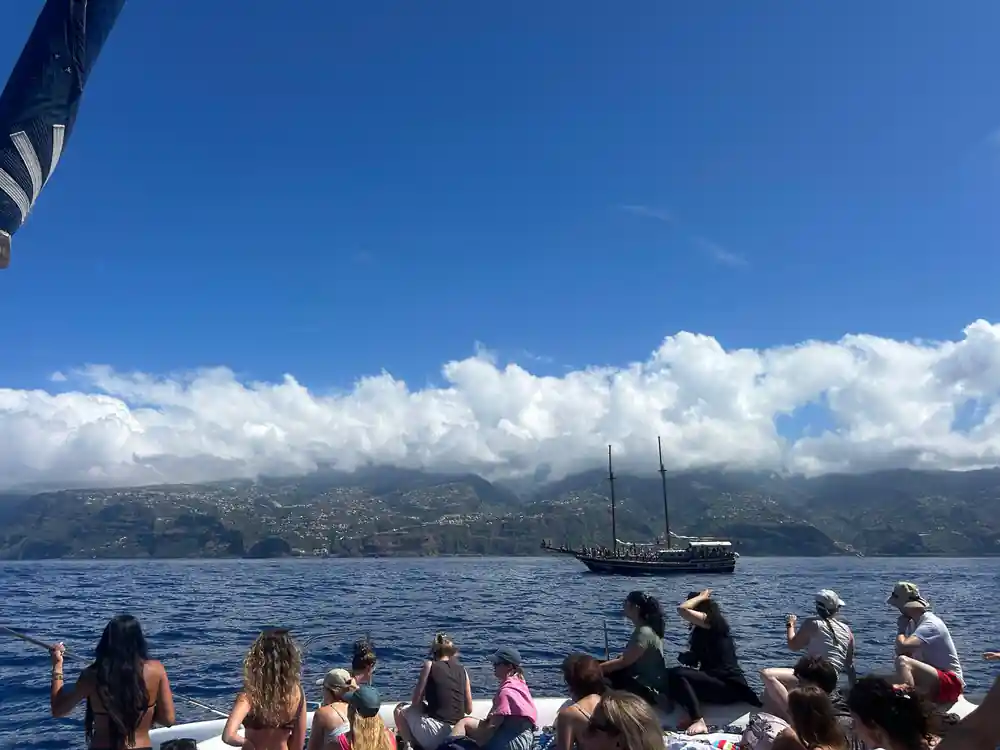
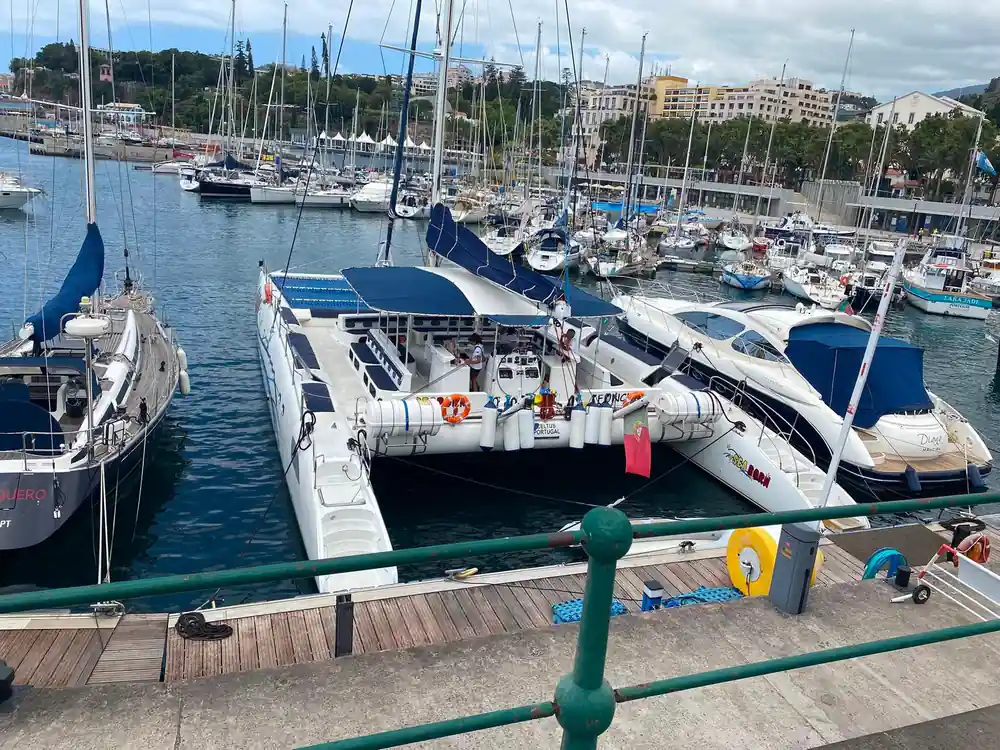
For first timers, the 3-hour format of the booked catamaran cruise keeps the whole experience manageable.[6] You have enough time to see the southern coast and to wait for wildlife without feeling rushed, and the live guide can point out what you are looking at in English and Portuguese.[6]
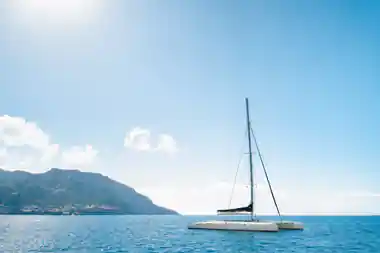
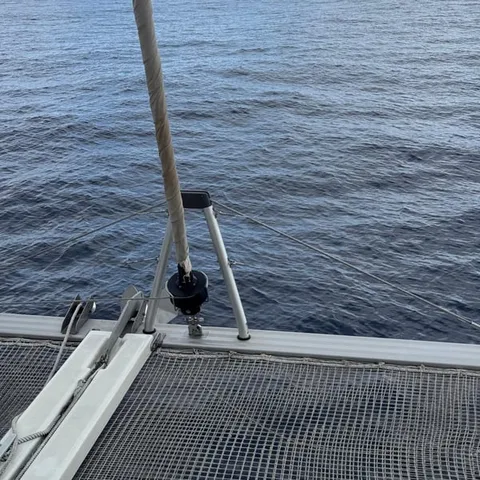
A stable catamaran is a comfortable way to watch for whales and dolphins.
Seamounts and why they gather life
The volcanic forces that created Madeira left a seabed full of structure. Around the island, underwater peaks, slopes and canyons push against the moving Atlantic.[1] In the ocean, structure means life: currents are disturbed, nutrients are stirred up, plankton blooms, and small fish form bait balls. Whales and dolphins follow the food.
The steep underwater landscape has another key role: it lets larger cetaceans, typically found in deep water, approach the island's coastline.[1] A catamaran can therefore drift over ocean that feels completely wild, while still being near enough to Funchal for a short excursion. If you are comparing options for Madeira whale watching, look for a boat that treats this habitat with respect and keeps its distance.
You do not need a biology degree to enjoy it. The clues are visible from the deck: birds working the surface, a sudden slick of calm water, a blow against the horizon. The crew watches for those signs, and the deep underwater terrain is what brings them together so close to shore.[1]
Warm water, and what it brings
Madeira sits at a latitude where the sea stays pleasant through the year. The water off Funchal sits between 18°C in winter and 24°C in summer.[10] That warmth gives the island a more varied visitor list than many colder Atlantic destinations, and it also makes being on deck much more comfortable.
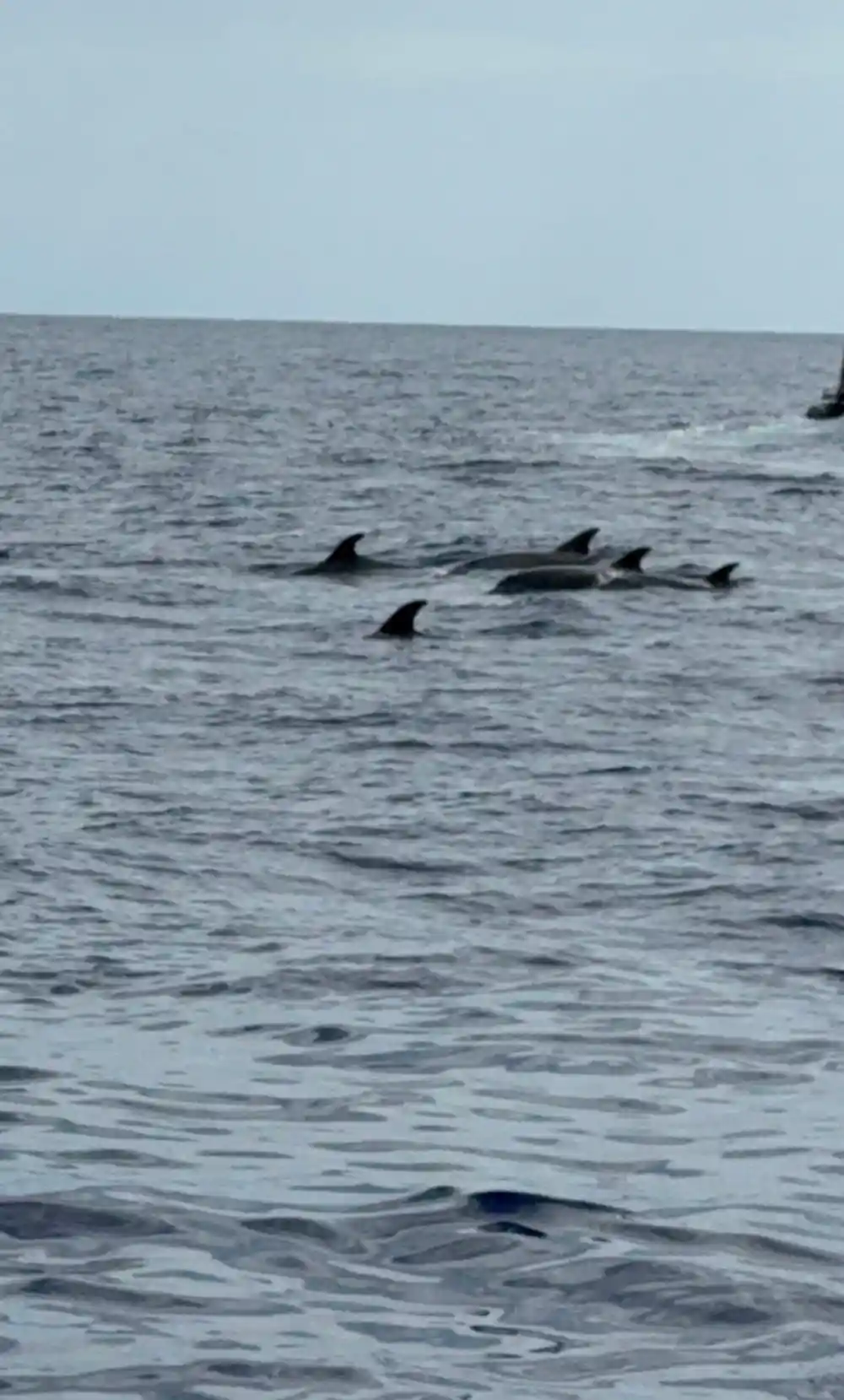
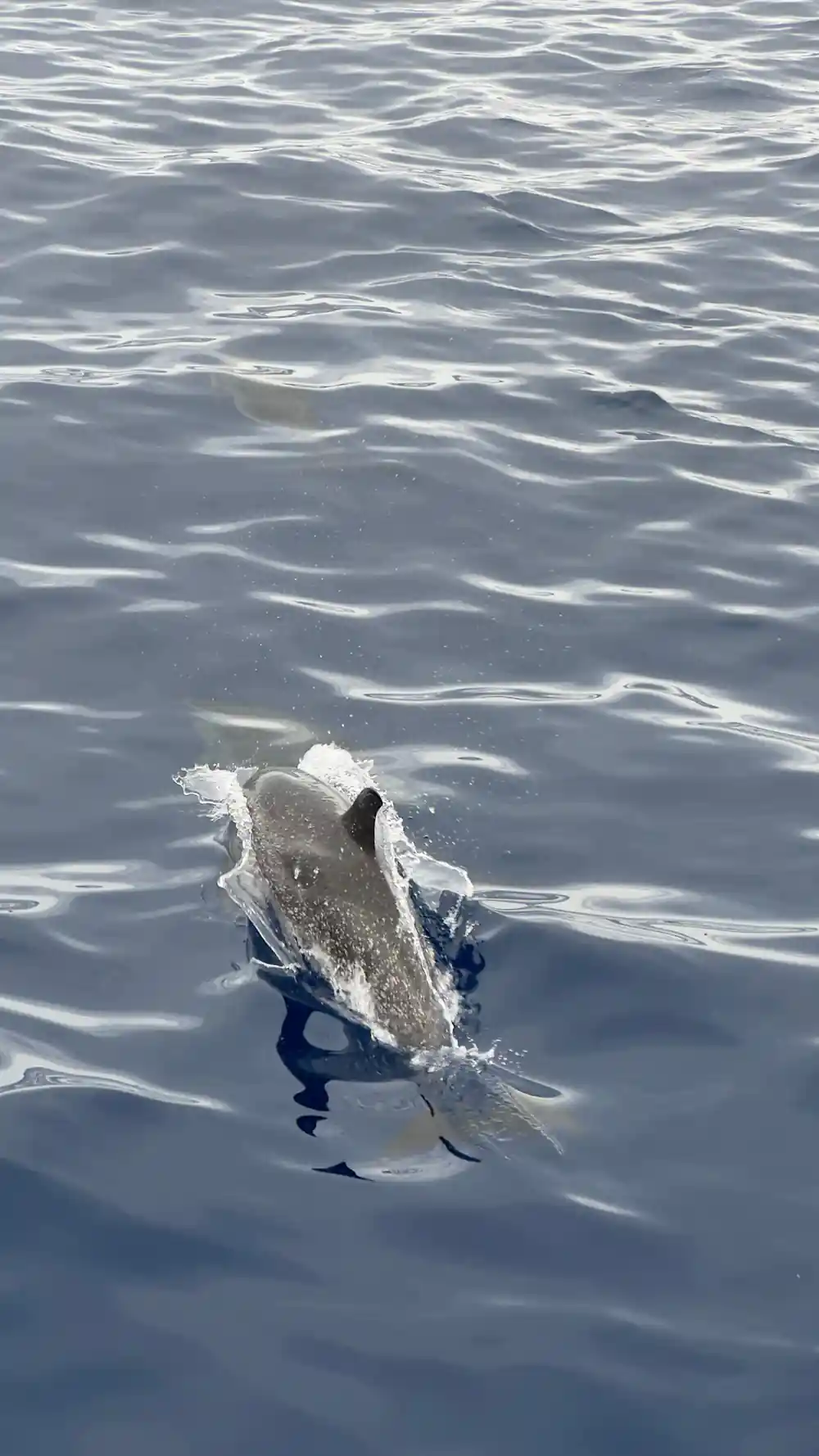
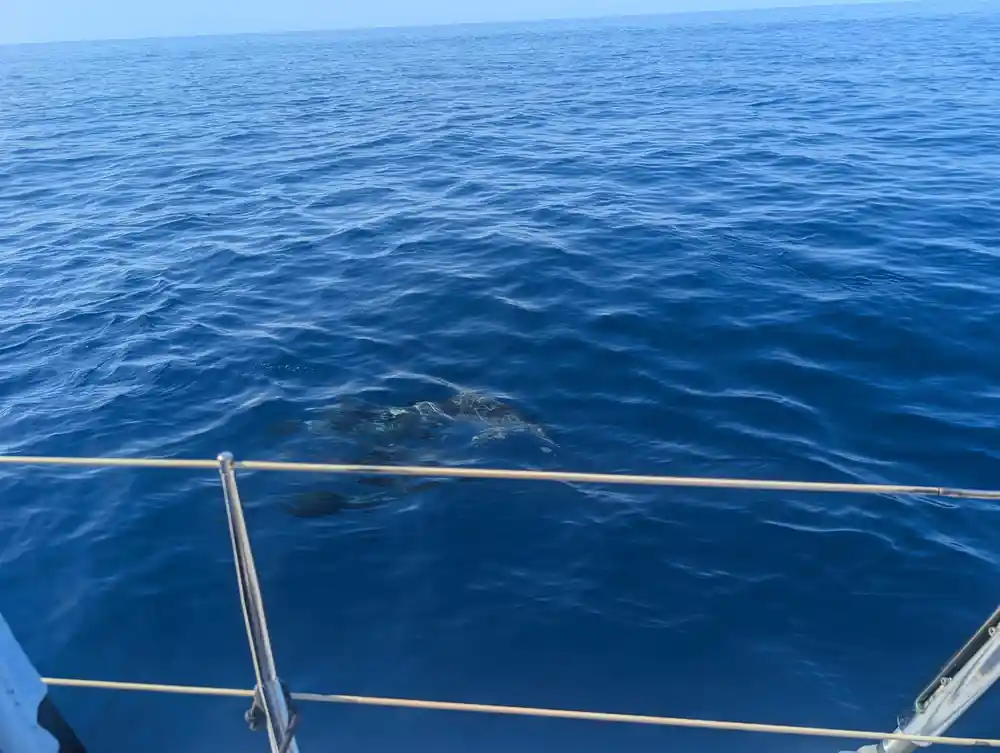
Among the year-round residents, bottlenose dolphins and short-finned pilot whales are the most reliable company.[2] Seasonally, Atlantic spotted dolphins and the occasional blue whale pass through, while orcas and humpback whales are rarely seen.[2] Sperm whales are about all year with a fall peak, and Bryde's whales are most frequent from June until November.[3][4] The mix changes with the season, which is part of the appeal of returning for another trip.
from US$40
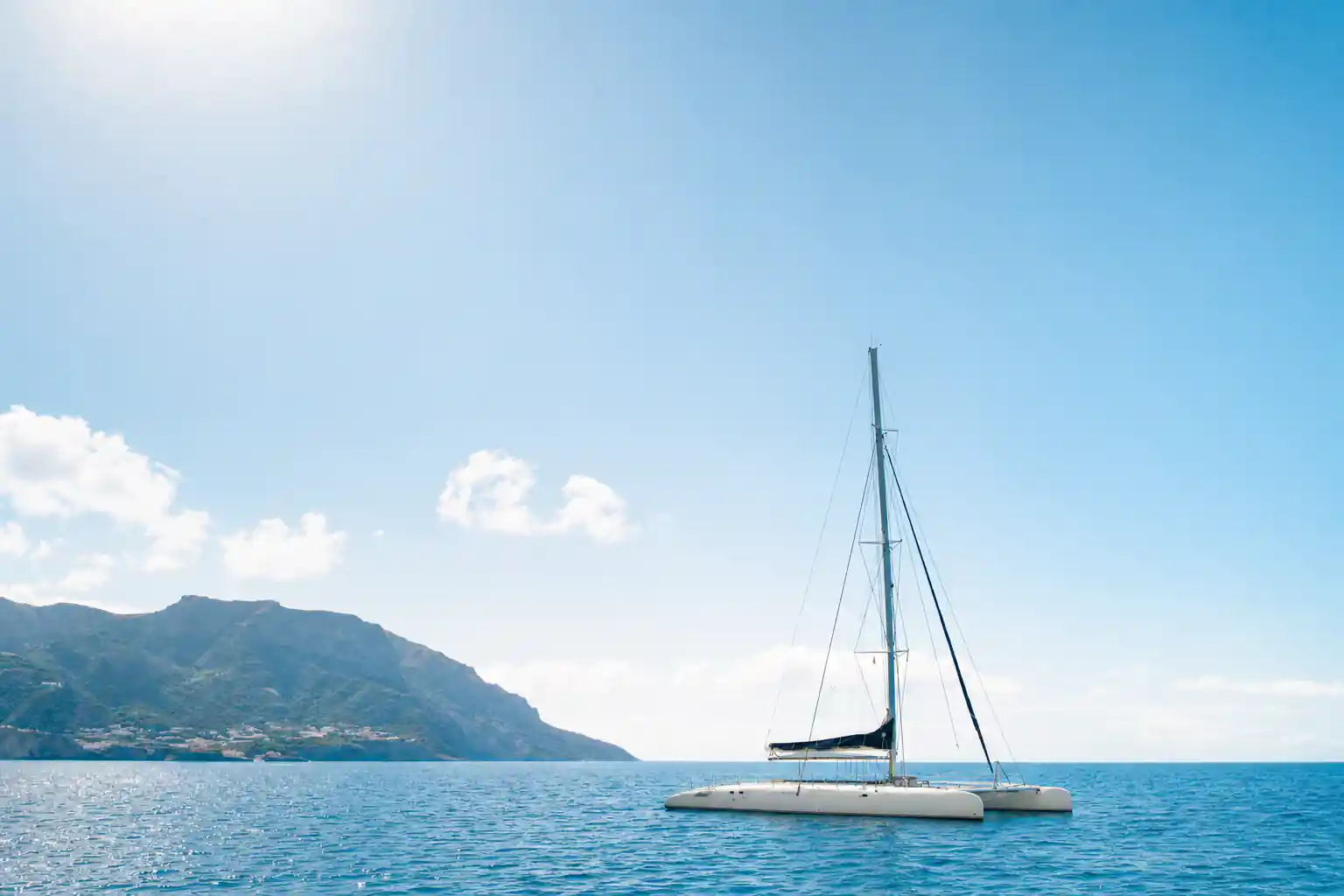
The ocean deepens fast off Madeira. This 3-hour catamaran cruise from Funchal costs from US$40 and includes a live English and Portuguese guide.[1][6]
A stepping stone in an empty ocean
Madeira is not an isolated rock in an empty stretch; it is part of a wider marine landscape. Three small islands southeast of Madeira rise out of the Atlantic: the Desertas.[11] Those islands are a landmark of the region, and the waters around them are unmistakably oceanic.
For a visitor, the practical point is that you can leave from a lively city harbour and still feel the scale of the open sea. The ocean depth just offshore gives you that feeling quickly.[1] A 3-hour catamaran cruise is long enough to scan the water, watch for blows, and enjoy the island's coastline from a new angle, without turning the day into a full expedition.[6]
If you want to add more sea time, the Desertas are a known target, but they are a separate destination southeast of Madeira.[11] A shorter cruise from Funchal is the easier way to spend a holiday morning, especially if you also want time for Madeira's gardens, viewpoints and cable cars.
Compared with mainland whale watching
Mainland trips often spend a large part of their schedule travelling to deep water. Madeira's steep drop-off removes that step.[1] A 3-hour cruise from Funchal is direct: you board, the crew heads out, and the search begins close to the island.[6] The tour from this site costs from US$40 and includes a live guide in English and Portuguese.[6]
What makes this more than a convenience is the care built into the rules. Vessels in Madeira must remain no closer than 50 metres to whales and dolphins, and no closer than 25 metres to sea turtles.[5] That space matters both for safety and for allowing the animals to behave normally. Good Madeira whale watching is not about chasing every splash; it is about being in the right place and letting the whales do the rest.
One tip: choose a morning or early afternoon departure when the sea is often calmer. The booked cruise lets you check starting times when you book, so you can decide what suits your day.[6] Whales do not run on a timetable, but a calm sea makes the searching more comfortable.
What makes a good day
A good day starts with the booking. The Funchal dolphin and whale watching catamaran cruise is the tour to choose from this site, and it lasts 3 hours, with starting times you check at the time of booking.[6] It costs from US$40, is guided live in English and Portuguese, and has a 4.61 rating from 6,772 reviews on GetYourGuide.[6] You may book now and pay later, with free cancellation available up to 24 hours prior.[6]
On the water, dress for conditions. The sea temperature off Funchal stays between 18°C and 24°C, but the breeze while moving is cooler, so bring a layer and sunscreen.[10] Watch for blows, splashes and birds working the surface, and let the crew guide your attention. With the 50-metre distance rule in place, you get a clear view without crowding the animals.[5] Whale watching Funchal Madeira usually means a cruise from the capital, and this one gives you the full experience without a long transfer.
If the sea looks rough, your flexibility protects you. Free cancellation up to 24 hours in advance is available on the booked cruise, so you can keep your plans until the forecast is clearer.[6] That freedom is part of what makes a whale watching trip to Madeira feel low-stress.
Whale watching from-prices
The cited GetYourGuide listings are[6],[12],[7],[13] and[14].
Compare tour from-prices
The cited GetYourGuide listings are[6],[12],[7] and[13].
When to go whale watching
Plan your Madeira whale watch
Choose the cruise
Pick the catamaran cruise from this site. It is the 3-hour trip with a live English and Portuguese guide, from US$40.[6]
Pick a date
Check availability for starting times. You can reserve now and pay later to keep the day flexible.[6]
Prepare for the sea
The water off Funchal stays between 18°C and 24°C, but wind on deck is cooler, so bring a layer.[10]
Arrive ready to look
Whales surface without notice, so keep watching for blows, splashes and birds.
Let the rules work
Vessels must remain at least 50 metres away from whales and dolphins, and at least 25 metres away from sea turtles.[5]
Stay flexible
Cancel at least 24 hours before departure for a full refund.[6]
Book a Madeira whale watching cruise from Funchal and see the deep-water world
from US$41Reserve now & pay later