If you read nothing else
- This booked cruise lasts 3 hours and includes live guiding in English and Portuguese, so children, parents, and grandparents can all follow along.[1]
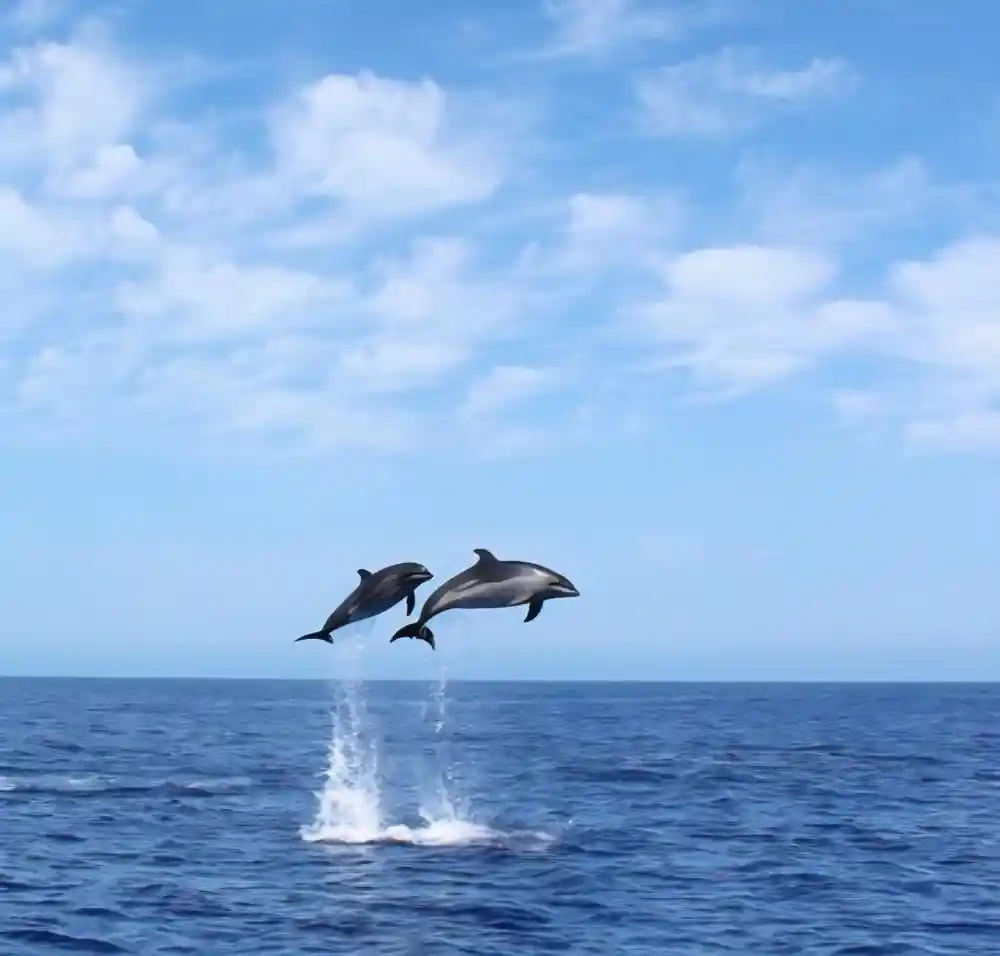
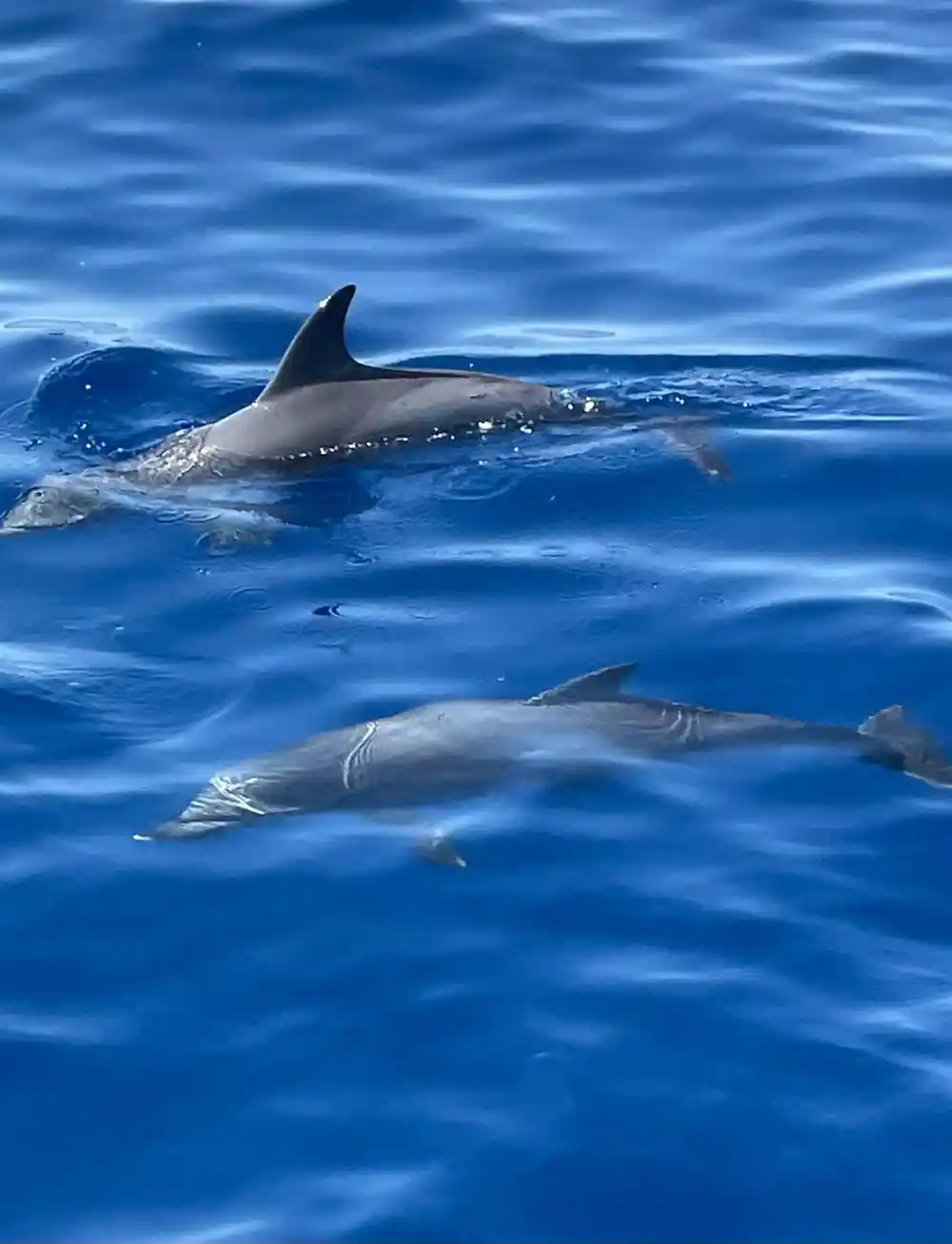
- Short-finned pilot whales and bottlenose dolphins can be seen all year round; scientists have confirmed 27 cetacean species in Madeira's waters.[2]
- Starting from US$40, free cancellation applies up to 24 hours before, and you can reserve now and pay later.[1]
- A catamaran's wide hull is steadier than a speedboat, and the 3-hour trip leaves time to find your sea legs.[1]
- Swimmers and non-swimmers share the same experience, because the activity is watching from the boat.
- Top choice Catamaran Cruise from US$40 Duration3 hours[1]Live guideEnglish, Portuguese[1]Rating4.61 from 6,772 reviews[1]CancellationFree cancellation up to 24 hours in advance[1]BookingReserve now, pay later[1] Check availability
- Luxury Catamaran from US$46 Duration3 hours[3]Live guidePortuguese, English[3]Rating4.25 from 3,470 reviews[3]CancellationFree cancellation up to 24 hours in advance[3]BookingReserve now, pay later[3] See this tour
- Sunset Sailing from US$63 Duration3 hours[4]Live guideEnglish, Portuguese[4]Rating4.77 from 2,450 reviews[4]CancellationFree cancellation up to 24 hours in advance[4]BookingReserve now, pay later[4] See this tour
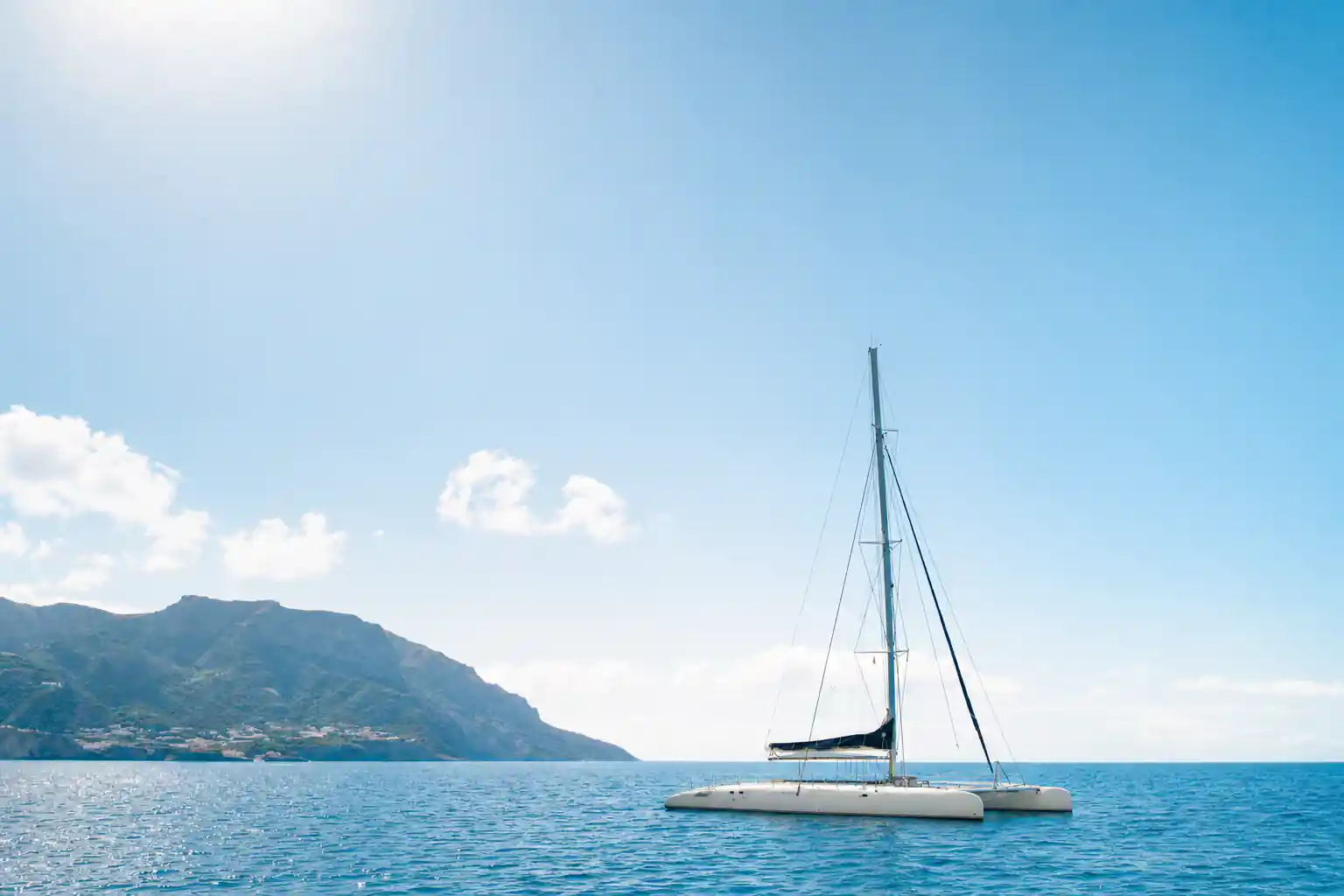
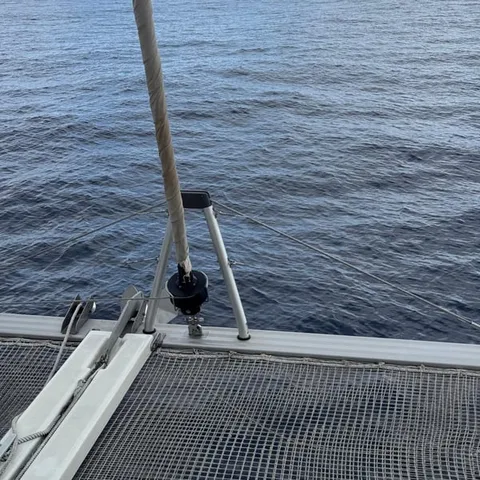
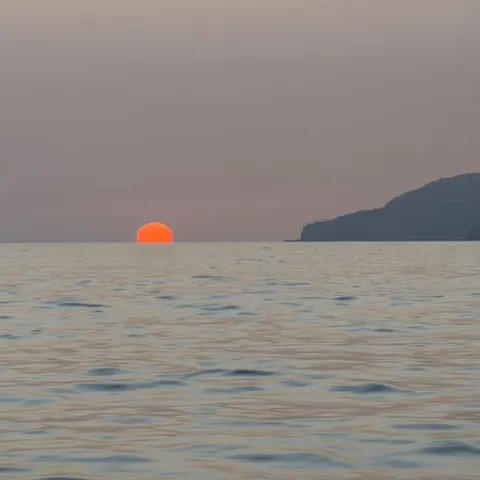
Bryde’s whales are the most commonly observed baleen whale species around the island of Madeira.
Who should book this cruise?
Read before booking
The practical exclusions
For the Funchal Dolphin and Whale Watching Catamaran Cruise, the details are straightforward: prices from US$40, 3 hours, a live guide speaking English and Portuguese, no-cost cancellation up to 24 hours ahead, and reserve now, pay later.[1] What the small print cannot show you is what a moving deck feels like. You will step aboard, find a seat, and move around while the boat gently rolls. For most people this is part of the fun, but anyone who is very unsteady on their feet should think carefully before booking.
The two exclusions that matter are physical rather than administrative. This is a 3-hour catamaran cruise, so there is no jumping off and no chance to get back to land quickly.[1] If you cannot manage the boarding steps or sit comfortably for that long, this may not be the right choice. Talk to the operator before booking; they know the boat and can tell you honestly whether it suits your needs. If you are travelling with a group, agree on a meeting spot after the trip, because the dock can be busy when several boats return at the same time. Most operators will also tell you the departure point clearly when you book, so there is no last-minute confusion.
Anyone who has recently had surgery, particularly on a hip or knee, should ask the operator for advice before booking. The crew can usually offer a steady arm, but they cannot lift you. The same applies to anyone who uses a walking frame or who cannot stand unaided for a few minutes. A short conversation before you book will remove most of the uncertainty. If you are unsure, choose a day with a good weather forecast and an early departure. The sea is often at its calmest in the morning, which makes the boarding steps easier and the ride smoother.
If your mobility is limited but not impaired
Mobility does not have to be perfect. The pace on board is calm, the crew help people find seats, and you can stay seated for the whole trip if you like. The important question is the few steps between the dock and the catamaran, and whether you can move across the deck when the boat is swaying. If you are comfortable with that, the cruise itself is usually no harder than a gentle train ride. You can watch the wildlife from a rail-side seat and let the crew point out where to look. Ask for a seat with a backrest and a clear view; the crew will usually help you choose.
The cruise lasts 3 hours, so plan for limited access to toilets and no chance to stretch your legs on land.[1] If you use a walking stick, keep it close and ask the crew to take it when you step aboard. For wheelchair users, the listing for this tour does not state wheelchair access, so contact the operator before booking to check the boarding ramp and onboard toilet. Even if the boat is accessible, the pontoon at low tide may add a step or two. The crew are used to helping older passengers, so do not feel embarrassed to ask.
What matters most is honesty with yourself and the operator. If you can stand for a few minutes and transfer from a chair or walking frame to a boat seat, you will probably be fine. If you cannot, consider a land-based tour in Funchal instead, such as a hop-on hop-off bus or a tuk tuk tour. There are gentle ways to see the coast from land, and you can always watch the whales from a cliff viewpoint. Your holiday should feel easy, not like a test of balance.
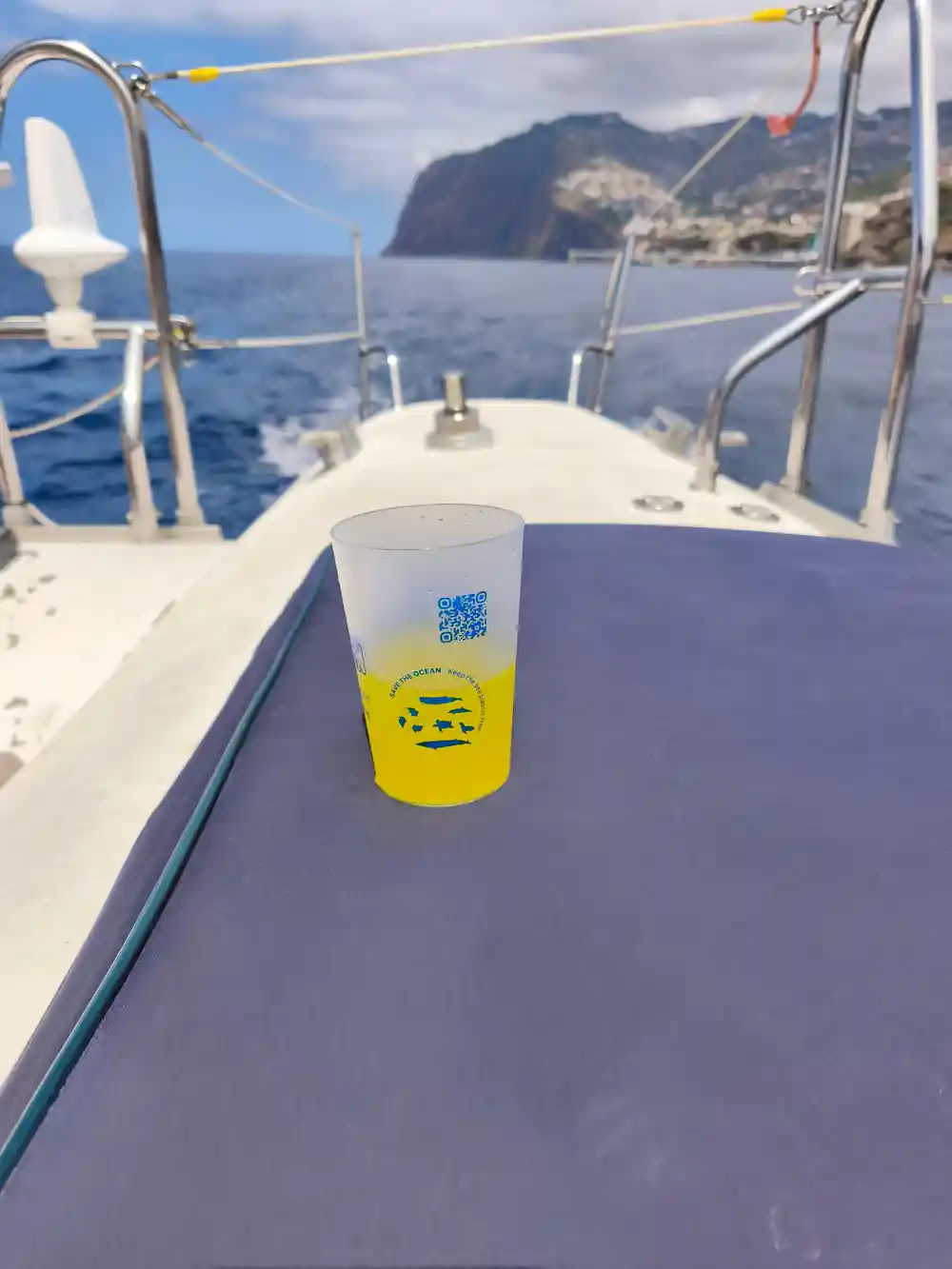
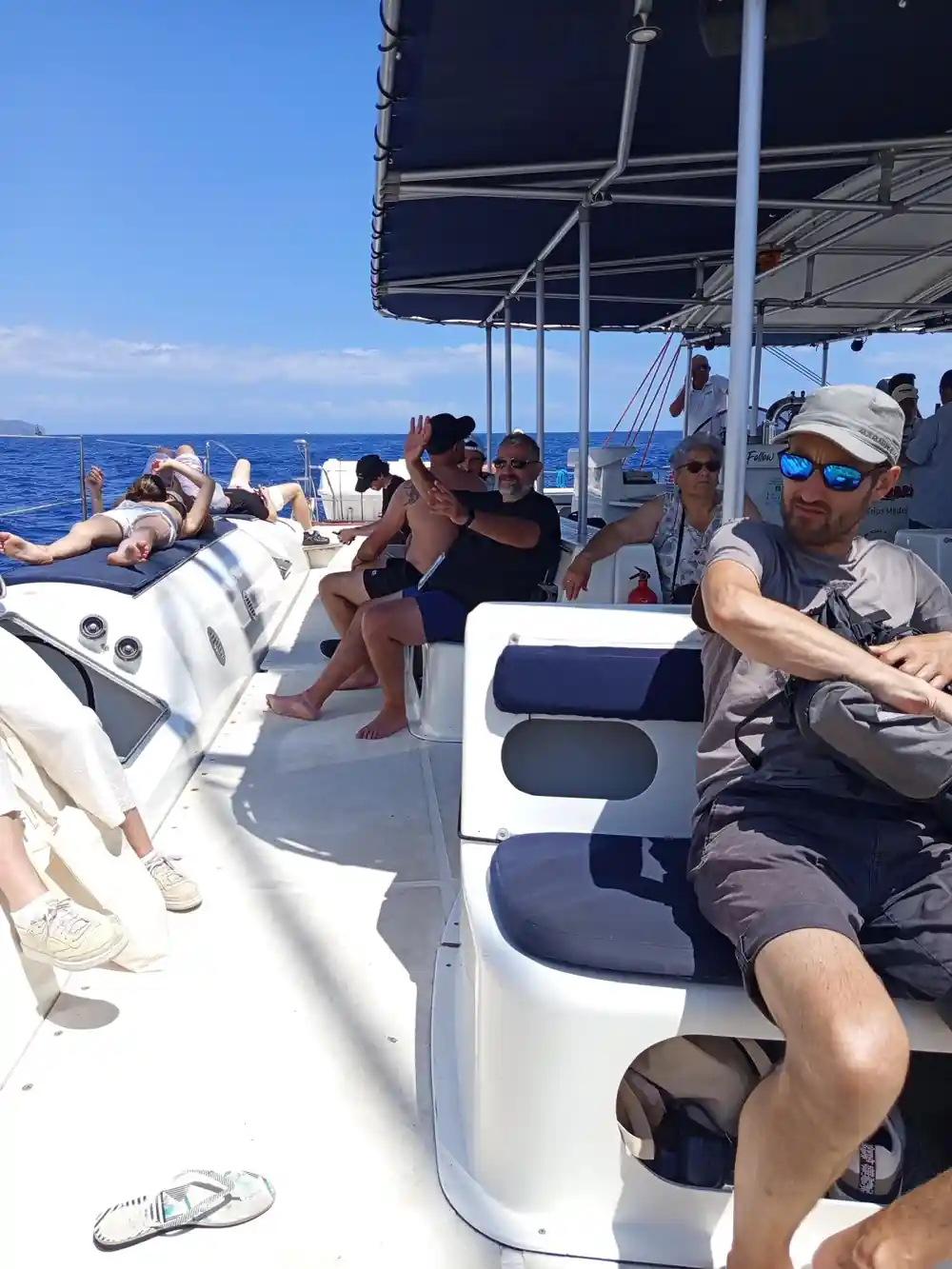
Passengers scan the bright Atlantic for the first dorsal fin off Madeira.
Children
Children are very welcome on this cruise in practice, and the wildlife gives them a reason to keep watching. Short-finned pilot whales and bottlenose dolphins can be seen all year round; scientists have confirmed 27 cetacean species in Madeira's waters.[2] A first sighting of a dorsal fin is a moment most families remember for years. Decide in advance how long your child can sit still, and keep the mood relaxed rather than promised.
The trip lasts 3 hours, about the length of a school morning, so bring small distractions: snacks, a hat, sunscreen and a warm layer.[1] The live guide speaks English and Portuguese, so children can follow the story of each sighting.[1] Keep younger children in the central seating area and hold hands near the rail. A small pair of binoculars can turn waiting time into a game, and a quiet snack helps with low blood sugar.
A catamaran is a good first boat for children because the wide hull is steadier than a speedboat. If your child is prone to motion sickness, talk to your pharmacist in advance. In winter the water off Funchal is 18°C; in summer it reaches 24°C, yet wind on deck can make things feel far colder.[5] Dress children in layers, carry a change of clothes for very young ones, and do not expect them to watch the water for three hours without breaks.[1]
Older travellers
Older travellers with reasonable balance usually enjoy this trip more than they expect. There is no pressure to swim or to be physically active, and you can watch everything from your seat. The live guide speaks English and Portuguese, so you will not miss the context of what you are seeing.[1] The cruise lasts 3 hours, a manageable length for a morning or afternoon outing.[1] If you have not been on a boat for years, this gentle outing is a good reintroduction.
The water temperature off Funchal stays between 18°C in winter and 24°C in summer, but the breeze while moving is the bigger factor.[5] Bring a fleece or windproof jacket even on a hot day, and choose a seat in the shade if you are sensitive to sun. If you take medication, keep it in a small bag with your snacks. A hat with a strap is more practical than a loose cap, because the wind on the water can be persistent. A neck wallet is handy for sunglasses and seasickness tablets.
If you are older and otherwise healthy, you will probably be fine. The main question is boarding and disembarking. Tell the operator when you book so they can have a crew member ready to help you. Arrive early and take your time; a rushed transfer is the only part likely to cause a wobble. Once you are seated, there is nothing more demanding on the itinerary than lifting your camera.
from US$40
This 3-hour Funchal catamaran cruise includes a live English-Portuguese guide, free cancellation up to 24 hours before, and reserve now, pay later.[1]
Seasickness
Seasickness is the biggest worry for many people, and prevention is the cure. A catamaran's wide hull is more stable than a small boat, and the central seats move the least. The cruise lasts 3 hours, so if you are prone to queasiness, take medicine before departure rather than waiting to see how you feel.[1] Ask your pharmacist about suitable options for children if the whole family is affected.
Once on board, watch the horizon, stay on deck, and keep your eyes on the dolphins; focusing on wildlife helps many people forget the motion. Off Funchal, water temperatures range between 18°C in winter and 24°C in summer, though a swell may appear at any time of year.[5] If you start to feel unwell, tell a crew member. They deal with seasick passengers often and will show you the best spot. Fresh air and a fixed point on the horizon are the oldest remedies. A wristband or patch from a pharmacist may work better for some people than tablets.
Do not let the fear of seasickness stop you. On a calm day, this trip is surprisingly smooth. If you are very anxious, choose a morning departure, sit in the middle, and eat a light meal before boarding. You can also ask the crew where you should sit for the steadiest ride. Having a plan in advance makes the whole experience more relaxed, and the memory is usually of dolphins, not discomfort.
Swimmers and non-swimmers
Swimming ability is irrelevant on this cruise. The focus is watching animals from the boat, so confident swimmers and nervous non-swimmers share exactly the same experience. You do not need to get into the water, and you do not need to wear a wetsuit or fins. The most important skill is keeping a pair of eyes on the sea and a hand on your hat. Children who cannot swim are no more at risk on the boat than adults, as long as they follow the crew's safety instructions.
If you want to combine wildlife with swimming, Madeira has separate kayak and snorkel tours, but this page is about the catamaran cruise. For families who simply want to see dolphins and whales without anyone getting wet, this is the right choice. The sea temperature is 18°C in winter and 24°C in summer, which is pleasant but not tropical.[5] You can always enjoy the water later from a beach or a pool.
Non-swimmers should still think about safety. Ask the crew where life jackets are kept and put one on if you feel more comfortable. Make sure children know the basic rules of the boat: stay seated when moving, hold the rail when walking, and always keep an arm's length from the edge. Knowing the safety routine is part of feeling confident, especially for anyone who cannot swim. If you do not want a life jacket on a warm day, keep it close at hand rather than tucked inside a bag.
Language, food and the small print
The live guide speaks English and Portuguese, which covers most visitors to Funchal.[1] If you speak something else, ask the crew for a written species list or use a translation app. The important names, such as bottlenose dolphins and short-finned pilot whales, are the same in most languages. On board, the guide gives the commentary in both languages, so there is usually a pause between the two versions.
The financial terms are easy to understand. Prices for the cruise start at US$40; reserve now and pay later, and cancellations up to 24 hours before departure receive a full refund.[1] That gives families real flexibility if a child is unwell or the weather forecast changes. You do not need to decide everything today; secure your place and keep the option open.
Whale-watching vessels in Madeira remain at least 50 meters away from whales and dolphins, and keep 25 meters away from sea turtles.[6] This means you watch at a respectful distance, and the crew will not chase animals. The experience is regulated, which is reassuring for families. For practical purposes, it also means your camera should have a good zoom lens rather than a wide-angle setting. It also keeps encounters calm and quiet, which is better for photography and for the animals.
From-prices for selected Funchal boat trips
Budget your family trip
From-prices are US dollar from-prices from GetYourGuide listings:[1],[3],[7],[4].
When to go
Plan your trip
Check the calendar
Pick a morning slot for calmer seas. The cruise lasts 3 hours, so leave the afternoon free.[1]
Dress for the sea
Bring layers, a windproof jacket, sunscreen and a hat. The ocean temperature falls between 18°C in winter and 24°C in summer.[5]
Book with flexibility
Book now and pay later, and remember that cancellation up to 24 hours prior gives a full refund.[1]
Arrive in good time
Give yourself time to find the meeting point. The tour has a live guide in English and Portuguese.[1]
Enjoy the wildlife
Keep your eyes on the water. In Madeira's waters, 27 cetacean species have been confirmed by researchers.[2]
See the Funchal dolphin and whale watching cruise
from US$41Reserve now & pay later