If you read nothing else
- Short-finned pilot whales and bottlenose dolphins are present off Madeira all year, so each season brings an opportunity for a sighting.[1]
- Off Funchal, the sea temperature goes from roughly 18°C in winter up to 24°C in summer, and being on deck is most comfortable in the warmest months.[2]
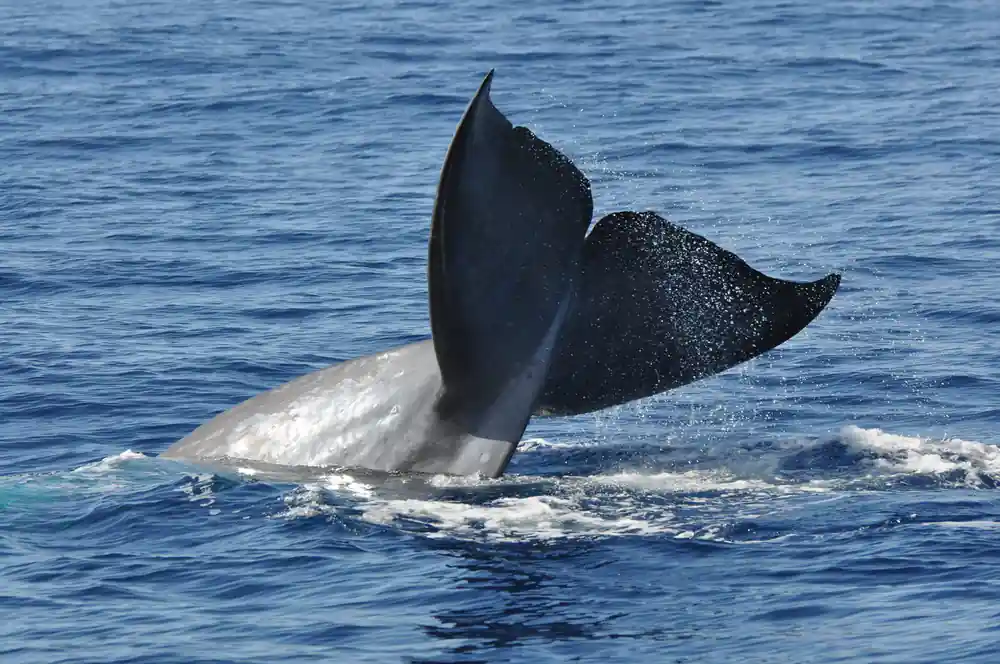
- Occasional blue whales and Atlantic spotted dolphins are seasonal, whereas Bryde's whales are most often seen from June until November.[1][3]
- Within just five kilometres of Madeira's coast, the sea reaches more than 3,000 metres in depth, and the steep terrain lets deep-water whales approach the shore.[4]
- The Funchal dolphin and whale watching catamaran cruise lasts 3 hours, costs from US$40 and is guided in English and Portuguese.[5]
- Top choice Funchal Catamaran Cruise from US$40 Duration3 hours[5]Rating4.61 from 6,772 reviews[5]GuideEnglish and Portuguese[5]CancellationFree up to 24 hours before[5] Check availability
- Funchal Bay Luxury Catamaran from US$46 Duration3 hours[6]Rating4.25 from 3,470 reviews[6]GuidePortuguese and English[6]CancellationFree up to 24 hours before[6] See this tour
- Funchal Sunset Sailing from US$63 Duration3 hours[7]Rating4.77 from 2,450 reviews[7]GuideEnglish and Portuguese[7]CancellationFree up to 24 hours before[7] See this tour
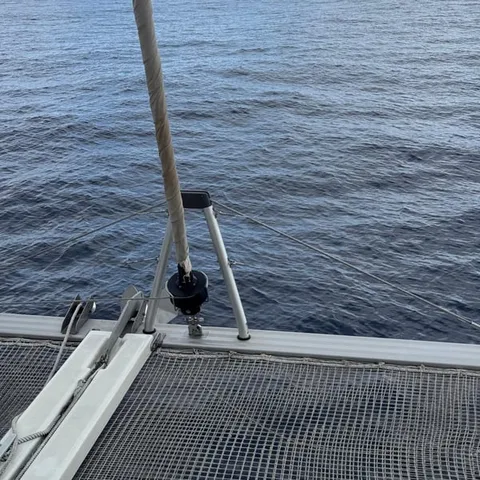
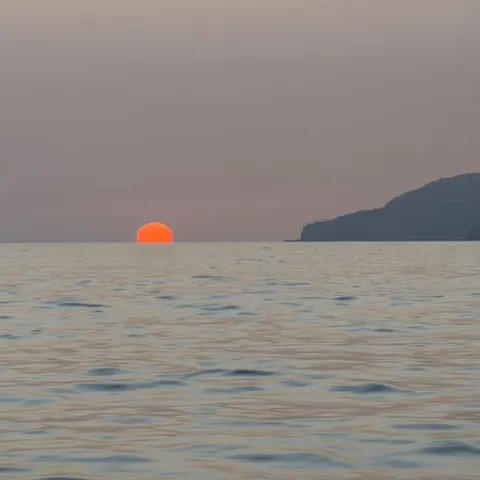
Sea temperatures remain pleasant, ranging from around 18°C in winter to 24°C in summer, allowing activities such as swimming and diving almost year-round.
A year-round trip with a warm-weather edge
Read before booking
The reassuring part first
Planning a trip around wildlife can feel uncertain, so start with the reassuring part. In Madeira's waters, researchers have confirmed 27 cetacean species, about a third of the known species on the planet.[1] Short-finned pilot whales and bottlenose dolphins are residents around Madeira all year, and that resident presence forms the backbone of the Funchal whale watching season.[1] It means you are not chasing a single fleeting date; you are entering a stretch of ocean that supports life in every season.
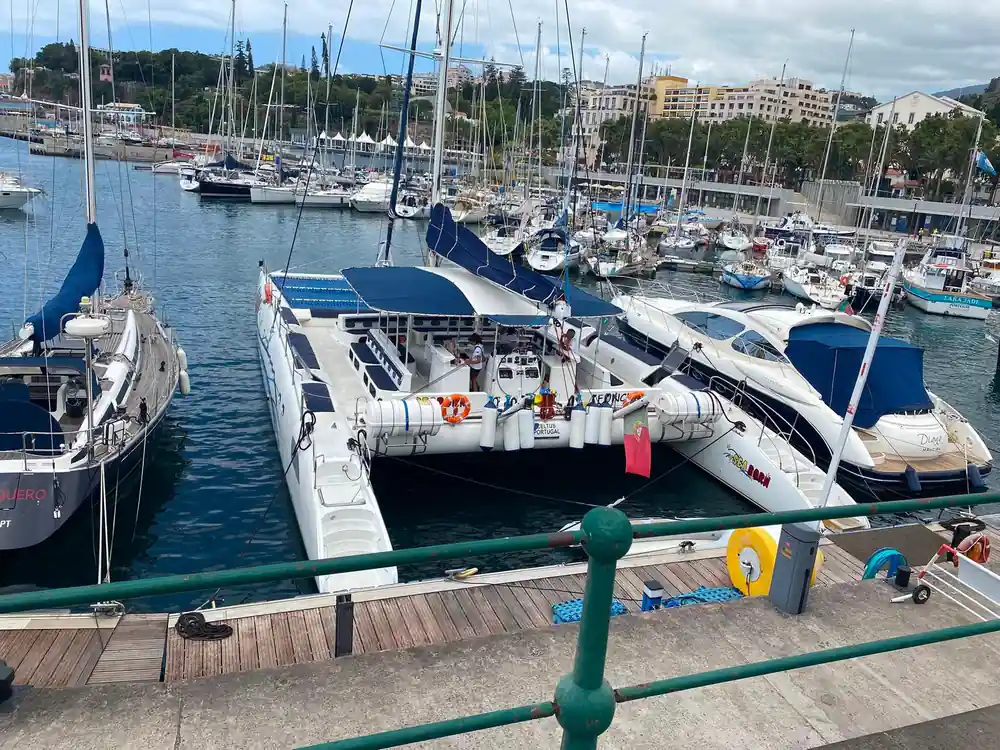
The practical way into this ocean world is the Funchal dolphin and whale watching catamaran cruise. It lasts 3 hours, is guided in English and Portuguese, and costs from US$40.[5] That makes it easy to fit into a day that also has room for the old town, a levada walk or an evening out, and the boat size gives you space to move around while keeping the experience social.
With a 4.61 rating from 6,772 reviews, the cruise has a strong track record with travellers.[5] You are not booking on a hunch; you are choosing a trip that thousands have taken before you, and the crew's daily routine is built around finding animals responsibly. If the sea kicks up, they know the local conditions and the best sheltered areas.
The residents, who never leave
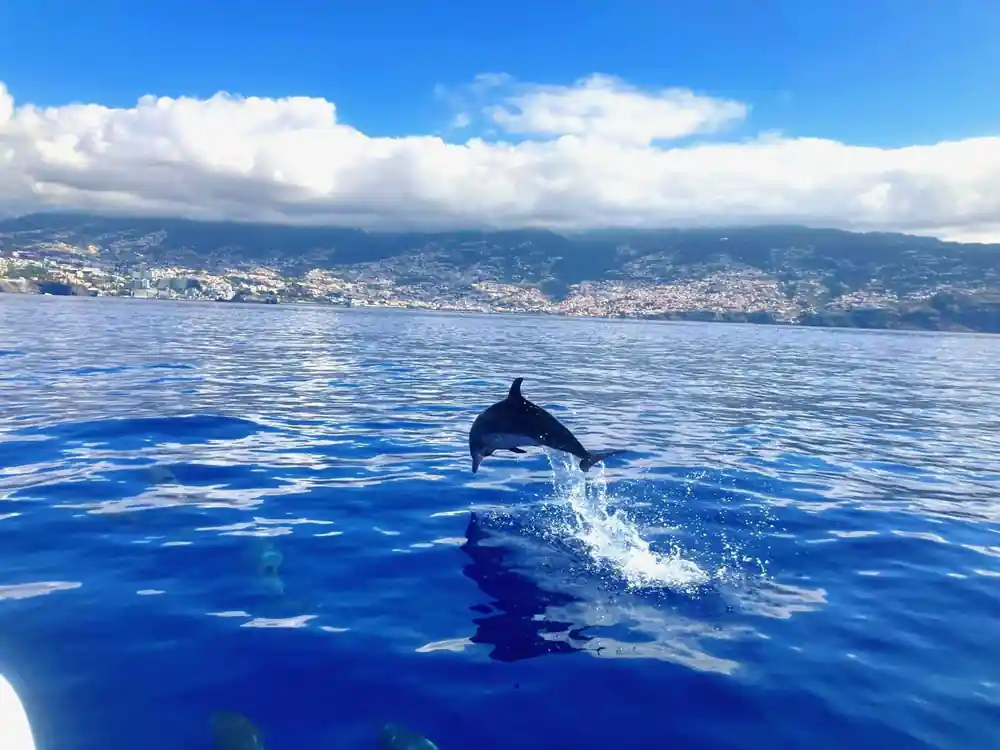
Bottlenose dolphins and short-finned pilot whales are the reliable stars of Madeira's whale watching. They appear all year round, while occasional blue whales and Atlantic spotted dolphins move in and out with the seasons, and orcas and humpback whales are seldom seen.[1] For first-time visitors, that mix is ideal: there is always a familiar face in the water, and always a chance of something rarer.
What makes these sightings possible is the ocean floor. Only five kilometres from shore, the sea floor reaches more than 3,000 metres, and the steep underwater relief lets deep-water whales swim near the coast.[4] It is one of the reasons Madeira is so special for whale watchers: the deep water begins almost at the shoreline, so the boat does not need to travel far.
That geography is what a good skipper works with. The Funchal catamaran cruise takes 3 hours and is led by a guide speaking English and Portuguese.[5] For visitors, that means a manageable morning or afternoon on the water, with time to scan the horizon without feeling rushed, and enough guidance to make sense of what you see.
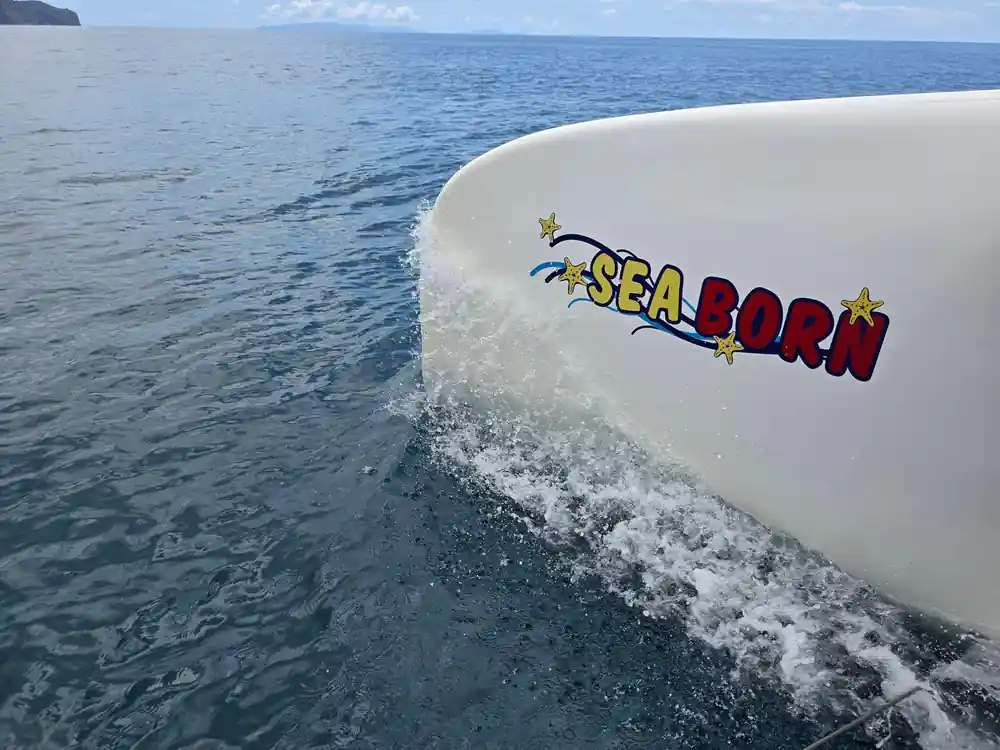
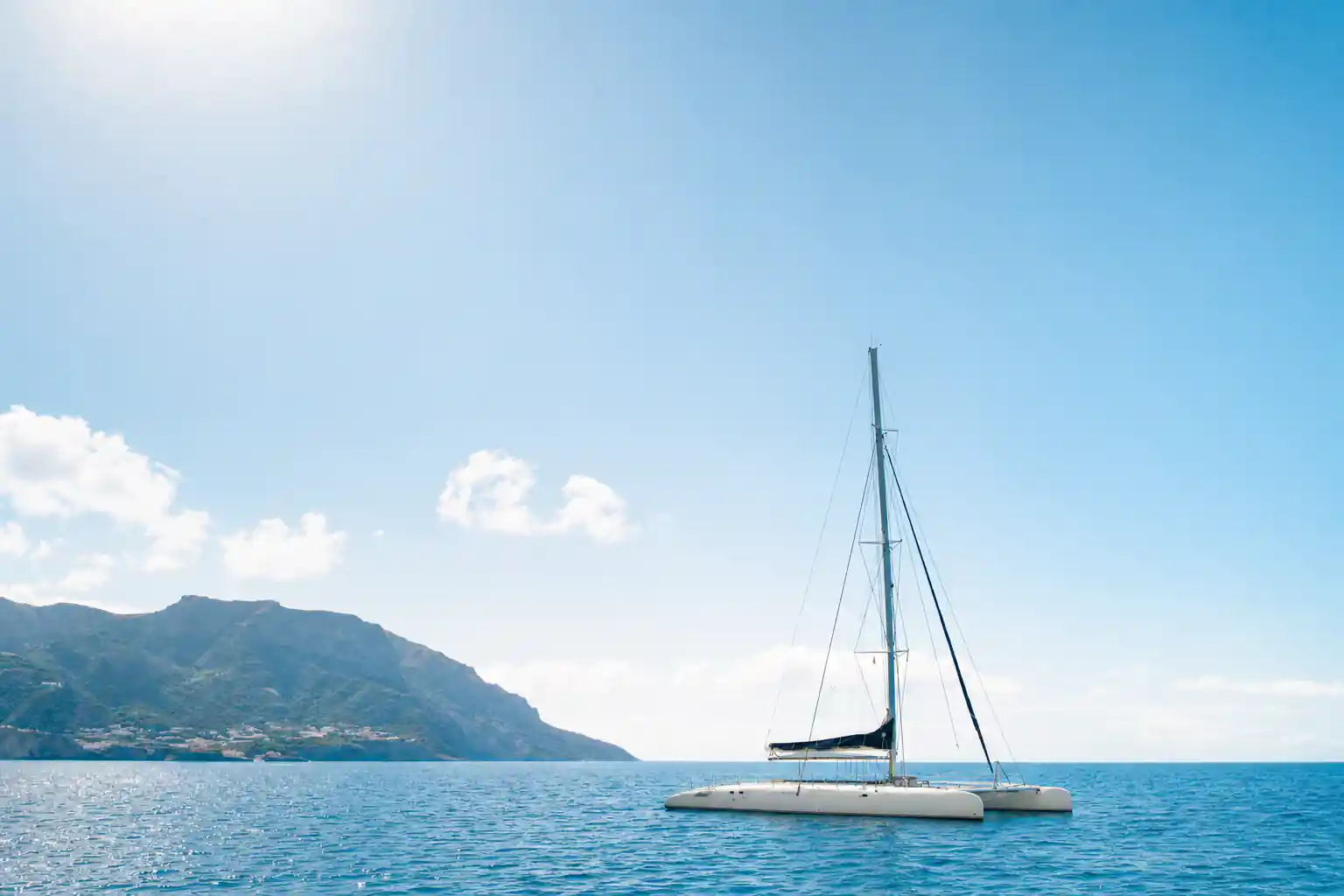
A calm Atlantic horizon and a crew scanning for fins are part of every Funchal whale watch.
Winter months
Winter visitors still get plenty from a Funchal whale watching trip. Off Funchal, the sea temperature goes from roughly 18°C in winter up to 24°C in summer.[2] A warm jacket, sunglasses and a seasickness tablet are the classic kit for a cooler Atlantic day, and layered clothing works better than one heavy coat because the sun can still be strong between showers.
Sperm whales can be seen with some frequency all year, and they are more common during the fall months.[9] Outside that window, resident bottlenose dolphins and short-finned pilot whales remain the mainstay.[1] In winter the pace on board can feel calmer, which gives you more time to talk with the crew and ask questions about the animals.
The Funchal dolphin and whale watching catamaran cruise is bookable with free cancellation up to 24 hours in advance, which is useful if the Atlantic looks unsettled.[5] You can also reserve now and pay later, and the plan stays flexible until you are sure.[5] That kind of flexibility matters when your holiday dates are fixed but the sea is not.
Spring months
Spring is a transition time. Occasional blue whales and Atlantic spotted dolphins are seasonal arrivals in Madeira, while the water temperature climbs toward its summer peak.[1][2] Whale watching in Funchal in this season rewards patience; species are in flux, and the ocean changes mood from week to week.
By late spring and early summer, the baleen whale calendar comes alive. Bryde's whales are the most commonly observed baleen whale species around Madeira, and they are typically seen most from June until November.[3] That makes late spring an exciting time to watch for their rolling backs and open-mouth feeding.
For a spring trip, the 3-hour Funchal catamaran cruise with a live guide in English and Portuguese is a simple way to get out on the water.[5] Bring a light layer for the morning and sunscreen for the afternoon, and you will be ready for whatever the day offers, from calm blue sea to a fresh Atlantic breeze.
from US$40
3-hour Funchal dolphin and whale watching catamaran cruise with live guiding in English and Portuguese.[5]
Summer and early autumn
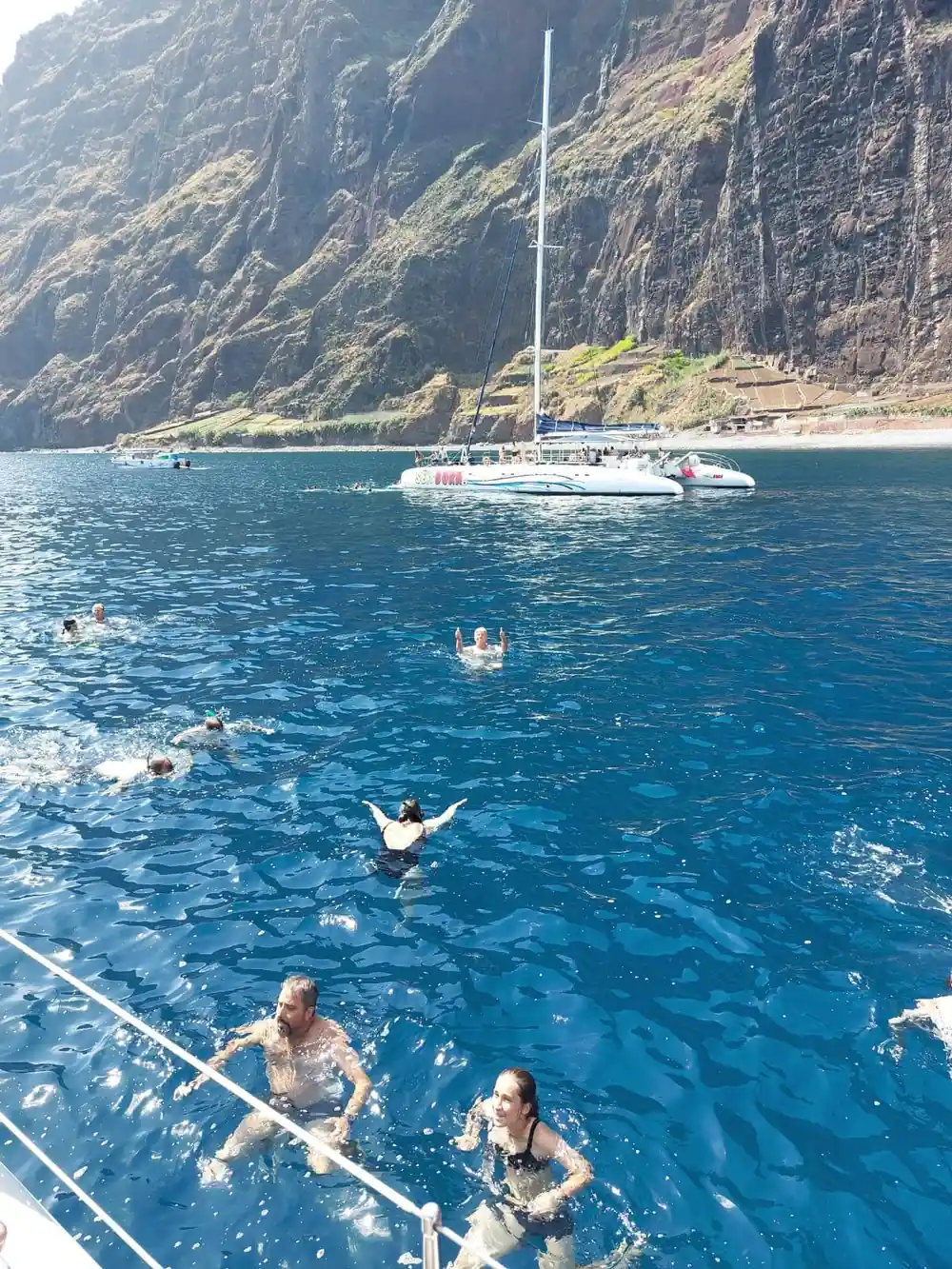
Summer is when the sea feels most inviting, with temperatures reaching 24°C off Funchal.[2] That warmth makes it easy to stay on deck for the full 3-hour Funchal catamaran cruise and keep watching the horizon.[5] You can settle in and let the search become part of the pleasure.
The animal calendar is generous too. Bryde's whales are typically seen most from June until November, while bottlenose dolphins and short-finned pilot whales continue all year.[1][3] Keep your eyes on the water between the big sightings; dolphins often travel in lively groups and give away their position with splashes.
When people ask about the whale watching Funchal best time, this is often the season they picture: warm water and a reliable cast of cetaceans.[1][2] The cruise is a 3-hour window that works well as the centrepiece of a Funchal day.[5] A late-afternoon departure can finish with golden light over the bay, and the exact starting times are shown when you check availability.
Does the weather change what you see
Weather can affect comfort, but it does not change the rulebook. Boats are required to keep at least 50 meters away from whales and dolphins, and at least 25 meters away from sea turtles.[8] It is a precise, well-regulated approach to watching wild animals, and it is part of what keeps Madeira's whale watching sustainable.
Skippers also get help from shore. A spotter on land guides whale watching boats, relaying details like mileage and landmarks to help them find the animals.[10] A good spotter can mean the difference between a quiet cruise and one filled with fins and blows, so the crew are not working blind.
The 3-hour Funchal catamaran cruise includes a live guide in English and Portuguese, who can point out what to look for and answer questions as you go.[5] Even on a grey day, the commentary and the sea air make the trip worthwhile.
So which month
If you want a simple answer, choose the month that matches your comfort. Summer water reaches 24°C, while winter water sits around 18°C.[2] There is no closed Funchal whale watching season, only shifts in the likely species and the kind of clothing you will need.
For the animal list, resident bottlenose dolphins and short-finned pilot whales are the only all-year guarantee; seasonal and rarer visitors add variety but never replace them.[1] That is the honest answer to anyone looking for a perfect month: the residents make every month workable.
The practical move is to book the Funchal dolphin and whale watching catamaran cruise, which lasts 3 hours and costs from US$40, and let the crew do the rest.[5] Give yourself a few days in Madeira and you can pair the cruise with a levada hike or a trip to another corner of the island.
From prices of popular Funchal boat tours
From-prices in US dollars for five Funchal boat tours:[5],[11],[12],[13],[7].
Compare Funchal boat tour prices
From-prices in US dollars from GetYourGuide listings:[5],[11],[12],[13].
Seasonal windows
Plan your trip
Choose the cruise
Book the Funchal dolphin and whale watching catamaran cruise, from US$40.[5]
Pick a season
Pilot whales and resident dolphins stay all year, while the water temperature goes from roughly 18°C in winter up to 24°C in summer.[1][2]
Pack for the deck
Bring sun protection, a windproof layer, seasickness tablets and binoculars.
Know the rules
Boats stay a full 50 meters away from whales and dolphins; they keep 25 meters away from sea turtles.[8]
Ready to plan your Funchal whale watching season?
from US$41Reserve now & pay later