If you read nothing else
- A 3-hour catamaran trip from Funchal with live guiding in English and Portuguese, from US$40[1].
- Madeira has 27 confirmed cetacean species[2], with bottlenose dolphins and short-finned pilot whales around all year[2].
- If the skipper offers a swim, expect calm water and a short break; nobody has to get in.
- Winter temperatures hover near 18°C, while summer reaches about 24°C[3].
- Book today with payment deferred, and get a complete refund if cancelled at least 24 hours ahead[1].
- Top choice Catamaran Cruise from US$40 Duration3 hours[1]Rating4.61 from 6,772 reviews[1]GuideLive guide in English and Portuguese[1]CancellationFree cancellation up to 24 hours in advance[1] Check availability
- Luxury Catamaran from US$46 Duration3 hours[4]Rating4.25 from 3,470 reviews[4]GuideLive guide in Portuguese and English[4]CancellationFree cancellation up to 24 hours in advance[4] See this tour
- Sunset Sailing from US$63 Duration3 hours[5]Rating4.77 from 2,450 reviews[5]GuideLive guide in English and Portuguese[5]CancellationFree cancellation up to 24 hours in advance[5] See this tour
So far, researchers have confirmed 27 species of cetacean in the waters of Madeira, which is equivalent to almost a third of the planet’s known species!
A relaxed catamaran day with strong wildlife watching
Pre-trip notes
- Sunscreen, hat and sunglasses
- A warm layer for sea breeze
- Booking confirmation ready
- Cash or card for optional extras
On the day
- Arrive with time to spare
- Tell the crew your comfort level
- Follow the crew's swim signals
- Keep a respectful distance from wildlife
When the stop happens
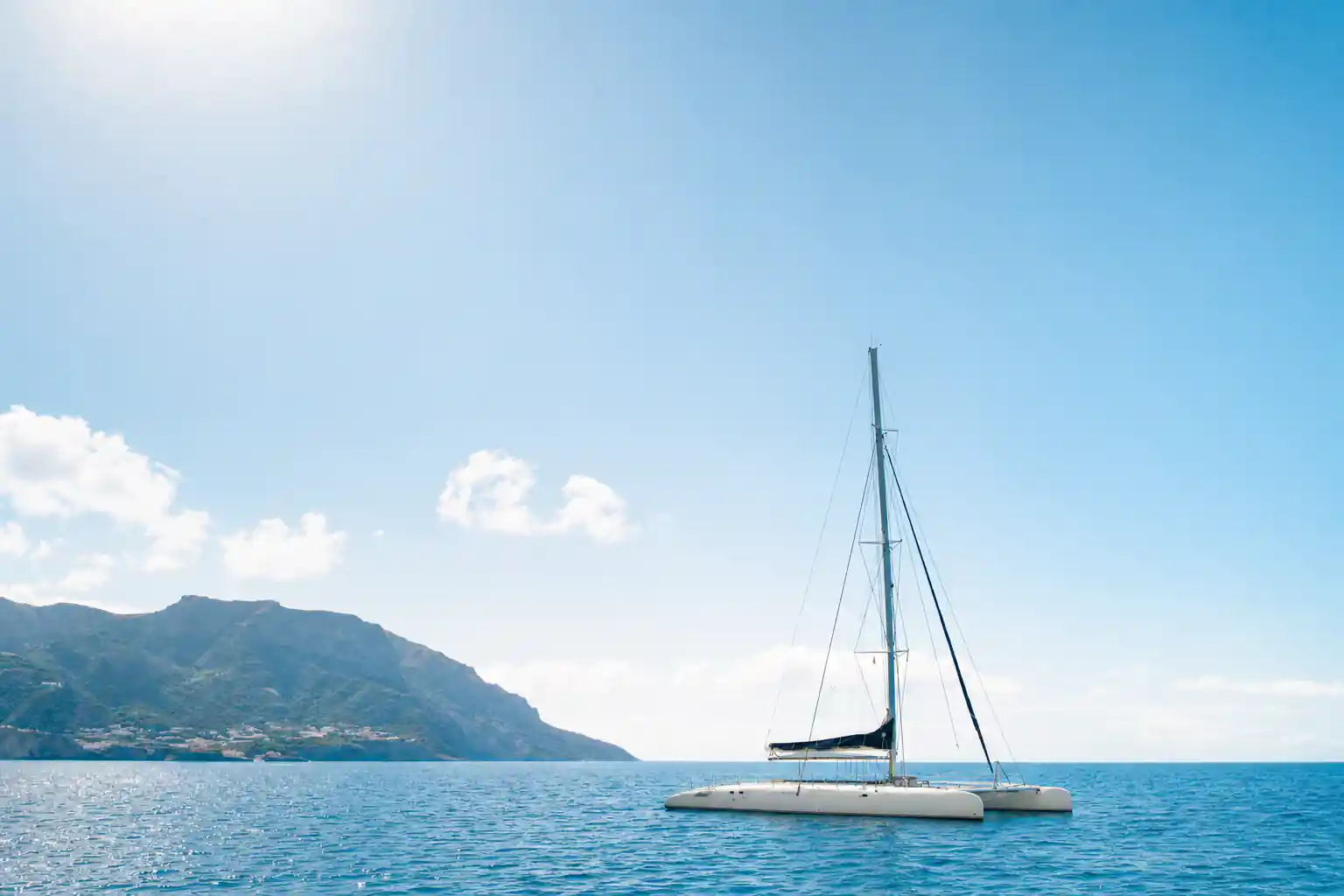
The Funchal Dolphin and Whale Watching Catamaran Cruise lasts 3 hours and is priced from US$40[1]. It leaves from Funchal and spends its time scanning the water for marine life. English and Portuguese are spoken by the guide, and cancellations up to 24 hours ahead are refunded in full.[1] The boat is a catamaran, so there is space to move around and a decent view from both sides, which helps when animals appear without warning.
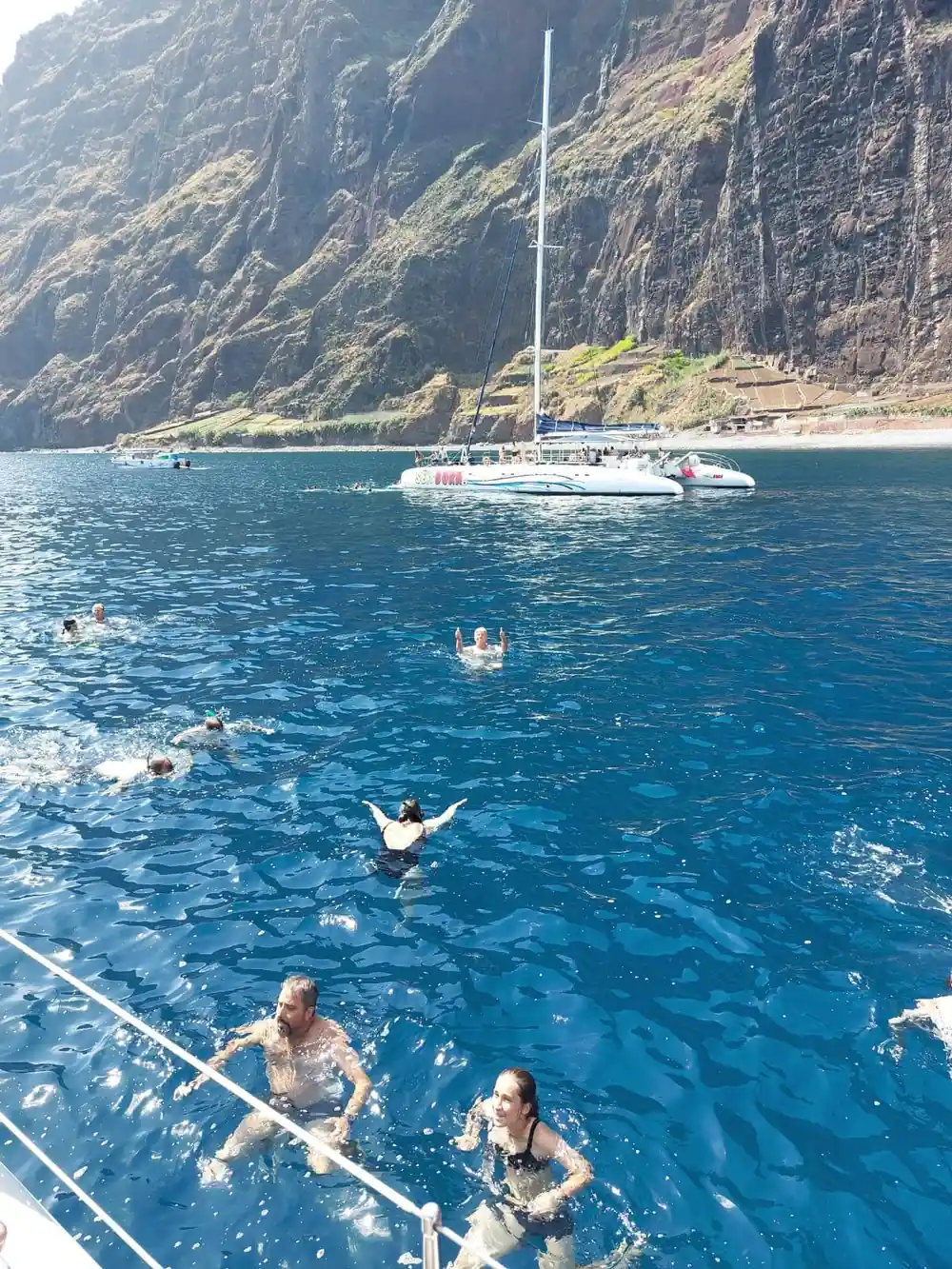
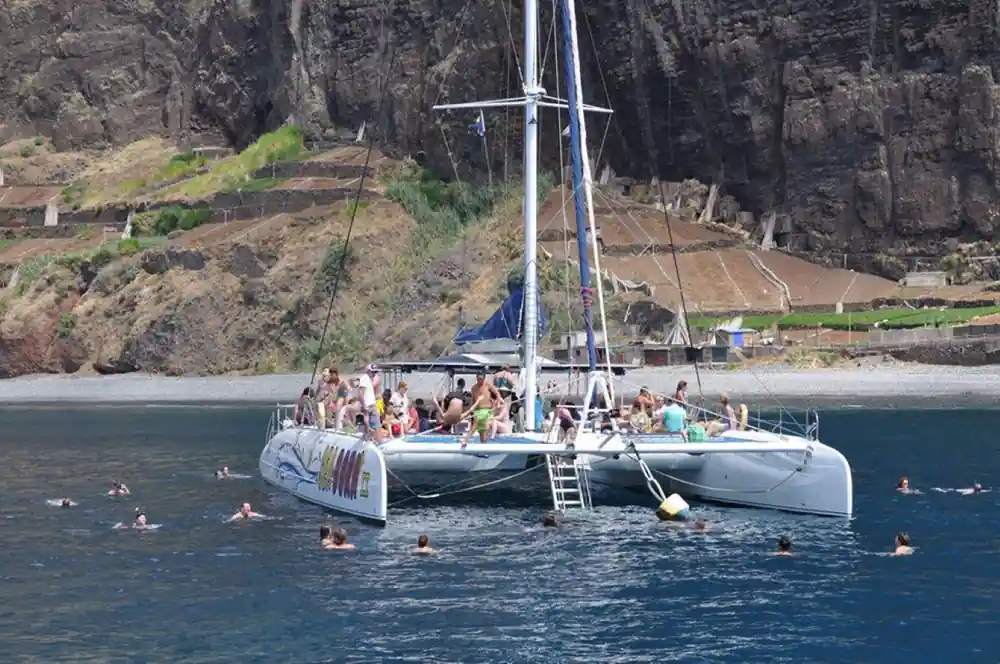
If a swim stop is part of the day, the timing depends on sightings and sea conditions. The crew will call it when the boat is in a sheltered spot with enough time left to get back to port. Listen for their announcement and be ready to move quickly when it comes. It is the kind of moment that arrives without a long countdown, so keep your towel and mask within reach if you want to join in.
In practice, the stop tends to come after the main wildlife watching, once everyone has had a good look and the skipper has chosen calm water. It can also be shortened or dropped if conditions change, so treat it as a bonus rather than a guarantee. That keeps the day relaxed and gives the crew room to make the right call at sea.
Where the boat stops
Whale watching boats along Madeira's south coast keep an eye on the water and follow the animals. The skipper picks a place that makes sense for the day: calm water, easy anchoring and a view that keeps everyone comfortable. Cabo Girão, the sea cliff that rises 580 metres above the Atlantic, is a familiar landmark in the area[6]. It gives the whole south coast a dramatic backdrop and helps you keep your bearings when the boat turns.
The exact stop changes from trip to trip. What matters is that the crew chooses somewhere sheltered, away from boat traffic, and easy for everyone to manage. If you have questions about where the boat will go, ask the guide before you board. A quick chat on deck can also tell you how long you will have in the water and what to expect from the bottom.
The southern coast has plenty of coves and low cliffs, and the calm bays can be very different from the open water where whales are spotted. A swim stop is usually in shallow, clear water rather than out in the deep blue. That makes it a gentler introduction for nervous swimmers and an easy place to keep an eye on children.
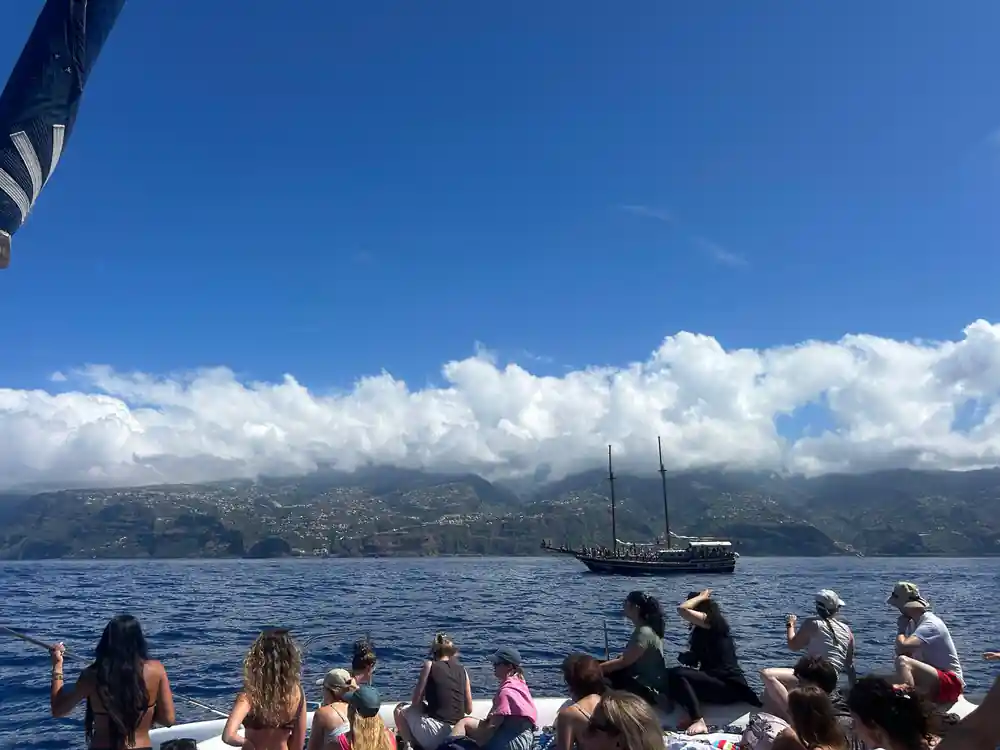
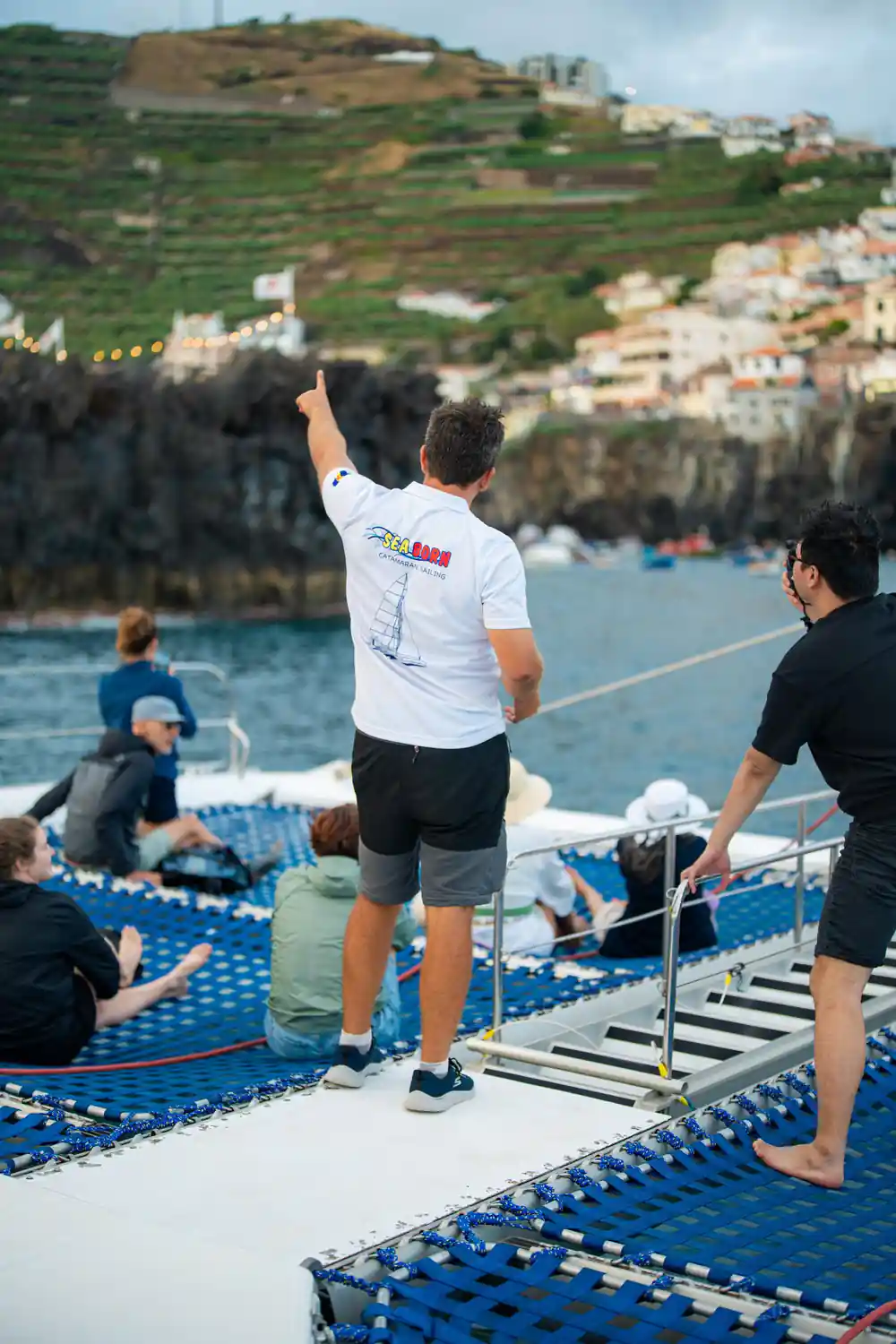
A catamaran glides across the Atlantic with passengers watching for dolphins.
The equipment and the deposit
For a swim stop, you need to know what is on board before you step onto the deck. Ask the crew about mask and snorkel hire, whether there is a deposit, and how the equipment is returned. That way there are no surprises when you are bobbing in the Atlantic. The crew see the same questions every day and will normally talk you through the basics before the anchor goes down.
A simple approach is to bring your own mask and snorkel if you have them. Keep them in a small bag with your towel and a change of clothes. The crew can tell you the safest place to leave things while you are in the water. A lightweight dry bag is handy if you want to keep keys and phone out of the salt.
Deposits are common for hire equipment, so bring something small to leave as security if you do borrow gear. Check the exact amount and how it is returned before you take anything on board. It is also worth asking whether the mask comes with a snorkel that fits you and whether fins are available.
What the water is like
Winter sea temperatures near Madeira are about 18°C, rising to around 24°C in summer.[3] That makes summer swim stops genuinely pleasant and winter ones bracing. A thin wetsuit or a rash vest can make a big difference in the cooler months, and even in summer the open ocean can feel cooler than the air.
The Atlantic off Madeira is open water, so conditions can change quickly. Look at the surface before you get in, and trust the crew when they say it is or is not a good moment for a swim. Ripples and light chop are normal; stronger swell means the entry and exit need more care. If you feel nervous, stay in the boat and watch from the bow; the water will still be there on another day.
Even on a calm day, the water may feel cooler than the air. Splash a little on your face first, then ease in and keep your breathing steady. The initial shock passes quickly, and most swimmers are glad they made the effort. If you are the sort of person who hesitates, count to three and go.
from US$40
This 3-hour catamaran excursion departs Funchal, with live narration in English and Portuguese and no cancellation fee up to 24 hours ahead[1].
What there is to see underwater
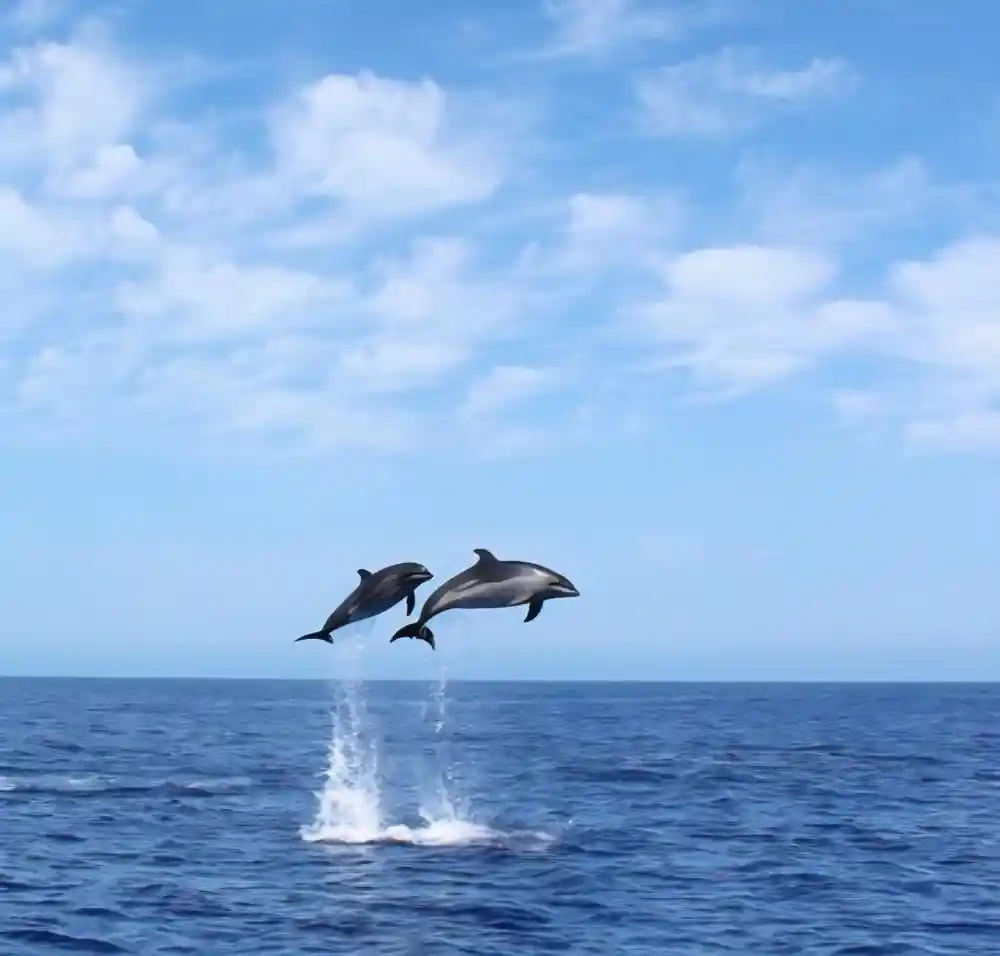
In Madeira's waters, 27 cetacean species have been confirmed by researchers.[2] Bottlenose dolphins appear all year, as do short-finned pilot whales; seasonal visitors include Atlantic spotted dolphins, plus occasional blue whales, while orcas and humpbacks are rarely seen.[2] Even a single trip can turn up several different animals, and the guide will help you tell them apart.
The underwater terrain around the island is dramatic. The ocean floor drops below 3,000 metres only five kilometres from shore, and steep slopes and canyons push deep-water whales nearer to land.[7] The result is a coastline where you can sometimes watch a large whale from a small boat. Snorkelling near such deep water is a reminder of how much life sits just offshore.
Seasonal rhythms add to the mix. Sperm whales can be seen all year but are more common in the fall months, and Bryde's whales are seen most from June to November[8][9]. If you have a particular species in mind, the months around your visit will shape your chances. On board, the guide can talk through what is likely on any given day.
Nobody has to get in
The heart of this trip is watching marine mammals from the deck. In Madeira, boats have to stay at least 50 meters away from whales and dolphins, and at least 25 meters away from sea turtles[10]; as a result, the animals are never crowded or chased. That respectful distance is part of what keeps the area special for wildlife.
If a swim stop is offered, joining is entirely optional. Stay on the boat, find a good view, and let the crew know if you would rather skip the water. The day works just as well from dry deck, and there is no pressure to take part. Some of the best moments happen while you are simply sitting and watching.
For anyone who does get in, the same respect for wildlife applies. Enjoy the water, but do not approach turtles or other animals you meet. The crew will explain any local rules before the stop begins, and the same spirit of observation applies underwater.
Practical points for the swim
Pack a towel, sunscreen, a warm layer and shoes you can slip on and off. Keep everything in a small bag that can sit on deck while you are in the water. A dry bag is useful if you have one. Sunscreen is important even on overcast days, and a hat helps while you are waiting on deck. Take a bottle of water, too; thirst creeps up quickly in sea air.
Listen for the crew's call to get back on board and be ready before the boat moves again. Wet hands and bare feet need care on a moving catamaran, so use the handrails. If you take a camera, keep it in a sealed case until you are back on the boat.
If you are unsure about the water, ask the guide about conditions before the stop. The crew wants everyone to feel safe, and they will tell you how long the stop will be and what to do next. That little bit of preparation lets you enjoy the swim without rushing.
GetYourGuide ratings for Funchal boat tours
Boat tour from prices
From prices in USD for tours:[1],[4],[5],[11].
When to plan your trip
How to book and prepare
Pick a date
Check availability for starting times and choose a day that fits your Madeira plans[1].
Make a reservation
Secure your spot with reserve now and pay later, then cancel free up to 24 hours in advance if plans change[1].
Get to Funchal
Make your way to the departure point in Funchal with enough time to board calmly.
Enjoy the cruise
Spend 3 hours on the water with a live English and Portuguese guide, watching for whales and dolphins[1].
Make the most of the swim stop
If one is offered, have your towel and mask ready and follow the crew's timing.
Ready for a dolphin and whale watching catamaran cruise from Funchal?
from US$41Reserve now & pay later