If you read nothing else
- A live guide who speaks English and Portuguese leads this 3-hour cruise, with prices starting at US$40.[1]
- Short-finned pilot whales and bottlenose dolphins are present year-round; Atlantic spotted dolphins, blue whales, humpback whales, and orcas appear seasonally or rarely.[2]
- Madeira's waters contain 27 confirmed cetacean species, and deep water near the shore pulls bigger whales toward the coast.[2][3]
- Vessels around Madeira stay no closer than 50 meters to whales or dolphins and no closer than 25 meters to sea turtles.[4]
- Book now, pay later; cancellation is free up to 24 hours ahead, and you receive a full refund.[1]
- Top choice Dolphin & Whale Catamaran from US$40 Duration3 hours[1]Live guideEnglish and Portuguese[1]CancellationFree up to 24 hours in advance for a full refund[1] Check availability
- Luxury Catamaran Cruise from US$46 Duration3 hours[5]Live guidePortuguese and English[5]CancellationFree up to 24 hours in advance for a full refund[5] See this tour
- Sunset Sailing Tour from US$63 Duration3 hours[6]Live guideEnglish and Portuguese[6]CancellationFree up to 24 hours in advance for a full refund[6] See this tour
Sperm whales are a transient cetacean species seen on Madeira dolphin and whale watching tours.
The right choice for a first whale watching trip
Read before booking
The first part is looking
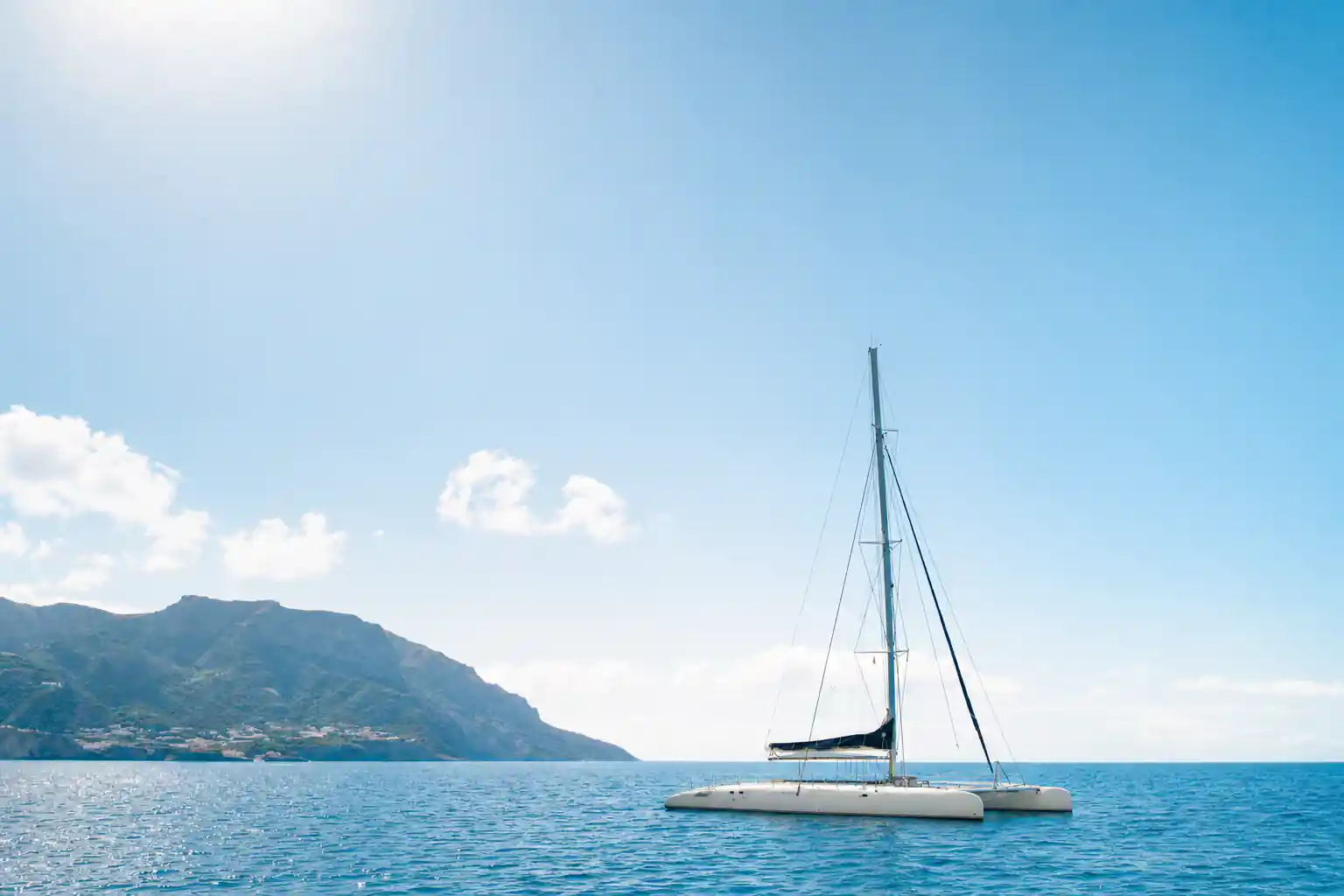
The moment the catamaran leaves the harbour, all attention shifts to the water. The crew scan for blows, splashes and the dark shapes that move just under the surface. Passengers quickly learn the rhythm: look along the horizon, then check the shallower water near the boat, and do it again. This is not passive sightseeing. The 3-hour cruise has a live guide in English and Portuguese, so there is always someone on hand to say what to look for and what the behaviour means.[1]
The water around Madeira is rich. In Madeira's waters, 27 cetacean species have been confirmed by researchers.[2] Just past the harbour, five kilometres out, the sea can go deeper than 3,000 metres, and that underwater terrain lets deep-water whales draw close to shore.[3] For anyone new to whale spotting in Funchal, the first lesson is to trust the process: the crew has done this hundreds of times, and they know where to look.
It also helps to know the rhythm of a trip. The first minutes are busy with logistics: the crew casts off, talks through safety, and moves the boat out of the marina. Once the engine settles, scanning begins in earnest. Passengers spread along the rail, and the guide starts to name the places on the horizon. By the time the boat reaches open water, everybody is watching the same way.
What the crew are actually looking for
A blow is often the first clue. The crew watch for a tall puff of mist, then the slower movement of a dark back. They also read the birds, because feeding seabirds can mark fish below, and fish often bring dolphins. Short-finned pilot whales and bottlenose dolphins appear year round in Madeira; the seasonal roster is made up of Atlantic spotted dolphins plus occasional blue whales. Orcas and humpback whales are rarely seen.[2]
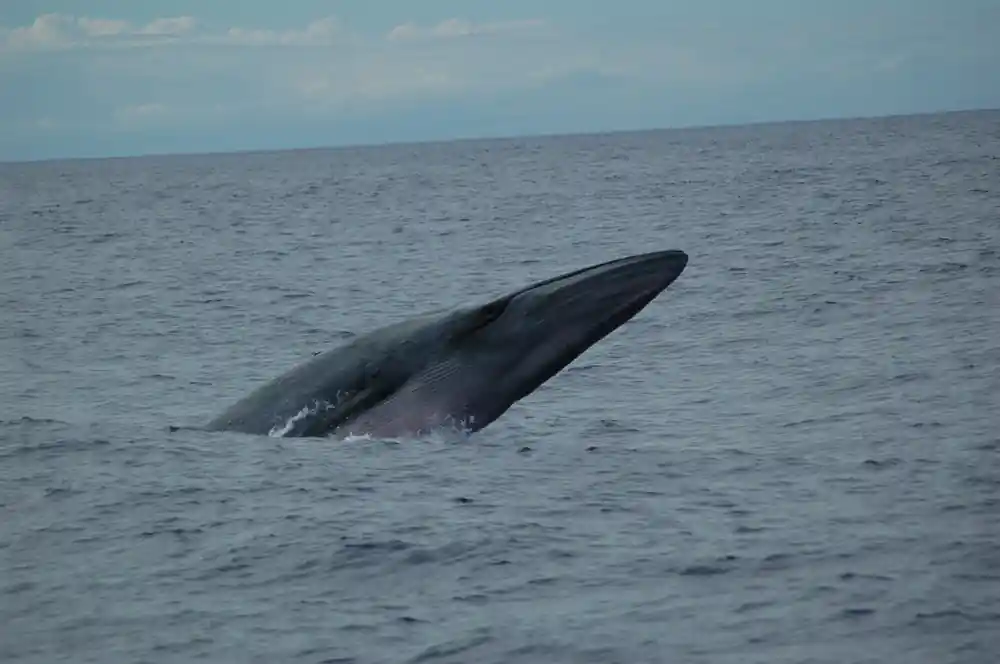
Different seasons shift the odds before you set out. Sperm whales can be seen with some frequency all year and are more common during fall.[8] Bryde's whales are typically seen most during the summer months, from June until November.[9] The live guide knows what is moving through on any given day, so a quiet stretch of water can change in a minute. The crew share what they see and keep the search orderly, which matters when everyone is trying to look in the same direction.
If you are new to this, ignore the urge to stare at one patch of sea. The eye gets tired quickly. Instead, let your gaze drift, and check the horizon with long, slow sweeps. The crew are doing the same thing with far more experience, so follow the direction of their binoculars. A sudden change in the spray or the way birds are moving is often the first signal.
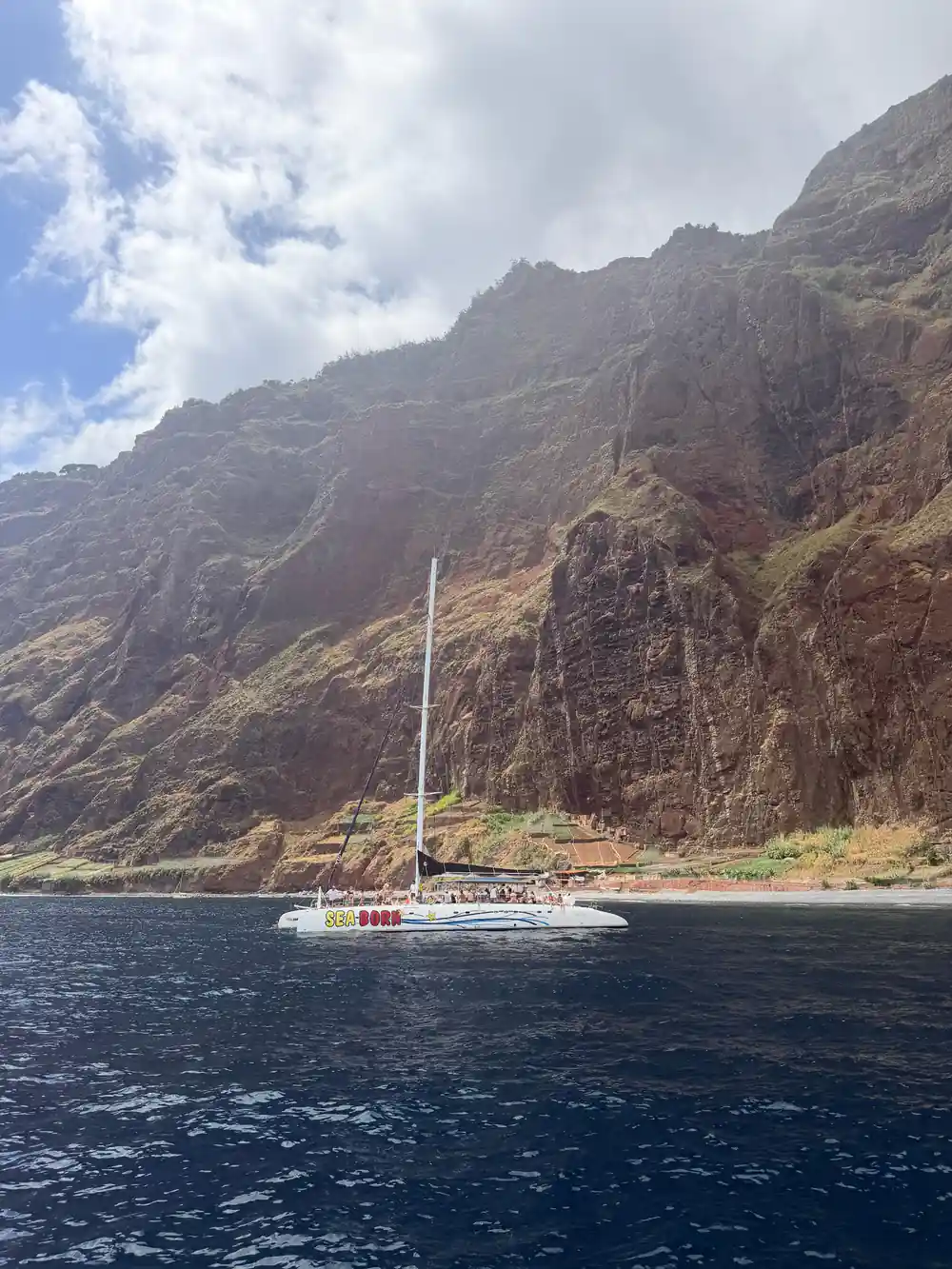
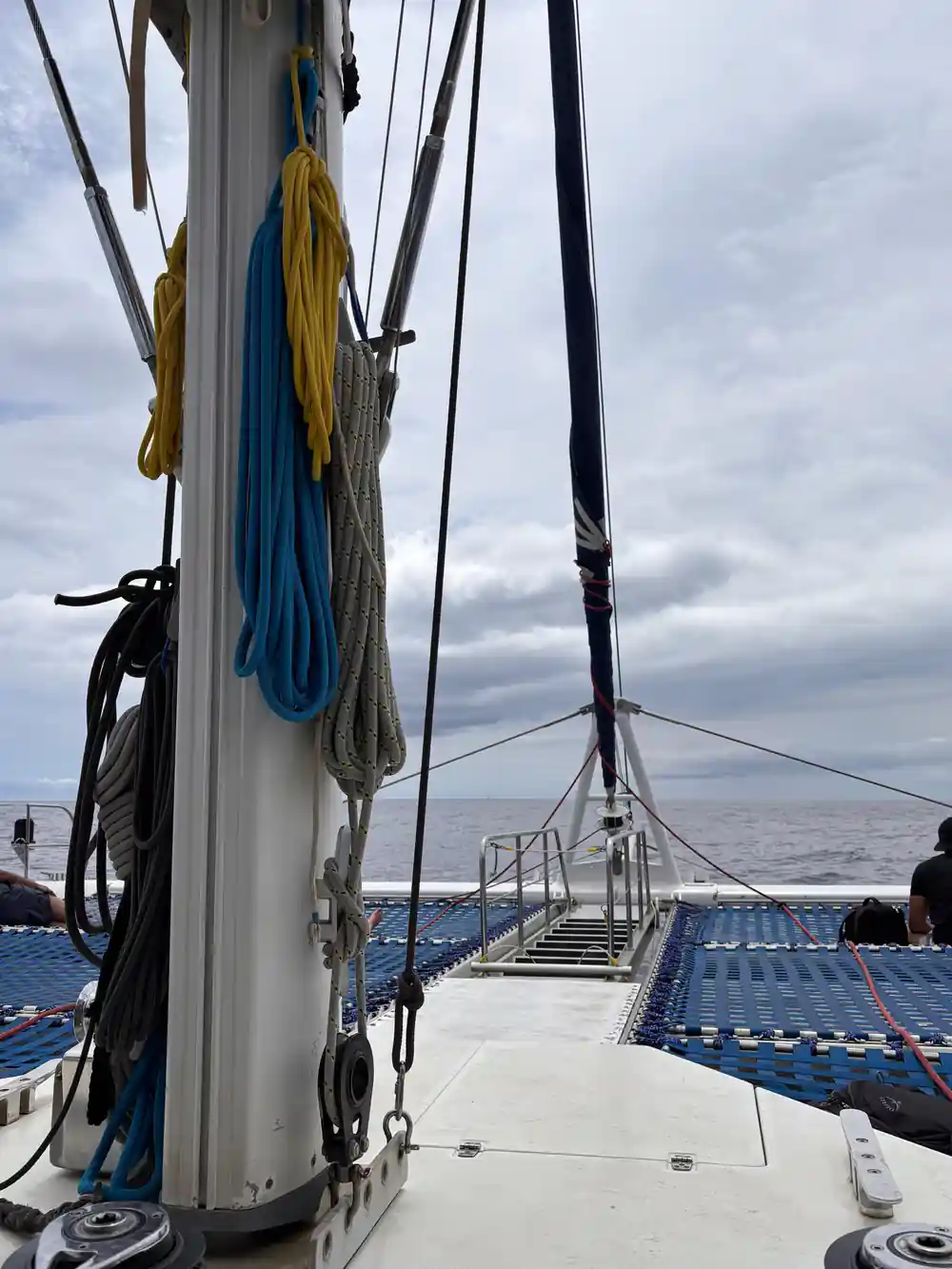
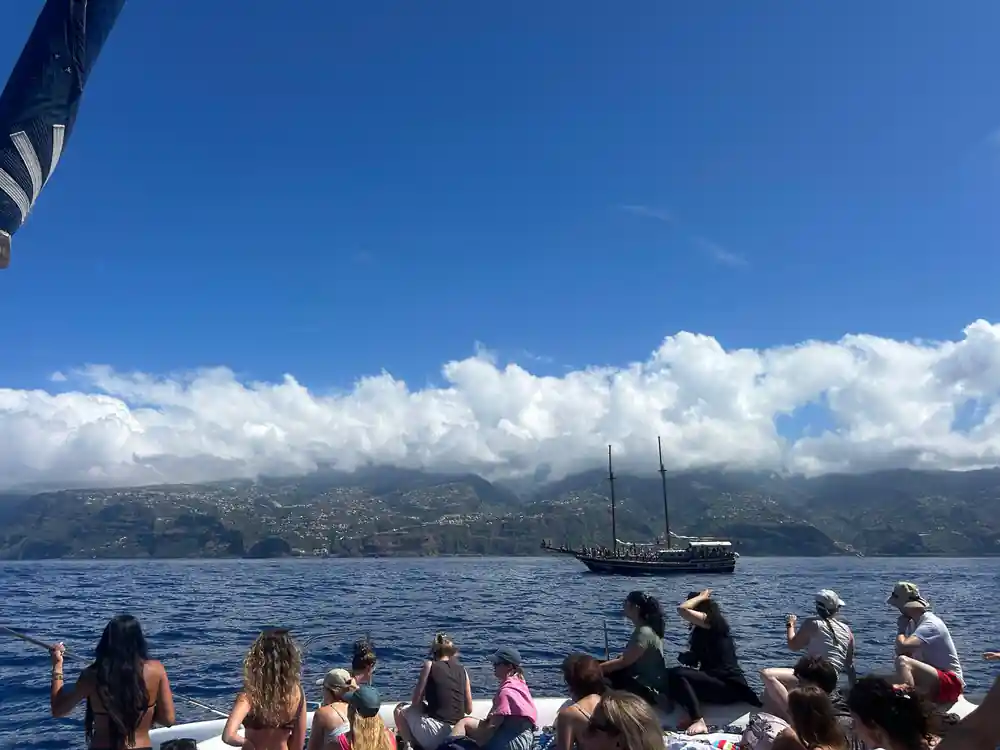
Passengers line the catamaran's deck as the crew scans for the next sign.
A dolphin encounter, close up
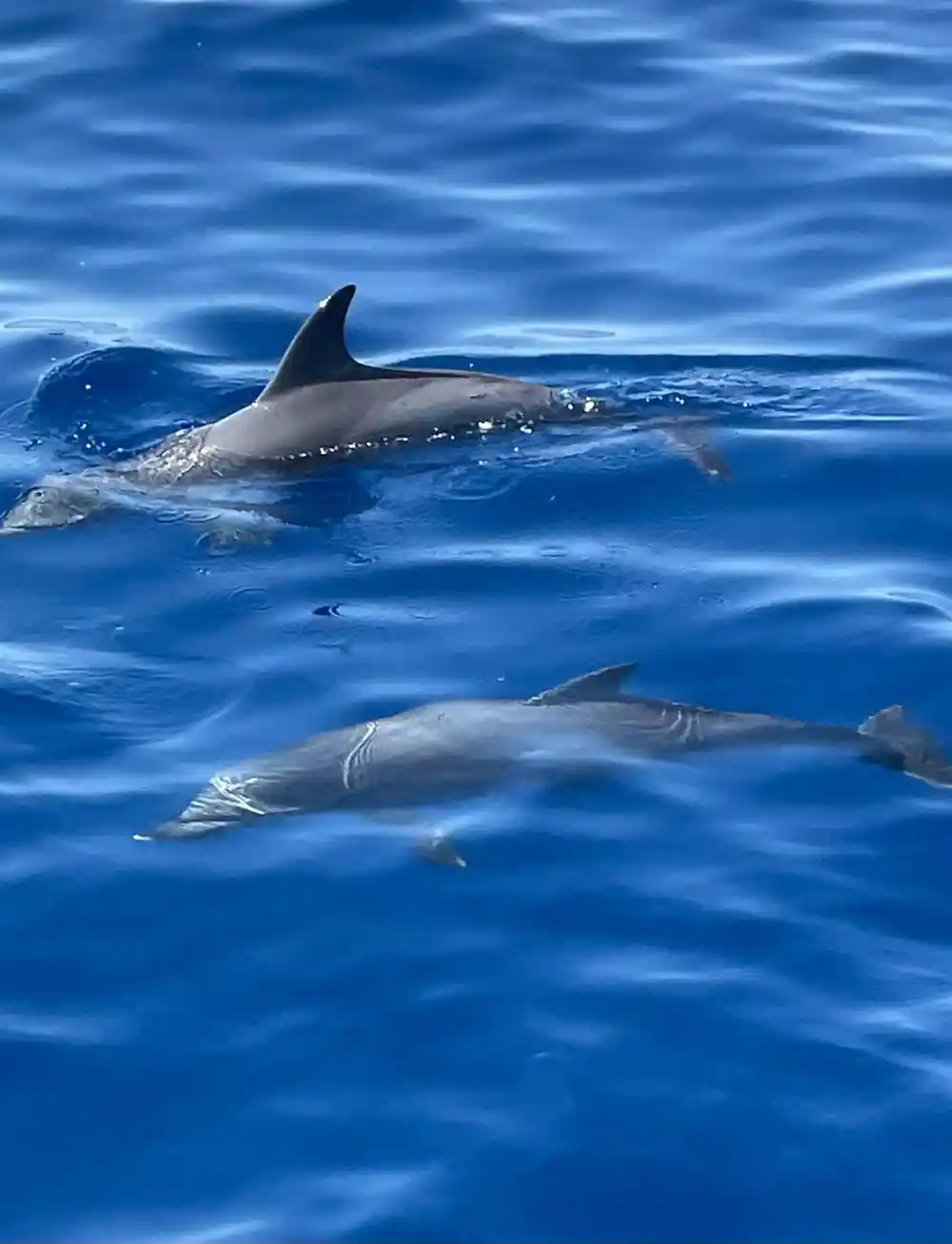
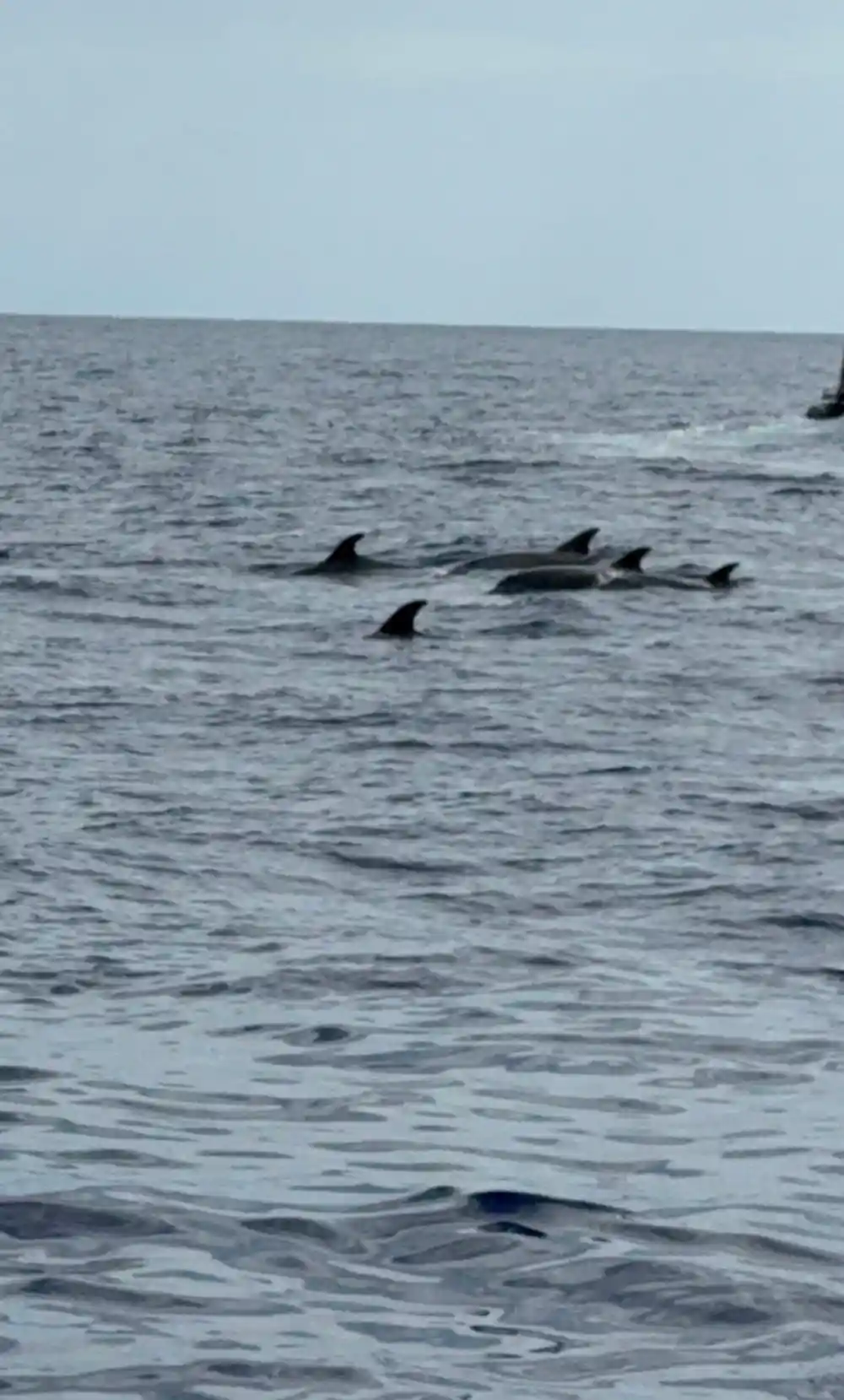
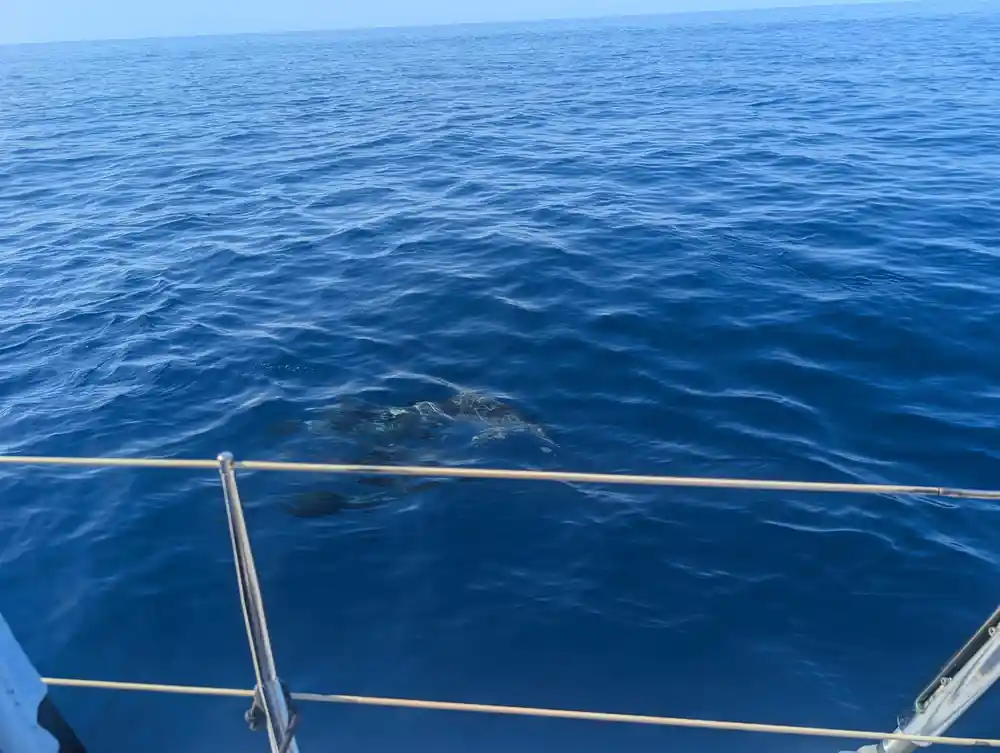
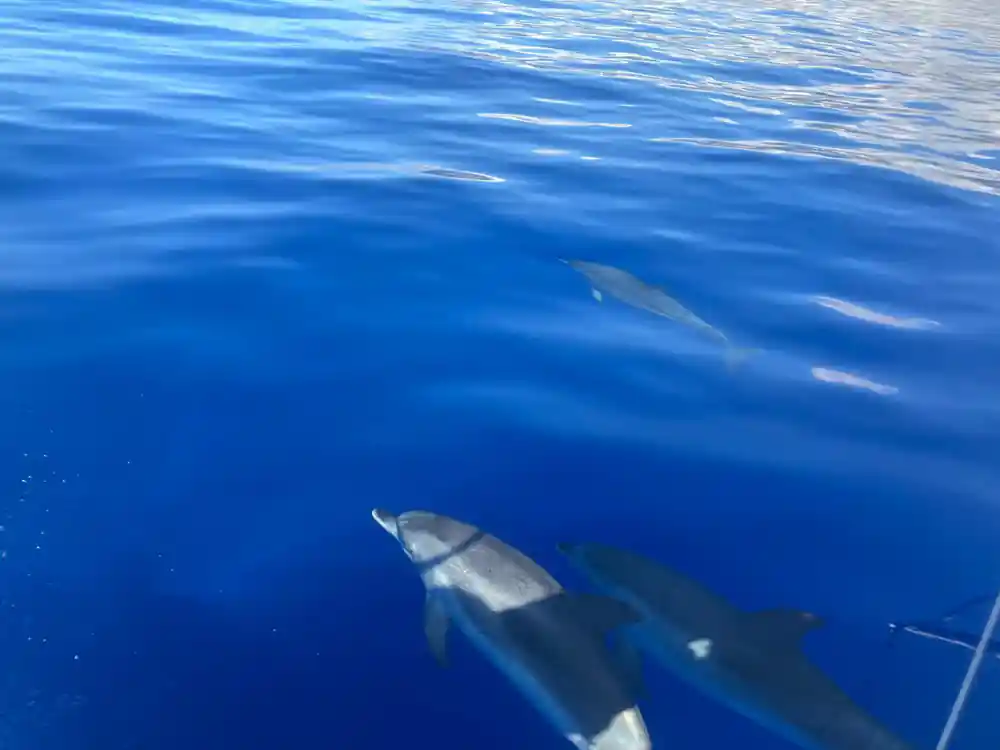
When dolphins arrive, the mood on deck changes instantly. They often travel in groups, surfing the bow wave and leaping clear of the water. Bottlenose dolphins are around all year, and seasonal species such as Atlantic spotted dolphins add variety.[2] The crew slows the catamaran so the animals can choose how close they want to come. Boats in Madeira must stay 50 meters away from whales and dolphins and 25 meters away from sea turtles, although dolphins frequently swim closer on their own.[4]
Watching a pod work the water is a lesson in energy and ease. The surface breaks with dark backs, dorsal fins, and sometimes the curve of a tail. Children crowd the bow, adults stop mid-sentence. The 3-hour cruise gives the crew enough time to search several zones rather than dipping into the bay and heading home.[1] Keep a hand on the railing and hold your camera ready; the first sighting can come quickly.
A whale encounter is different
A whale sighting tends to arrive as a single breath, then a long wait. The blow is followed by a dark back rolling through, sometimes a tail lifting clear. The water around Madeira drops off sharply, which is why larger whales can be found so close: just five kilometres off the coast, depths can reach more than 3,000 metres.[3] Sperm whales pass through with some frequency all year and are more common in fall; Bryde's whales are usually seen between June and November.[8][9] Every encounter feels different, but the slowness is the point.
The catamaran's height gives a good viewing platform. From the side deck, a whale's full back can be seen before it sounds. The crew call out positions so passengers know where to look, and the live English and Portuguese commentary keeps everyone oriented.[1] Give yourself time; a whale may stay down for several long minutes. If you are wondering what to wear, a light layer beats a heavy coat, because wind on the water can be cool even when the sun is warm.
from US$40
Three hours on the water, live guiding in English and Portuguese, and reserve now, pay later.[1]
How long it lasts
The tour is 3 hours long, which is enough to reach deeper water and still get back without burning a whole day.[1] Booking lets you reserve now and pay later, and if plans shift you can cancel up to 24 hours ahead for a full refund.[1] Those two details make it easy to fit around a holiday. The starting time depends on the day, so check availability when you book.[1]
For a first visit, a morning departure often means calmer sea conditions and a fresher crew, but afternoon sailings can be just as good. The boat moves steadily away from Funchal's harbour, and the shoreline rises behind you. Rather than measuring the trip by the harbour, measure it by the last stretch, when everyone is scanning, waiting and hoping together. The from-price is US$40, so it also fits into a relaxed budget.[1]
A short walk from the marina, Funchal's cafés and viewpoints make it easy to turn the trip into a half-day out. Because the cruise itself is 3 hours, you can plan a late breakfast before or a long lunch after without rushing.[1] The exact starting times vary, so checking availability when you book is the clearest way to lock your day into place.[1]
Photographing them
Set your camera before the boat leaves. A shutter speed fast enough to freeze movement matters more than a long lens, because dolphins dart and whales surface only for seconds. Hold the camera with both hands and brace against the boat. Focus on the eye level of the animal if you can, and shoot in short bursts. On a phone, tap the subject and keep still. If the sun is behind you, so much the better.
Photographing whales is about patience. You may have dozens of frames of flat sea before one good shot. That is normal. The wild moments are not always the perfect postcards; they are the blow you almost missed, the tail that appeared off the bow, the group of dolphins that crossed the wake. Put the camera down for a second too. The crew will point out details, and some of the best memories of whale spotting in Funchal are the ones you simply watch.
And if nothing appears
Wildlife is never a guarantee, and even the most experienced crew cannot summon a whale. Part of the pleasure is the search, the sea light, the company and the sense of being far from the shore. The local waters have 27 species of cetaceans confirmed.[2] A blank trip is possible, but the variety is part of what makes the search worthwhile. Still, plan for an outing that is enjoyable even if the animals are shy.
The booking terms help. With the option to reserve now and pay later, cancellation costs nothing up to 24 hours ahead, and a full refund gives you leeway when the weather looks bad or skies turn dull.[1] Beyond that, take the cruise for what it is: three hours on the Atlantic, with a live guide in English and Portuguese, and the chance to see something extraordinary.[1] If you see nothing, you have still spent a morning on the water, and that is rarely wasted.
From prices for Funchal whale and dolphin trips
From-prices are from GetYourGuide listings[1],[10],[11],[12].
What your whale spotting day could cost
All amounts are from-prices from GetYourGuide listings[1],[11],[6].
When to go whale spotting in Funchal
Plan your whale spotting
Choose your moment
Look at the seasonal notes above. Bottlenose dolphins and pilot whales are around all year; Bryde's whales are more likely from June to November.[2][9]
Book the right tour
The 3-hour cruise costs from US$40 and includes a live guide in English and Portuguese.[1]
Pack for the sea
Bring a light layer, sunscreen and a camera. Off Funchal, the sea temperature goes from roughly 18°C in winter up to 24°C in summer.[7]
Get on board
Head to Funchal and check availability for starting times when you book.[1]
Keep watching
Scan the horizon and follow the crew's direction. In Madeira, vessels maintain 50 meters away from whales and dolphins and 25 meters away from sea turtles.[4]
Ready to get out on the Atlantic and search for dolphins and whales?
from US$41Reserve now & pay later