If you read nothing else
- In Madeira, vessels are obliged to keep no less than 50 metres away from whales and dolphins, and 25 metres away from sea turtles.[1]
- Madeira's waters host 27 confirmed cetacean species, ranging from year-round bottlenose dolphins to seldom-seen blue whales.[2]
- At just 5 km from the coast, the sea can exceed 3,000 metres in depth, letting deep-water whales come near land.[3]
- Sperm whales are more common in fall, while Bryde's whales are typically seen most from June until November.[4][5]
- A 3-hour catamaran cruise with live English and Portuguese guide costs from US$40.[6]
- Top choice Catamaran Cruise from US$40 Duration3 hours[6]Rating4.61 from 6,772 reviews[6]GuideLive guide: English, Portuguese[6]CancellationFree cancellation up to 24 hours in advance[6] Check availability
- Luxury Catamaran from US$46 Duration3 hours[7]Rating4.25 from 3,470 reviews[7]GuideLive guide: Portuguese, English[7]CancellationFree cancellation up to 24 hours in advance[7] See this tour
- Sunset Sailing from US$63 Duration3 hours[8]Rating4.77 from 2,450 reviews[8]GuideLive guide: English, Portuguese[8]CancellationFree cancellation up to 24 hours in advance[8] See this tour
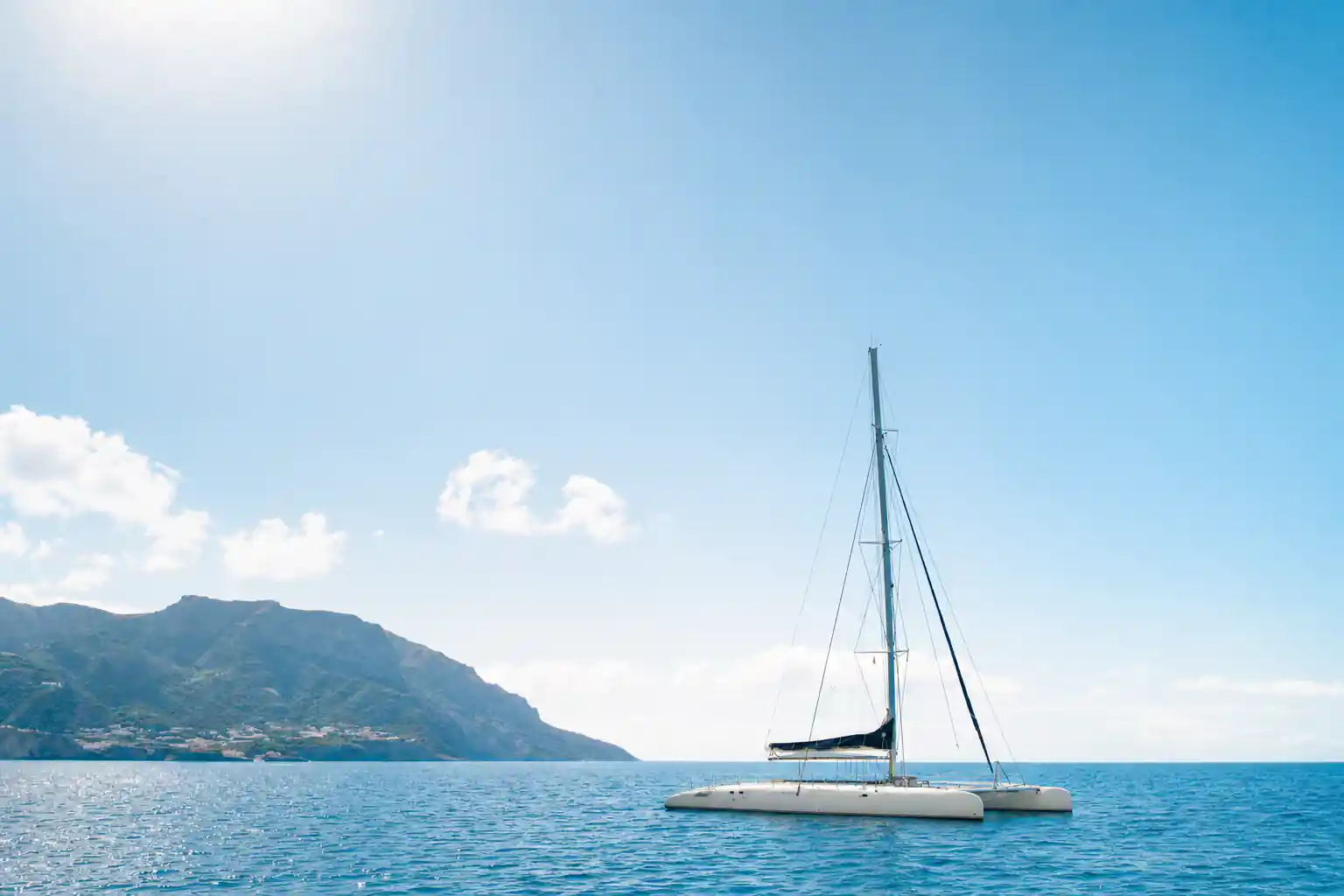
Boats must keep a minimum distance of 50 meters from whales and dolphins and 25 meters from sea turtles.
A calm, rule-respecting way to see Madeira's whales
Read before booking
On the day
- Arrive at the marina with time to spare and follow crew directions aboard
- Bring layers, sunscreen, hat; sea temperatures range from around 18°C to 24°C.[9]
- Move around the boat only when the crew says it is safe
- Respect the distance rule: 50 metres from whales and dolphins, 25 metres from sea turtles.[1]
Why regulation exists here at all
Madeira's waters hold a striking amount of life. The archipelago has 27 confirmed cetacean species, according to researchers.[2] Responsible whale watching in Funchal starts with understanding what is at stake. Boats go out to watch rather than to hunt, and the rules try to keep it that way. That intent matters on the water: the same creatures you might see are free to swim off, and the mood on a modern tour boat is one of quiet anticipation rather than pursuit.
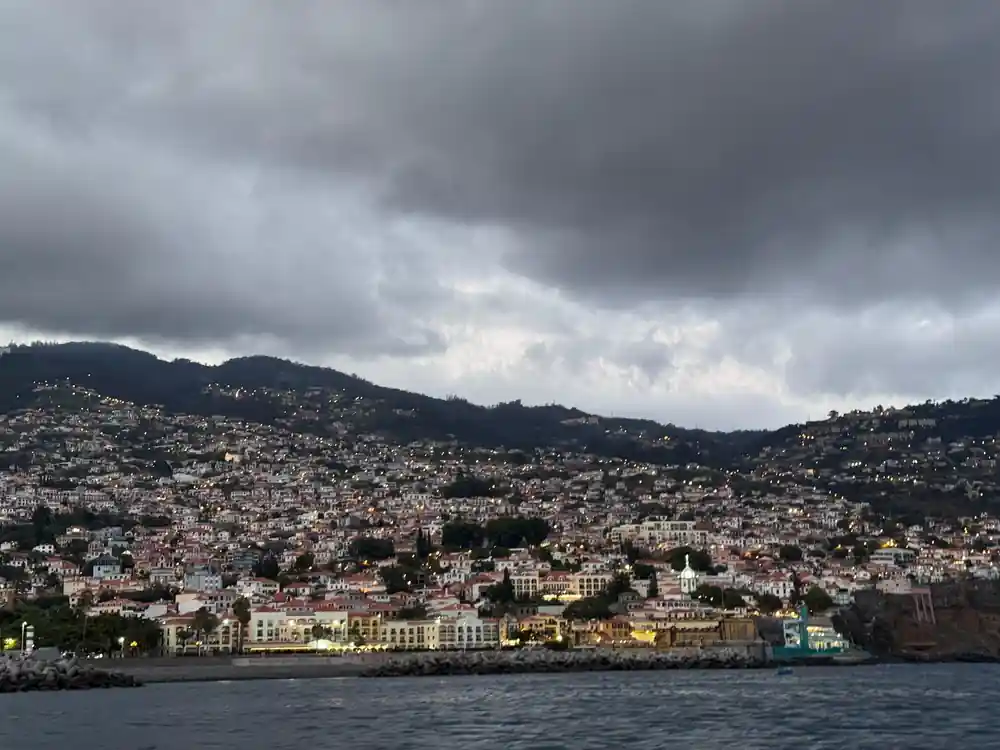
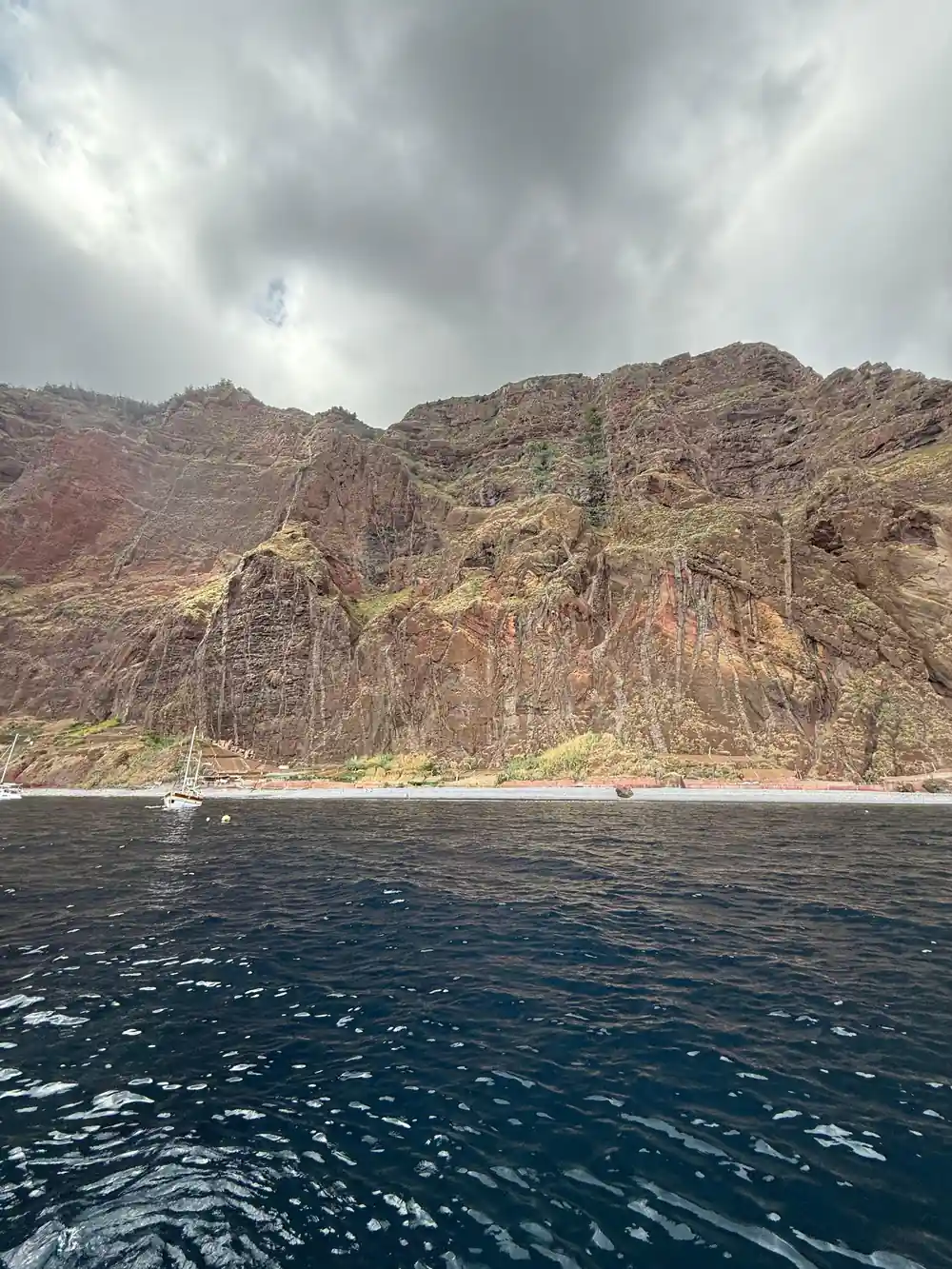
The island's geography helps explain the encounters. From the coast, the sea is only five kilometres away before exceeding 3,000 metres in depth, and this sharp drop allows deep-water whales to get near land.[3] From Funchal, a short boat trip can put you in the same waters as short-finned pilot whales and bottlenose dolphins all year, while Atlantic spotted dolphins and blue whales visit seasonally; orcas and humpback whales are only rarely seen.[2] Sea temperatures hold steady at mild levels for most of the year, roughly 18°C in winter and 24°C in summer, making time spent on deck while waiting typically pleasant.[9]
What the rules actually cover
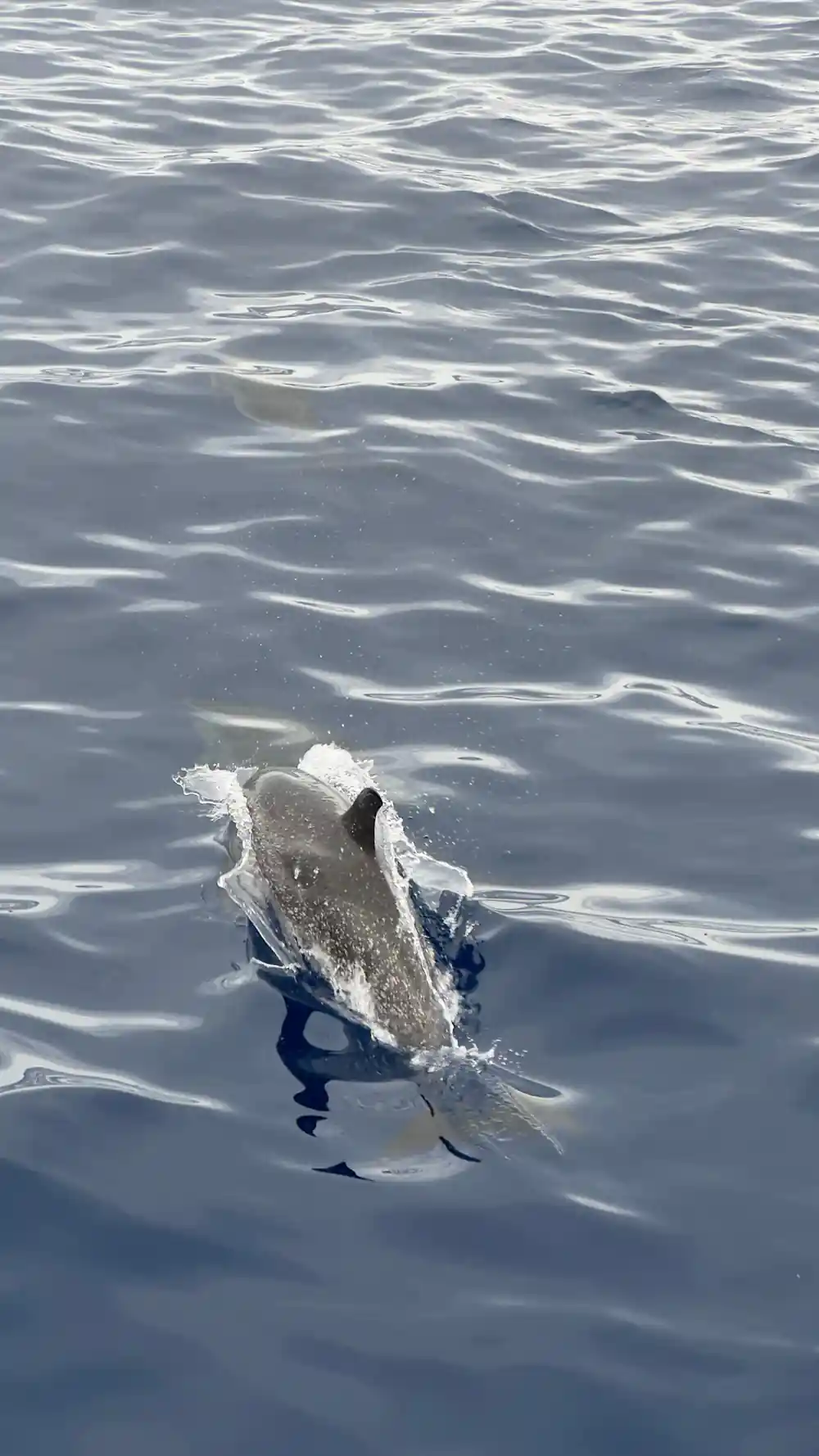
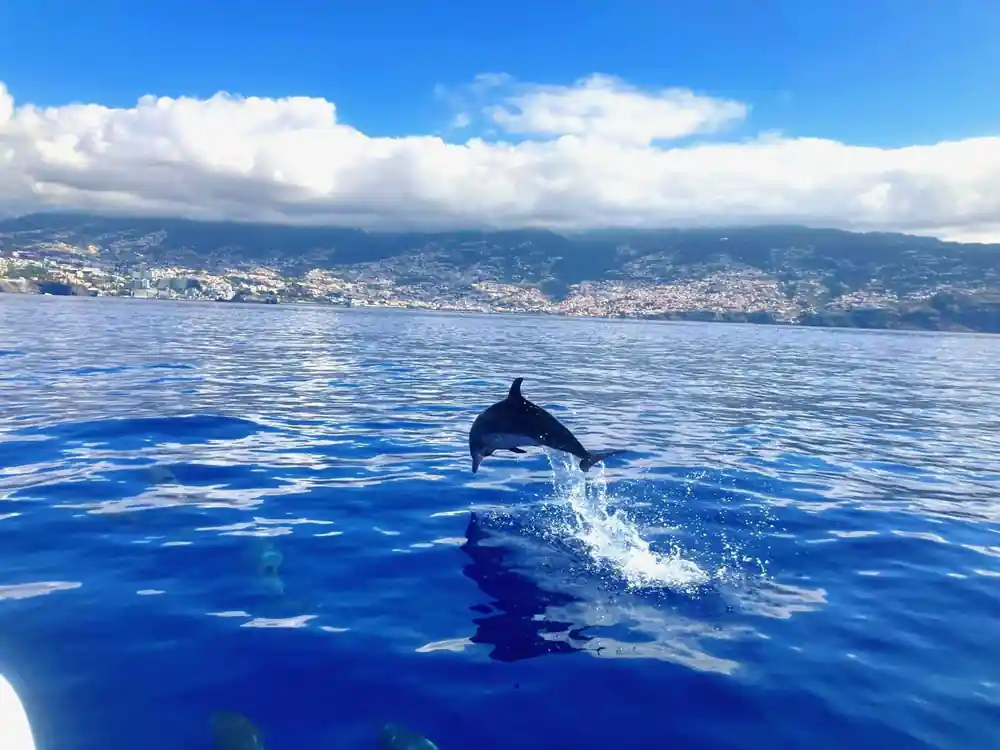
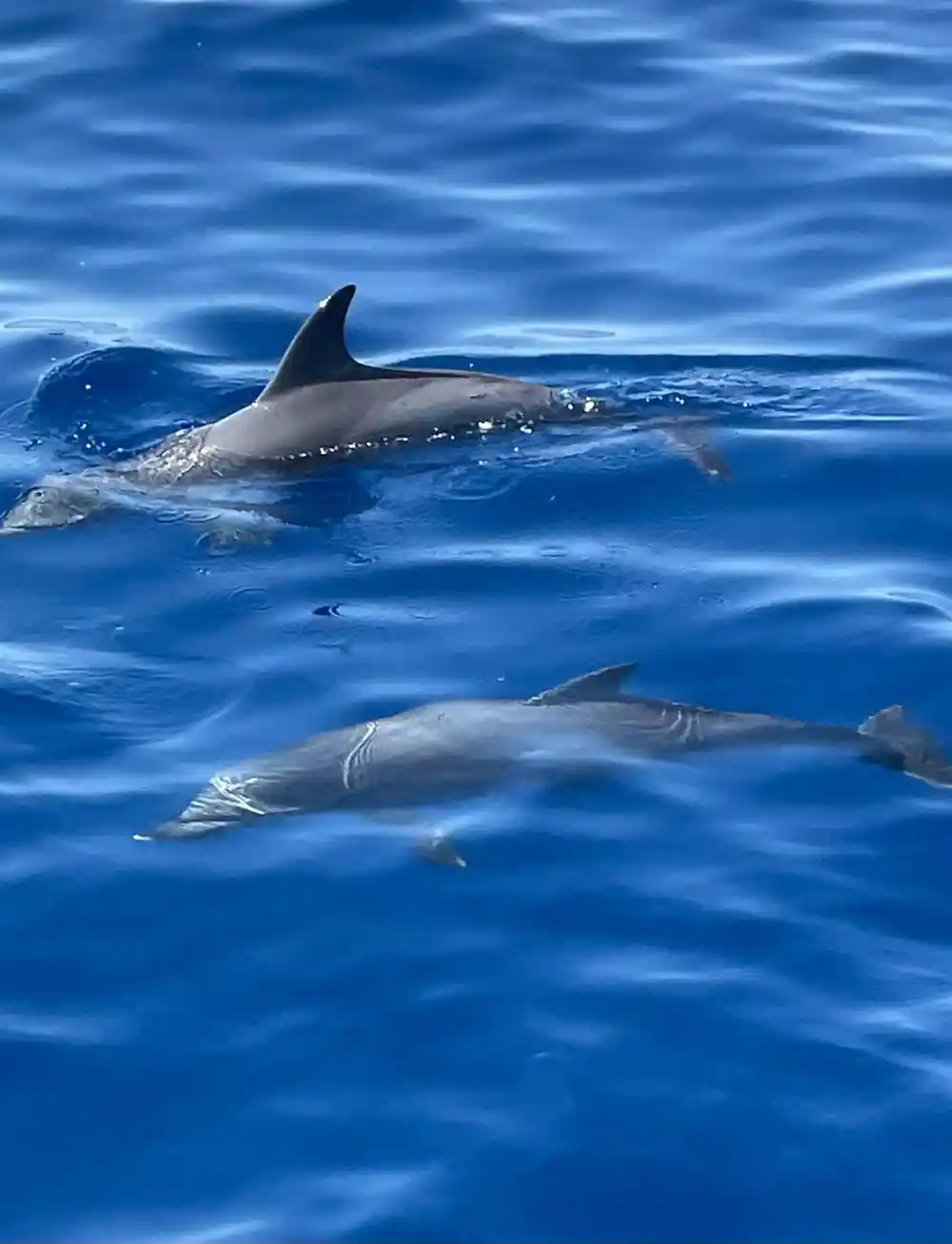
Madeira's whale watching rules are straightforward about distance. Vessels are required to stay at least 50 metres away from whales and dolphins, and 25 metres away from sea turtles.[1] This is not a suggestion; it is the legal frame for every responsible trip. When a captain holds back, the animals decide how close they want to be, and the viewing is usually calmer and longer. It can feel counterintuitive to watch from further away, especially when a dolphin arches through the swell, but the reward is a sighting that does not push the animal into a stress response.
Much of the searching happens before the boat even arrives. A land-based spotter watches the sea and relays details such as mileage and landmarks to the skipper.[10] That removes some guesswork from the trip and reduces the time a boat spends motoring around looking for wildlife. For passengers, it means the minutes on deck are more likely to be spent watching animals than waiting. It also keeps the boat on a steadier path, which helps anyone prone to seasickness and gives photographers a more stable platform.
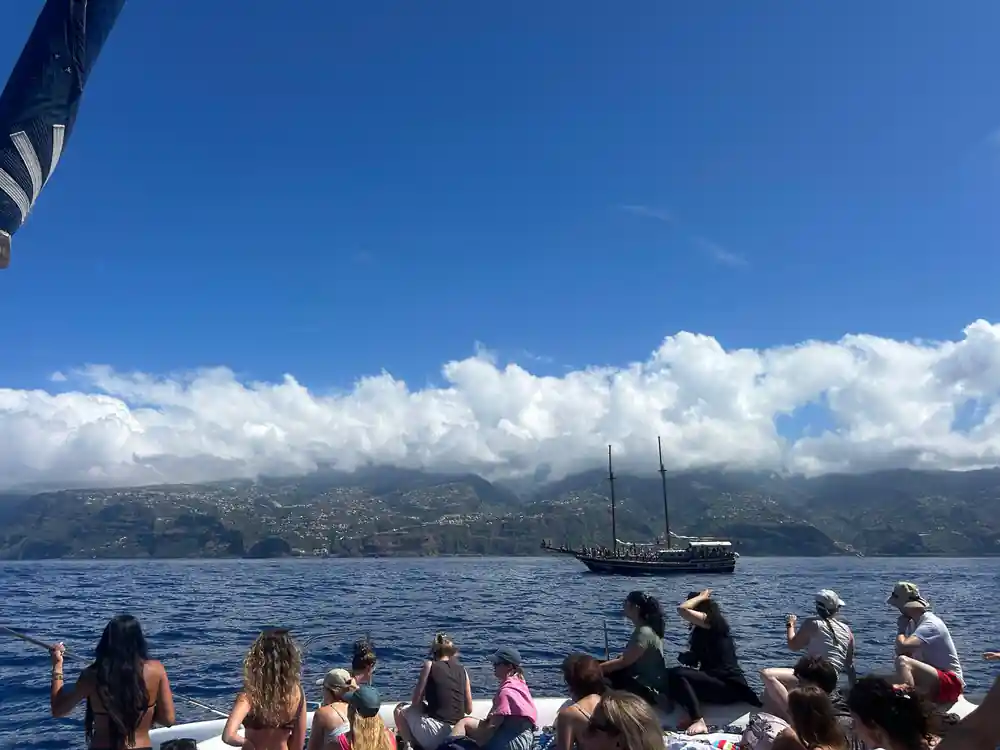
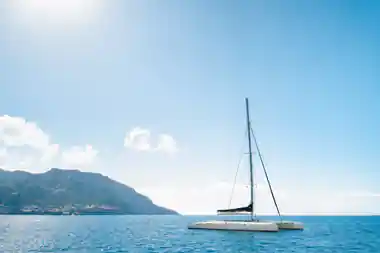
A catamaran moves along Madeira's southern coast, where deep Atlantic water meets dramatic cliffs.
The observation window, and why it feels right
Expect a sighting to feel measured rather than rushed. When a boat keeps its distance, the encounter stays steady and the animals are less likely to sound or move away. The crew will point out blows, splashes and feeding birds, and the guide helps turn those clues into a story about life below the surface. On a good day you might see a pod travelling together, mothers and calves surfacing in rhythm, or a whale fluking slowly before a dive. On a quiet day you may see little more than open water, but that too is part of watching wild animals.
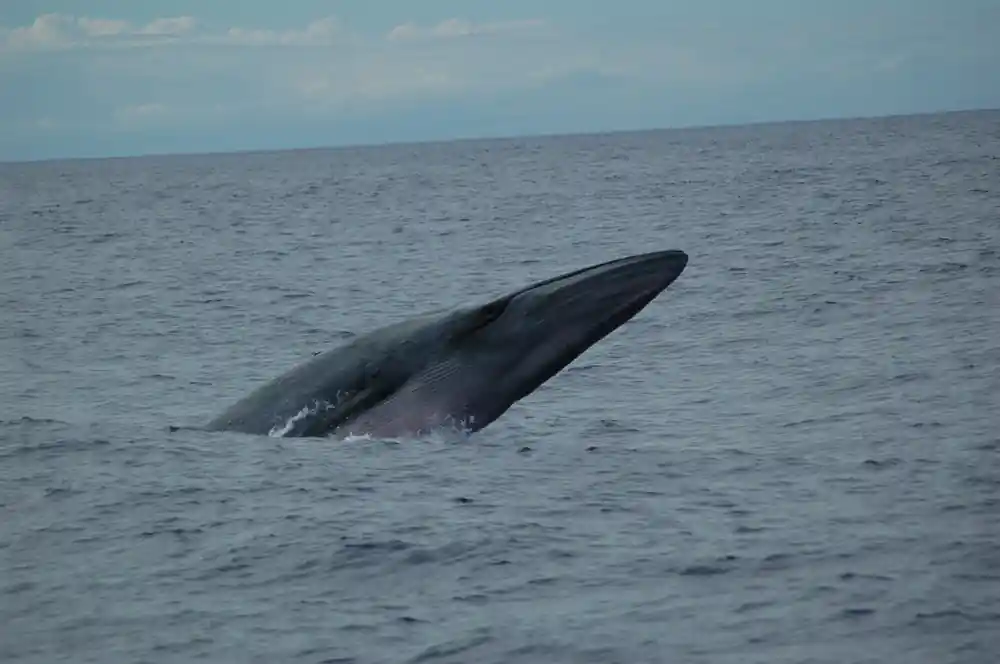
Seasonality also shapes what you see. Sperm whales are seen with some frequency all year but are more common during the fall months.[4] Bryde's whales are typically seen most off Madeira from June until November.[5] Knowing this can help you choose a date and understand that a quiet trip may simply be the wrong season for a particular species. If your priority is Bryde's whales, book in summer; if you are hoping for sperm whales, autumn is a better bet. Resident dolphins remain the dependable presence across the year.[2]
What a well-run sighting looks like
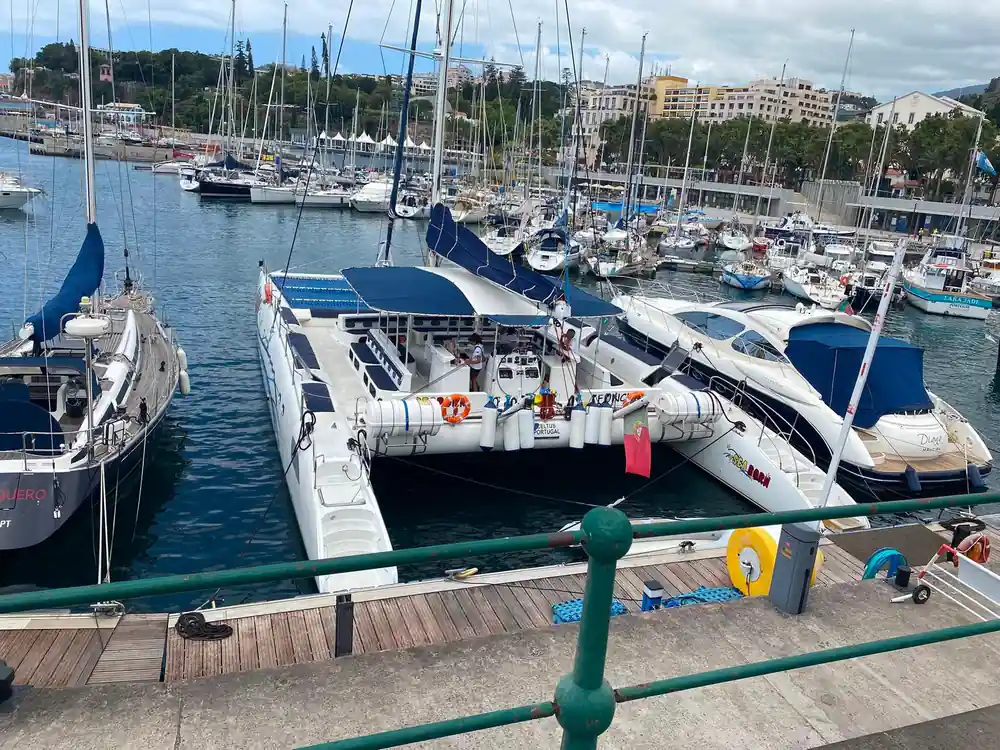
A well-run sighting begins with the right boat and the right crew. The tour featured here is a 3-hour catamaran cruise with a live guide speaking English and Portuguese.[6] The guide sets the tone, explaining what may appear and how to behave when it does. A catamaran's stable deck makes it easier to keep your eyes on the water and lets passengers spread out without crowding one side. The crew will usually gather everyone near the bow or stern depending on where the animals surface, and then ask for quiet.
Once at sea, the skipper holds the legal distance while the crew keeps everyone safe and positioned. A shore-based spotter may guide the boat using precise details such as mileage and landmarks.[10] That combination of preparation, patience and restraint is what responsible whale watching in Funchal looks like in practice. It is less about getting the closest possible photo and more about reading the sea, listening to the crew, and letting the encounter unfold on the animals' terms.
from US$40
From US$40 for a 3-hour catamaran cruise with a live English and Portuguese guide.[6]
This operator's own commitment
The operator's commitment is visible in the booking terms as much as on the water. This featured trip starts at US$40, runs 3 hours, and has a live English and Portuguese guide.[6] The listing allows reserve now and pay later, so you can secure a place without immediate payment.[6] That is useful when you are building a holiday itinerary and want to keep some flexibility before finalising other plans.
You can also cancel without charge up to 24 hours ahead and receive a complete refund.[6] That flexibility matters because the sea changes quickly. A responsible operator would rather you reschedule than sail in poor conditions or feel hurried. Good planning and clear terms are part of the experience. You can book with confidence, knowing that if the forecast turns or your travel plans shift, you are not locked in.
How to be a good passenger
Your part begins before boarding. Pack for the open Atlantic, not the resort pool: water temperatures are about 18°C in winter and 24°C in summer, and a deck wind may make it feel chillier.[9] Layers, sunscreen and a strap for your glasses or hat are all sensible choices. A light waterproof jacket can take the edge off the spray, and shoes with a good grip will help on a moving deck.
When animals are close, keep your voice low and your movements slow. Stay seated unless the crew says otherwise, and let them guide you to the side with the best view. The reasoning behind the distance rule is that boats must stay 50 metres off whales and dolphins and keep 25 metres away from sea turtles, and passengers follow instructions to make that possible.[1] If you are travelling with children, remind them that the deck is not a playground; the quieter everyone is, the longer the animals tend to stay nearby.
Does watching harm them anyway
Watching wild animals is never completely neutral, but it can be done with care. The rules place clear limits on approach distance, and a land-based spotter can shorten the search so boats spend less time pushing through the animals' habitat.[1][10] The impact on any single whale is smaller when the encounter is quiet, brief and at the correct distance. It also helps that the boats are not chasing every pod they hear about; the spotter's information allows a more deliberate choice of which animals to approach.
Madeira's history gives some perspective. Whaling here came to an end voluntarily. In the waters around the archipelago, researchers have verified 27 cetacean species.[2] The whales and dolphins are still here, and the question for visitors is how to meet them on their own terms. A responsible whale watching trip in Funchal is one answer: it takes you into their world without demanding that they perform.
Compare starting prices
From-prices from GetYourGuide listings[6],[7],[11],[12],[8].
What will your trip cost?
From-prices from GetYourGuide listings[6],[7],[11],[12],[8]. Child rates not stated.
When to book
Responsible trip checklist
Pick a calm date
Check availability for starting times and choose a slot that suits your travel style.
Reserve now, pay later
The listed tour allows reserve now and pay later, so you can hold your place without paying immediately.[6]
Pack for the Atlantic
Pack layered clothing and sunscreen; winter sea temperatures are near 18°C and summer near 24°C.[9]
Listen to the guide
The live guide speaks English and Portuguese; follow their directions about moving around the boat.[6]
Respect the distance
Stay seated when the boat slows, and let the skipper hold the legal minimum distance from the animals.[1]
Keep plans flexible
Free cancellation is offered up to 24 hours ahead, letting you adjust plans if the ocean seems rough.[6]
Book a responsible Funchal whale watching cruise and keep your plans flexible.
from US$41Reserve now & pay later