If you read nothing else
- In Madeira's waters, 27 cetacean species have been confirmed by researchers.[1] Five kilometres offshore, depths can exceed 3,000 metres.[2]
- The booked Funchal dolphin and whale watching catamaran cruise lasts 3 hours, costs from US$40, and has a 4.61 rating from 6,772 reviews.[3]
- Short-finned pilot whales and bottlenose dolphins are visible throughout the year; the seasonal visitors are Atlantic spotted dolphins plus occasional blue whales.[1]
- Boats maintain a 50 meters gap from whales and dolphins, as well as 25 meters from sea turtles, while sightings stay calm and unhurried.[4]
- Book now and pay later; cancellations are free up to 24 hours beforehand.[3]
- Top choice Catamaran Cruise from US$40 Duration3 hours[3]Traveller rating4.61[3]Reviews6,772[3]GuideEnglish, Portuguese[3]Who it's forFirst-time cruisers and families Check availability
- Luxury Catamaran from US$46 Duration3 hours[5]Traveller rating4.25[5]Reviews3,470[5]GuidePortuguese, English[5]Who it's forExtra comfort and skip-the-line See this tour
- Sunset Sailing from US$63 Duration3 hours[6]Traveller rating4.77[6]Reviews2,450[6]GuideEnglish, Portuguese[6]Who it's forGolden-hour atmosphere See this tour
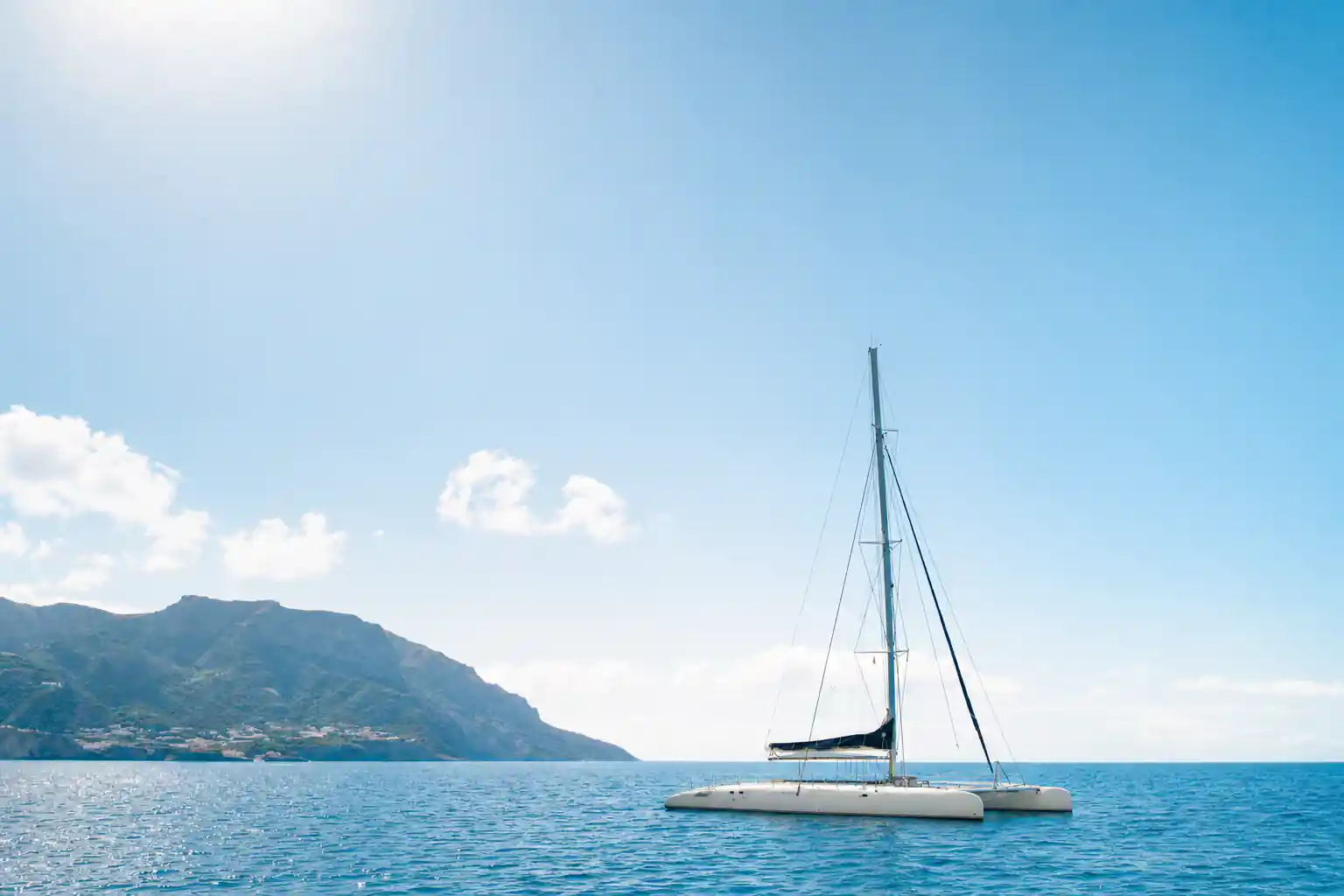
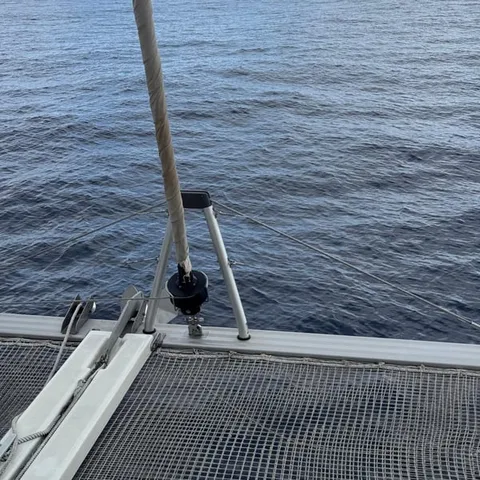
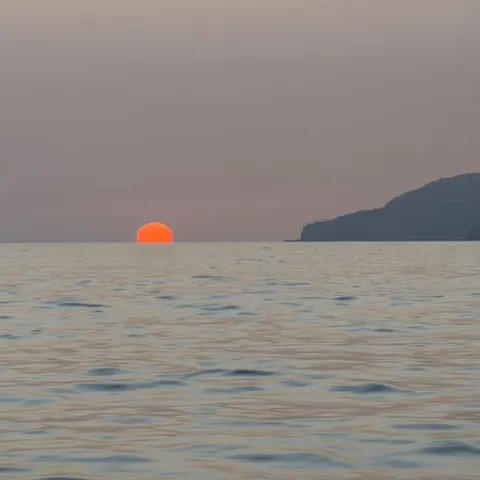
Three small islands to the southeast of the island of Madeira, where we can find an extremely valuable natural and ecological heritage.
A patient, rewarding day on the water
Read before booking
At sea
- Sea temperatures in Madeira range from around 18°C in winter to 24°C in summer.[7]
- Boats keep 50 meters from whales and dolphins and 25 meters from sea turtles.[4]
- Just five kilometres offshore, depths can exceed 3,000 metres.[2]
- Researchers have confirmed 27 species of cetaceans in Madeira's waters.[1]
Why the list is so long
Madeira is a small island with an outsized marine neighbourhood. The ocean just five kilometres offshore can be more than 3,000 metres deep, and this steep underwater terrain lets large cetaceans, normally found in deep water, approach the island closely.[2] This is what makes the island's whale watching so productive, even close to shore.
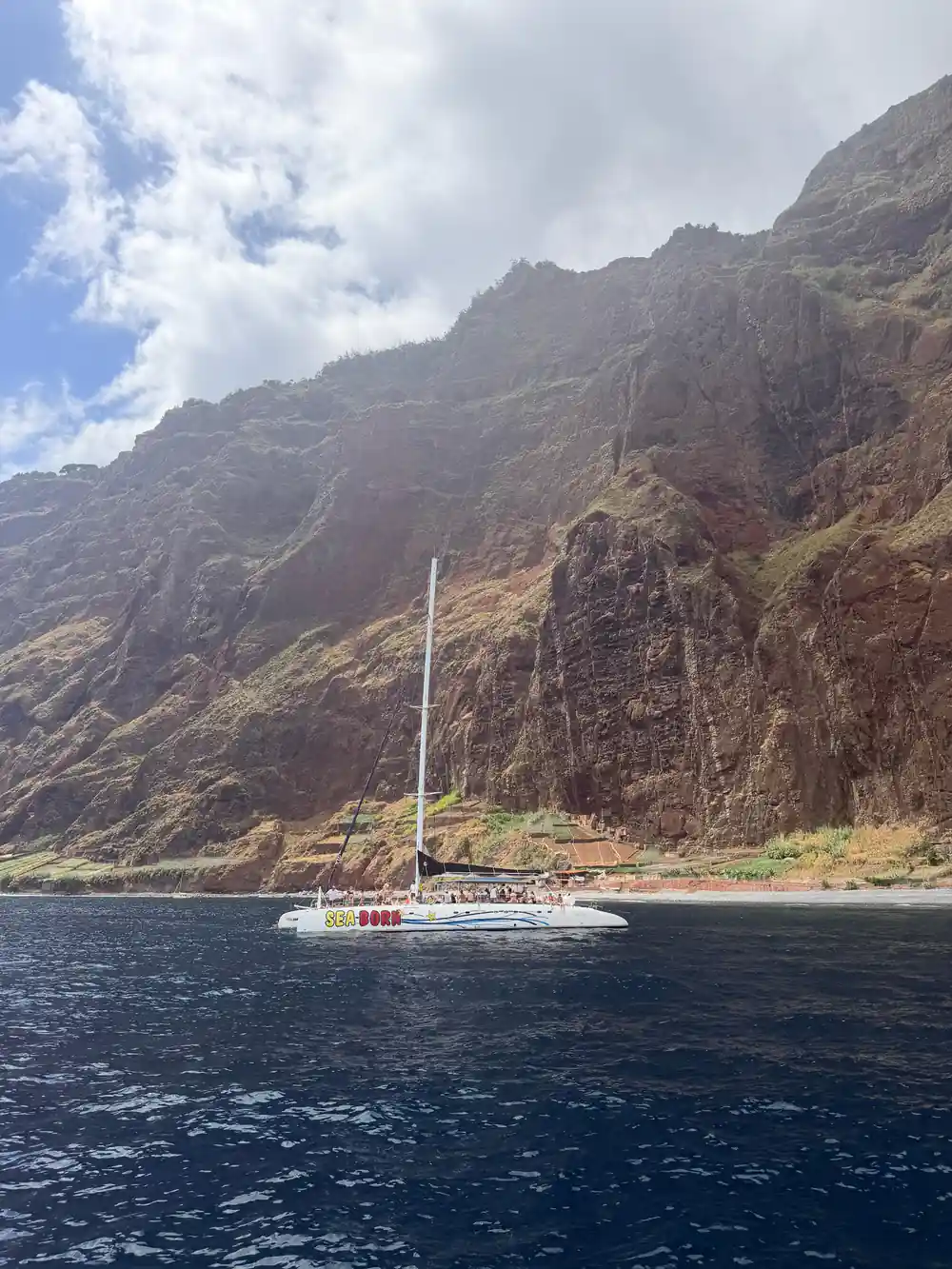
In Madeira's waters, 27 cetacean species have been confirmed by researchers.[1] The island's south coast also has Cabo Girão, a sea cliff 580 metres high, which tells you how dramatic the land-to-sea drop is.[8] Beyond it, the Desertas Islands are three small islands to the southeast of Madeira, forming the Desertas Islands Nature Reserve.[9]
Today's simple rule for boats: stay 50 meters minimum away from whales and dolphins, and keep 25 meters minimum away from sea turtles.[4] That restraint helps encounters feel calm and gives animals the space to behave naturally.
The bottlenose dolphin
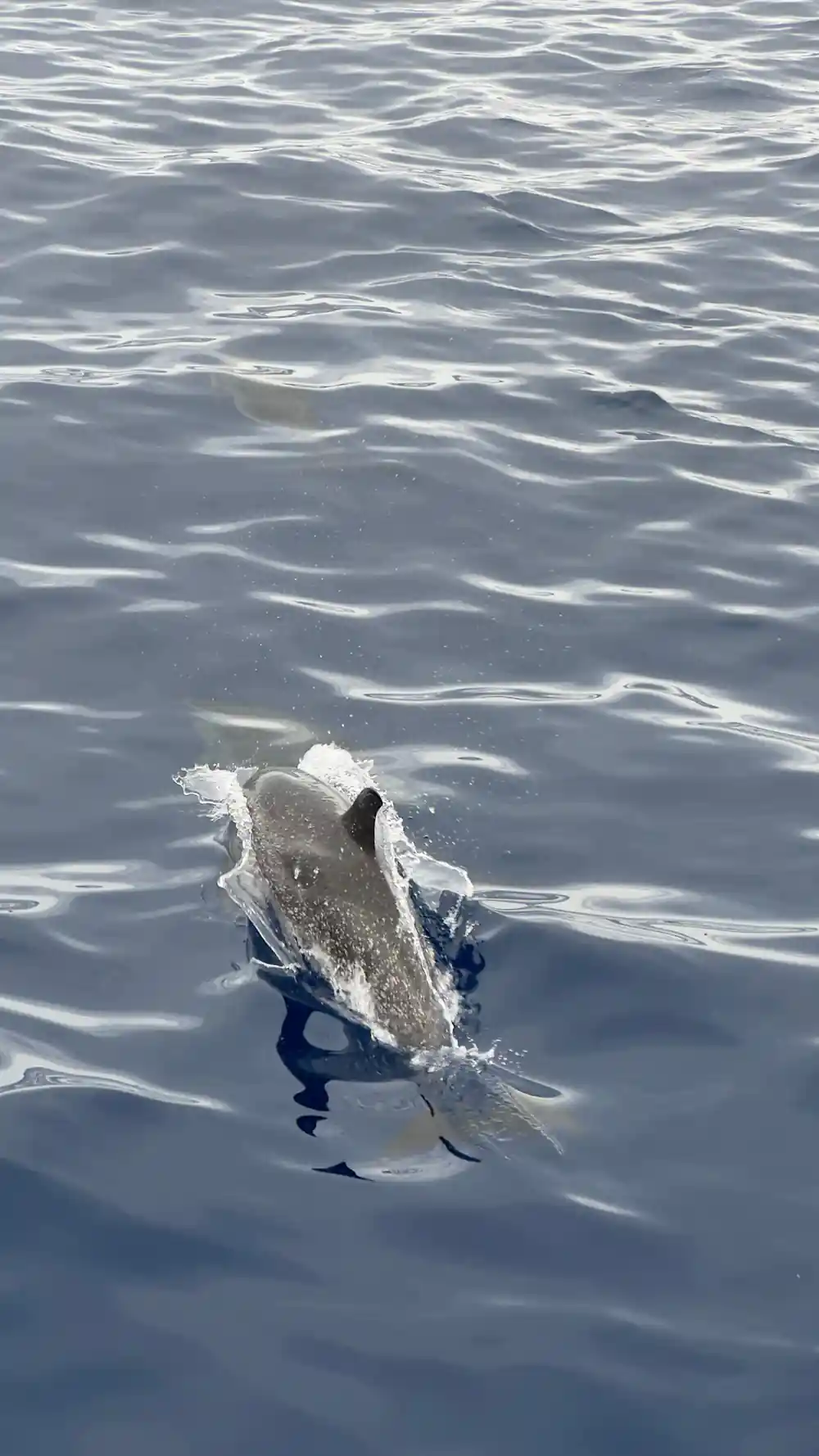
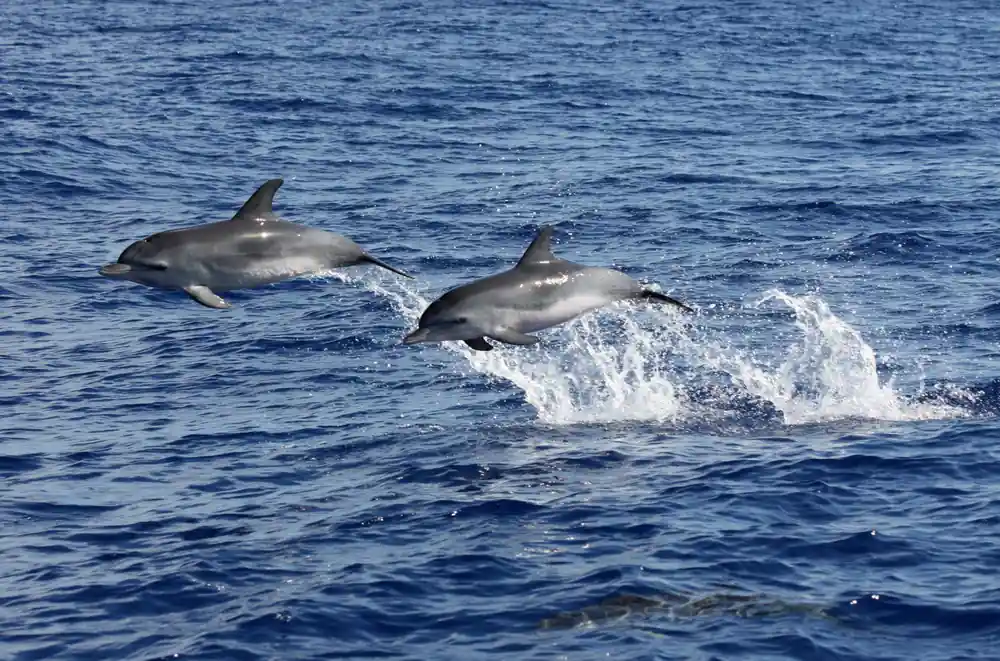
The bottlenose dolphin is the species that often steals the show. It is seen all year round off Madeira and often travels in groups that bow-ride and leap.[1] Their grey bodies and curved fins are easy to pick out against the blue Atlantic, and calves often stay close to their mothers, giving you a clear view of family behaviour.
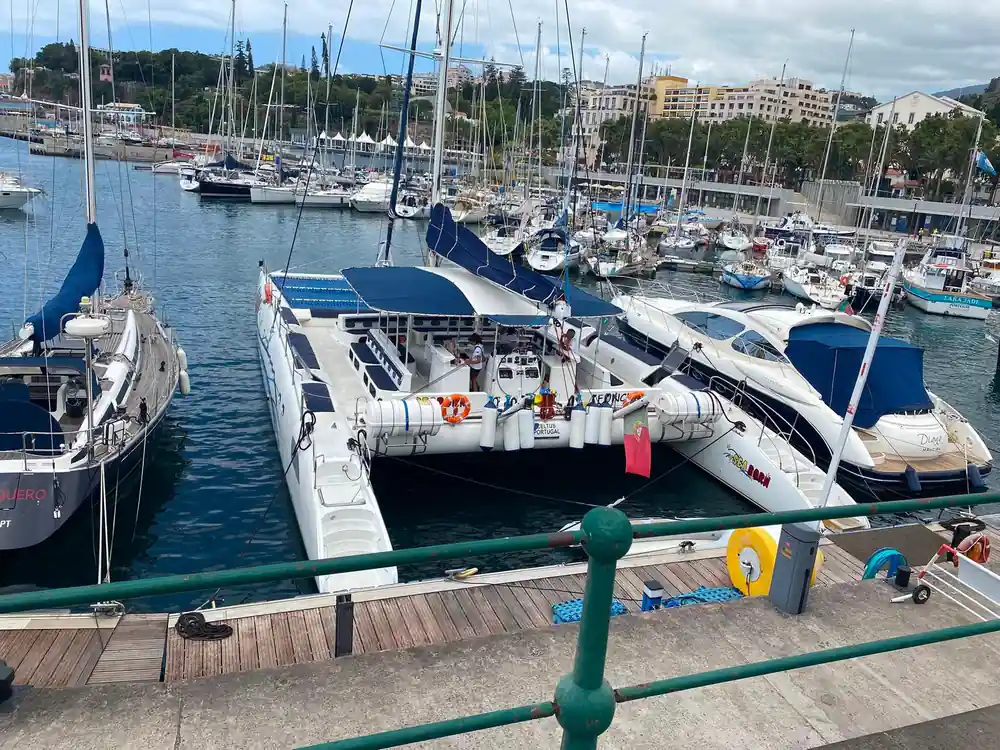
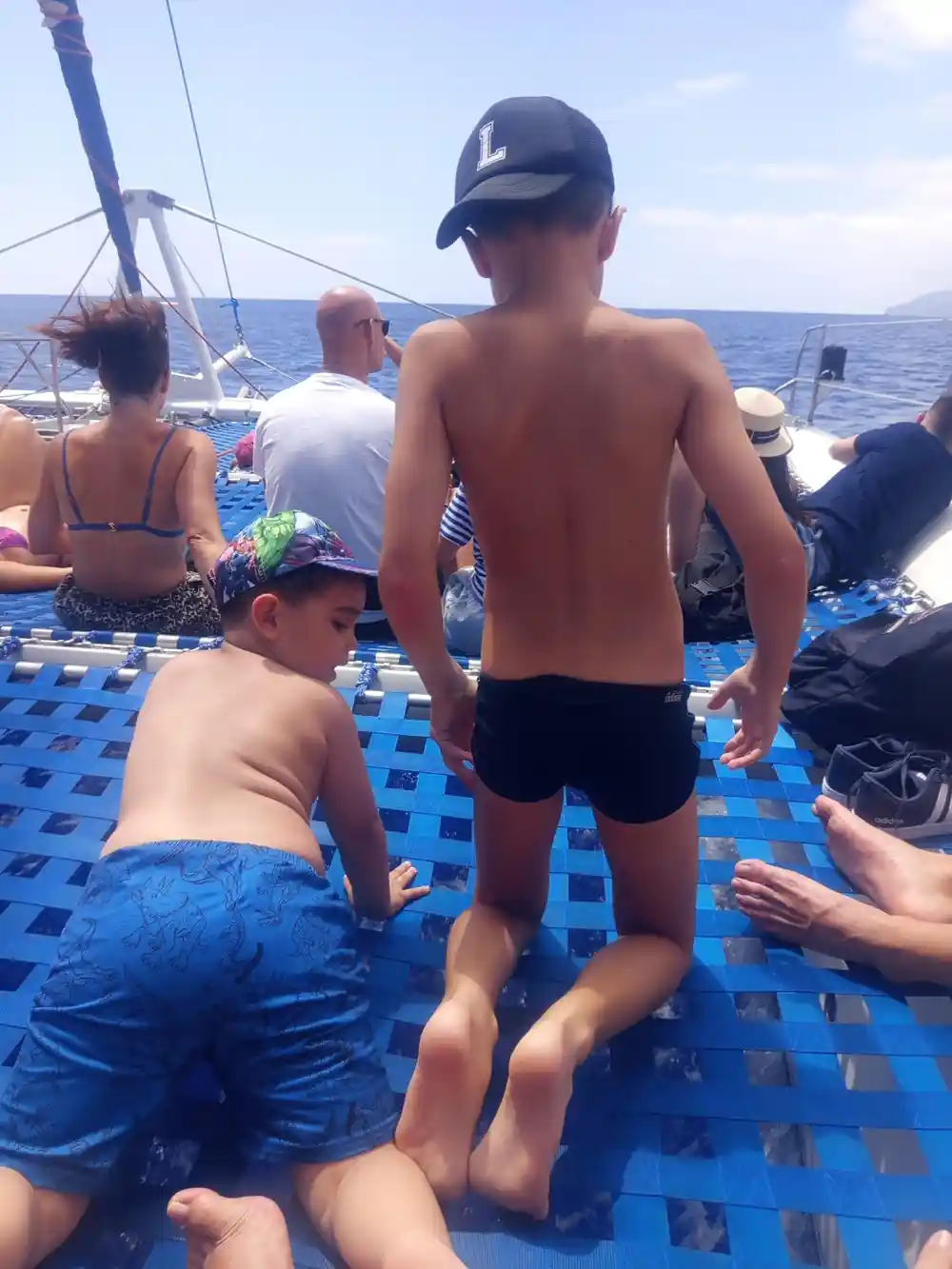
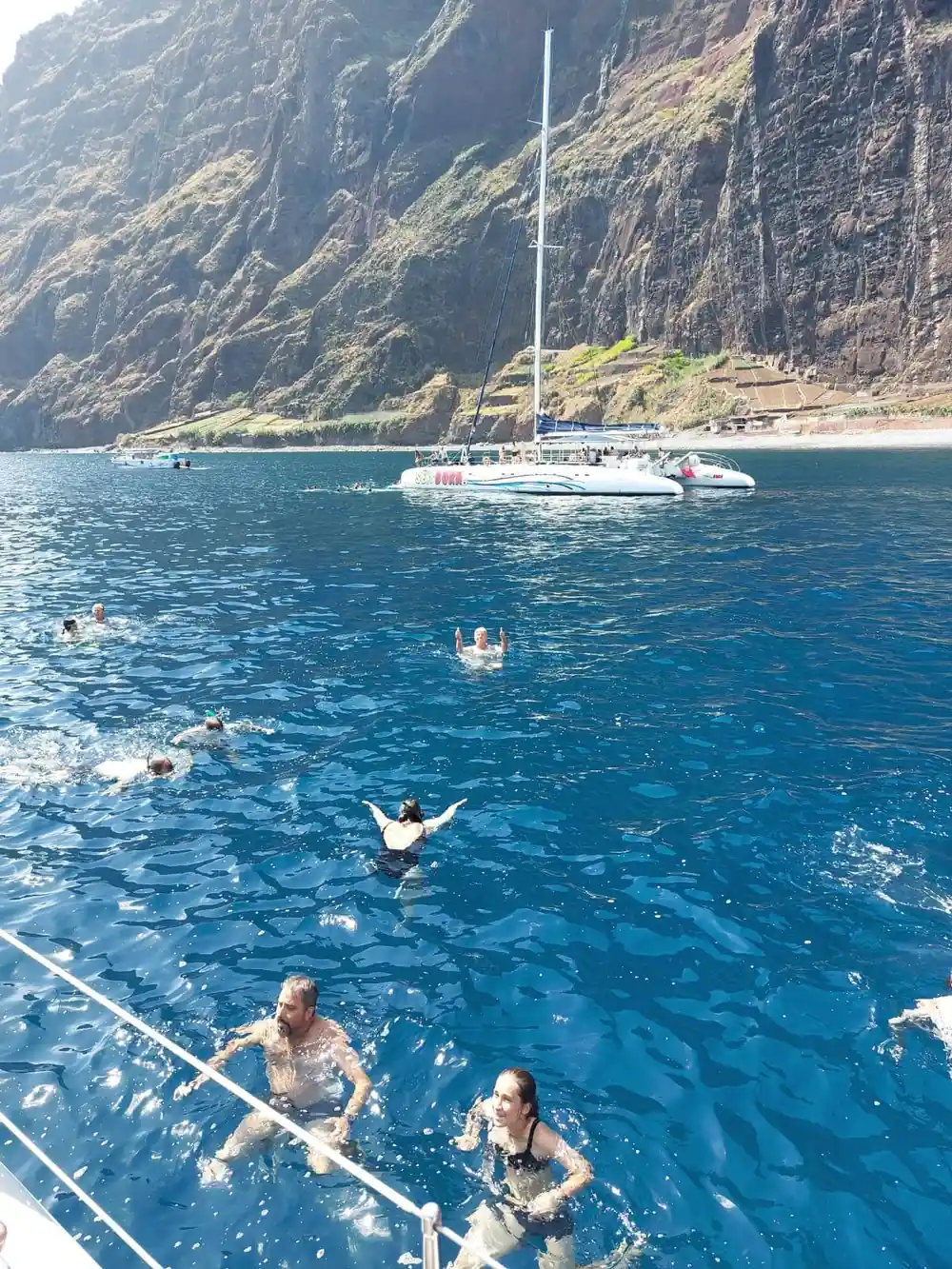
A catamaran is an ideal platform for watching them. When booked from this site, the cruise runs for 3 hours and includes a live English and Portuguese guide.[3] You can stand at the rail or sit on the netting and still keep your balance while the boat slows for a sighting. The deck layout means you can move from side to side as the guide points, and the 3-hour window leaves time to idle near an active pod.[3]
Atlantic spotted dolphins are also part of Madeira's seasonal cast, and they are best recognised by the pale spots that develop as they age.[1] If you are unsure which dolphin you are watching, your guide can help; the tour's live guide covers English and Portuguese.[3] The guide will often point out differences in fin shape and behaviour as the pod moves.
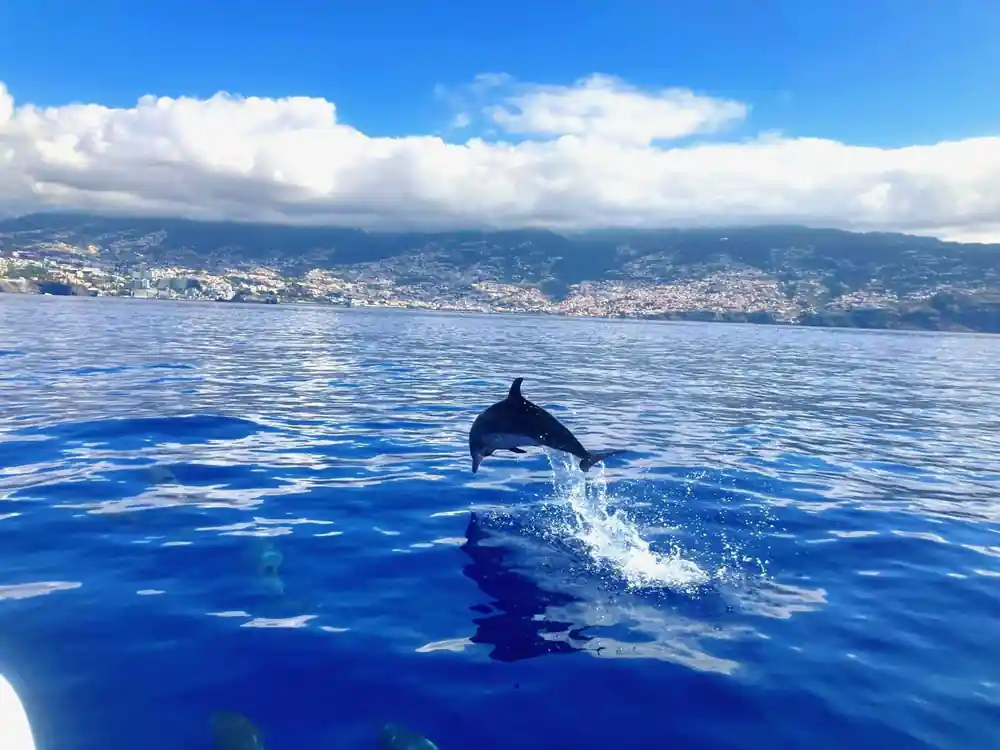
A whale tail rises above clear water during a Funchal catamaran cruise.
The common dolphin
Common dolphins are quick and energetic, with a slim build that sets them apart from the chunkier bottlenose. They often appear in large groups, and their leaping can be seen from a long way off. On calm days, they may race alongside the boat, making short, splashy dives as they travel.
On a whale watching trip, you may see common dolphins riding the wake or spinning in the air. The crew will usually slow the catamaran so you can enjoy the moment without putting the animals under pressure. Keeping a respectful distance is part of the local approach, and it makes the encounter feel more relaxed.[4]
If you want to widen your dolphin checklist, remember that Madeira's year-round residents are bottlenose dolphins and short-finned pilot whales, while Atlantic spotted dolphins are seasonal visitors.[1] That mix means each trip can have a different feel.
Pilot whales, which are dolphins
Short-finned pilot whales are not whales in the strict sense; they are oceanic dolphins. They are seen all year round off Madeira.[1] Their black bodies, bulbous heads and slow surface behaviour make them a favourite with photographers. They often surface slowly, giving you time to lift a camera before the next breath.
Pilot whale groups often include several generations, and they may rest at the surface in a tight cluster. Boats keep at least 50 meters away from whales and dolphins, and the viewing is unhurried.[4] Groups can be large, and young animals sometimes spy-hop to look at the boat. This can be one of the most intimate moments on the water.
The catamaran's 3-hour cruise gives enough time for a patient search.[3] Pilot whales can be the first sighting of the day, especially in calm morning conditions, and their presence often draws other wildlife into the same patch of sea.
from US$40
The 3-hour catamaran cruise comes with a live guide who speaks English and Portuguese, and cancellation is free up to 24 hours ahead.[3]
The great whales
Sperm whales are the deep divers of Madeira. They can be seen with some frequency all year, but they are more common during the fall months.[10] Look for a low, angled blow and a long, dark back before the tail rises. A tall, bushy blow is often the first sign, followed by a long dive that can last many minutes.
Bryde's whales are the most commonly observed baleen whale species around Madeira, and they are typically seen most from June until November.[11] They are rorquals, so they can be fast and unpredictable, though they often surface several times in a row before sounding.
Blue whales are occasional visitors, while orcas and humpback whales are rarely seen.[1] A spotter on land helps boats find these animals, sending details including mileage and landmarks to the boat skippers.[12] Binoculars are useful, but many sightings are close enough for the naked eye.
Turtles and the rest
The waters off Madeira are not only for whales and dolphins. Sea turtles also appear, and boats are asked to keep a minimum distance of 25 meters from them.[4] A turtle floating at the surface can look like a piece of driftwood until it raises its head to breathe. If a turtle surfaces, the crew will often slow down and give everyone a clear look.
Seabirds are the other constant companions. Shearwaters, gulls and terns often feed in the same patches of water as dolphins, so following birds can be a useful way to spot activity. This kind of watching is part of the fun even before a whale appears. Some trips also see flying fish skittering away from the bow.
Madeira's wild offshore scenery adds to the mood. The Desertas Islands are three small islands to the southeast of Madeira, forming the Desertas Islands Nature Reserve.[9] Seawater in Madeira is about 18°C in winter and 24°C in summer, and even a breezy day feels comfortable.[7]
What you will probably actually see
No operator can promise a specific species, but the record is strong. In Madeira's waters, 27 cetacean species have been confirmed by researchers.[1] Short-finned pilot whales and bottlenose dolphins are dependable year-round; seasonal appearances come from Atlantic spotted dolphins as well as occasional blue whales.[1] Even a quiet day on the water is a good way to see Funchal from the sea.
The booked cruise reflects that reliability. It is rated 4.61 from 6,772 reviews and starts from US$40.[3] It lasts 3 hours, and you can reserve now and pay later or cancel free up to 24 hours in advance.[3]
Go with patience and good layers. Around Madeira, sea temperatures are about 18°C in winter and 24°C in summer; mornings can feel chillier than they appear.[7] Listen to the crew, watch the horizon, and you will understand why Madeira's whale watching has such devoted fans. A light drizzle does not stop the trip, and the ocean can change quickly; stay flexible.
Compare from-prices
US dollar from-prices from[3],[5],[6].
When to go whale and dolphin watching
How to plan your trip
Choose the cruise
Book the 3-hour catamaran cruise from US$40 and use reserve now and pay later to hold your place.[3]
Pick a time
Look at the starting times before you travel, then choose the one that fits your morning or afternoon.[3]
Dress for the ocean
Pack layers, sunscreen, and a camera; sea temperatures around Madeira are about 18°C in winter and 24°C in summer.[7]
Respect the animals
Pace yourself with the crew; boats maintain a 50 meters gap to whales and dolphins, plus 25 meters to turtles.[4]
Trust the spotting system
A land-based spotter passes mileage and landmarks to the skipper to help find wildlife.[12]
Ready to meet Madeira's dolphins and whales?
from US$41Reserve now & pay later